

Ready & Packaged Foods
All →Vegetables & Legumes
All →Desserts & Confectionery
All →Meat & Protein
All →Grains & Bakery
All →Beverages
All →Milk & Dairy
All →

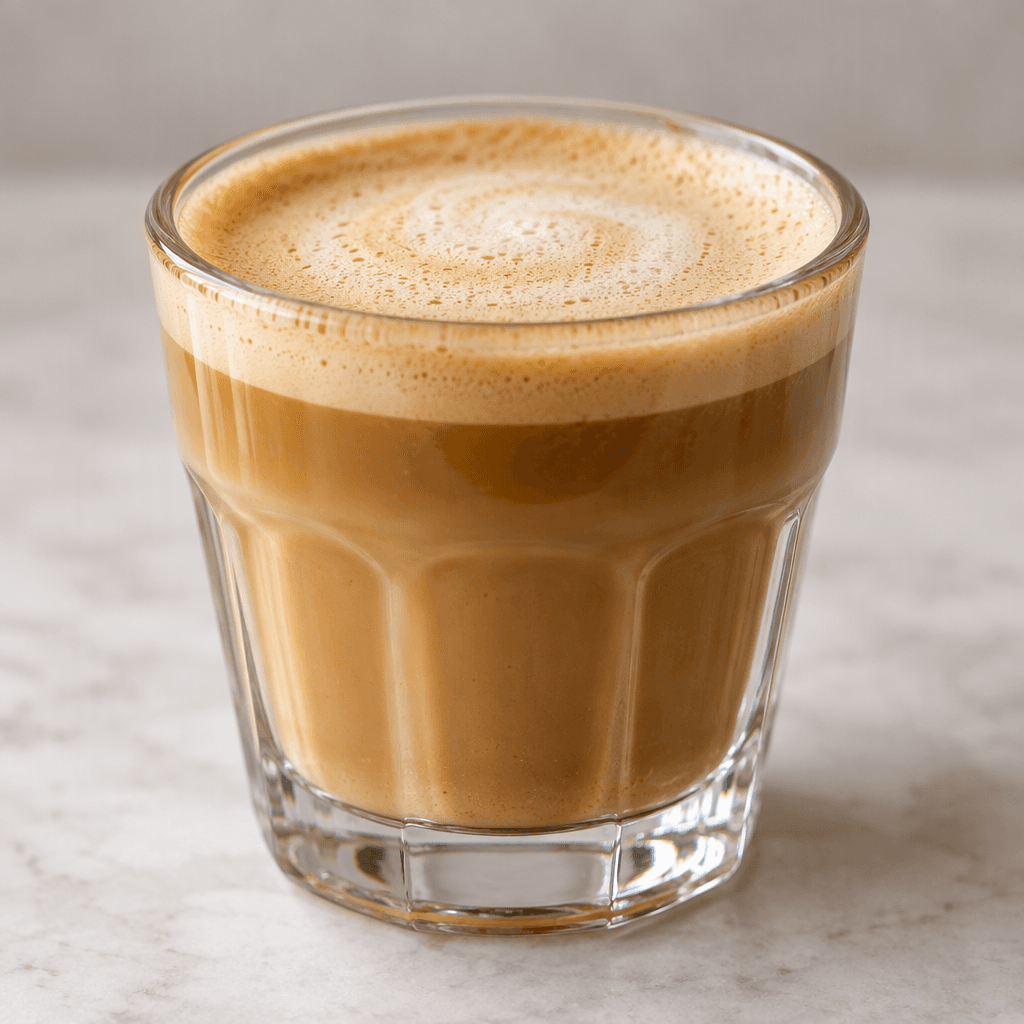
Protein milk espresso Calories
High-protein milk coffee drink
CALORIES
GI
POTASSIUM
FIBER
Quick answer
1 cup (medium) of Protein milk espresso (250 g) has 145 calories. That works out to 58 calories per 100 g. It contains 10.3 g of carbs, 15.5 g of protein, 4 g of fat and 0.3 g of fiber. Its 1.1 µg of B12 covers 44% of the Daily Value. Its glycemic index is 32 (low), so it raises blood sugar slowly.
What is Protein milk espresso?
Protein milk espresso combines espresso with protein-enriched milk for a creamy coffee with a more substantial feel than a standard milk coffee. The milk softens espresso’s roasted bitterness, while a light layer of foam gives it a smooth finish. It can be served hot or over ice, depending on the season and your preference.
It fits naturally into a breakfast or an afternoon coffee break, whether you make it at home or order it from a café. The drink’s nutritional character is shaped by its added protein: it provides 6.2 g per 100 g. For a less sweet, lighter-tasting cup, skip flavoured syrups and added sugar, and adjust the amount of milk to suit your taste.
Protein milk espresso Nutrition Facts
Selected: 100 g
58
KCAL / 100G
Carbs
4.1g
· 1% DV
Protein
6.2g
· 12% DV
Fat
1.6g
· 2% DV
Fiber
0.1g
· 0% DV
DV is the share of the daily value covered, on a 2,000 kcal reference diet.
Calories come from: Carbs 29% · Protein 45% · Fat 26%
Protein milk espresso Vitamins & Minerals
Vitamins
B12
0.42µg · 18% DV
B2
0.22mg · 17% DV
B5
0.32mg · 6% DV
Biotin
1.6µg · 5% DV
Minerals
Phosphorus
95mg · 14% DV
Calcium
120mg · 12% DV
Zinc
1mg · 9% DV
Iodine
12µg · 8% DV
How Nutritious Is Protein milk espresso?
Nutrient density
Medium
How many vitamins, minerals and how much fiber this food carries per calorie. A high score means a lot of nutrition for few calories.
Satiety score
Medium
An EatBetter score computed from fiber, protein and calorie density. A high score means staying full longer on the same calories.
Both scores are calculated per 100 g and do not change with the selected portion. The satiety score is EatBetter's own calculation, not a clinical measure.
Protein milk espresso Glycemic Index
GLYCEMIC INDEX
GLYCEMIC LOAD
Accounts for portion size — a more realistic measure than GI alone.
How to Burn Off Protein milk espresso
To burn the 58 calories in 100 g:
🚶
Walking (5 km/h)
🏃
Running (8 km/h)
🚴
Cycling
🏊
Swimming
Times are calculated with the MET equation for a 70 kg adult. Actual burn varies with your weight, age and pace.
Is Protein milk espresso Processed?
NOVA 3
Processed
1. Unprocessed
2. Minimally Processed
3. Processed
4. Ultra-Processed
NOVA classifies foods into 4 groups by industrial processing. NOVA 1 (unprocessed) is the healthiest.
Does Protein milk espresso Contain Allergens?
Contains these allergens:
Which Diets Is Protein milk espresso Good For?
Vegan
— Not suitable
Vegetarian
✓ Suitable
Gluten-Free
✓ Suitable
Dairy-Free
— Not suitable
Mediterranean
✓ Suitable
Paleo
— Not suitable
Whole30
— Not suitable
DASH
— Not suitable
Keto
— Not suitable
Low FODMAP
— Not suitable
Protein milk espresso Fat Profile
SATURATED
1g
MONOUNSATURATED
0.4g
POLYUNSATURATED
0.08g
Omega 6:3 ratio 1.7:1
Below the ideal 4:1 — a good omega balance.
Compare Protein milk espresso
Foods Similar to Protein milk espresso
Frequently Asked Questions About Protein milk espresso
How do you make protein milk espresso at home?
Make an espresso, then stir or pour in protein-enriched milk. For a hot drink, warm the milk gently and add it gradually; for an iced version, cool the espresso first so the ice does not dilute it straight away.
Is protein milk espresso the same as a protein latte?
Not necessarily. Protein milk espresso describes espresso combined with protein-enriched milk, while a latte typically has a larger amount of steamed milk; recipes and serving sizes vary, so the names are not always interchangeable.
Does protein milk espresso contain caffeine?
Yes, protein milk espresso contains caffeine from the espresso. The amount depends on how much espresso is used and how it is brewed, so drinking it late in the day may affect sleep if you are caffeine-sensitive.
Can you add protein powder to protein milk espresso?
Yes, but mix the protein powder into cool or lukewarm milk first until smooth. Adding powder straight to hot espresso can make it clump, and some powders change the drink’s texture or flavor.
Why does protein milk espresso curdle?
Protein milk espresso can curdle when cold milk meets very hot, acidic espresso, or when the milk is heated too much. Warm the milk gently and pour the espresso in slowly while stirring to help keep the drink smooth.
Is protein milk espresso better before or after a workout?
Protein milk espresso can fit after a workout as a drink that provides protein and caffeine, but it is not a complete recovery meal. Before exercise, the caffeine may feel stimulating, though it can also cause jitters in sensitive people.
Does heating protein milk espresso destroy its protein?
No, gently heating protein milk espresso to a drinkable temperature does not destroy its protein. Avoid boiling the milk: excessive heat can affect the texture and make the espresso-and-milk mixture less pleasant.
Can you make protein milk espresso iced?
Yes, protein milk espresso works as an iced drink. Chill the espresso before combining it with protein milk and ice; pouring hot espresso onto the ice can water down the flavor and sometimes affect the milk’s texture.
Does protein milk espresso raise blood sugar?
It can raise blood sugar because milk contains carbohydrates, although the response varies with the milk and any added sweetener. An unsweetened version avoids extra sugar; people managing diabetes should consider their own glucose response.
How long does homemade protein milk espresso keep?
Homemade protein milk espresso is best consumed fresh. If you have leftovers, refrigerate them promptly in a covered container and drink them the same day; discard the drink if it has been left out for an extended time.
Have another question about Protein milk espresso?
Ask the AI nutrition coach — calories, portions, alternatives and more, answered in seconds in the app.

Scan calories with your camera
Instant AI nutrition analysis

Nutrition data compiled from USDA FoodData Central and scientific sources.