

Ready & Packaged Foods
All →Vegetables & Legumes
All →Desserts & Confectionery
All →Meat & Protein
All →Grains & Bakery
All →Beverages
All →Milk & Dairy
All →

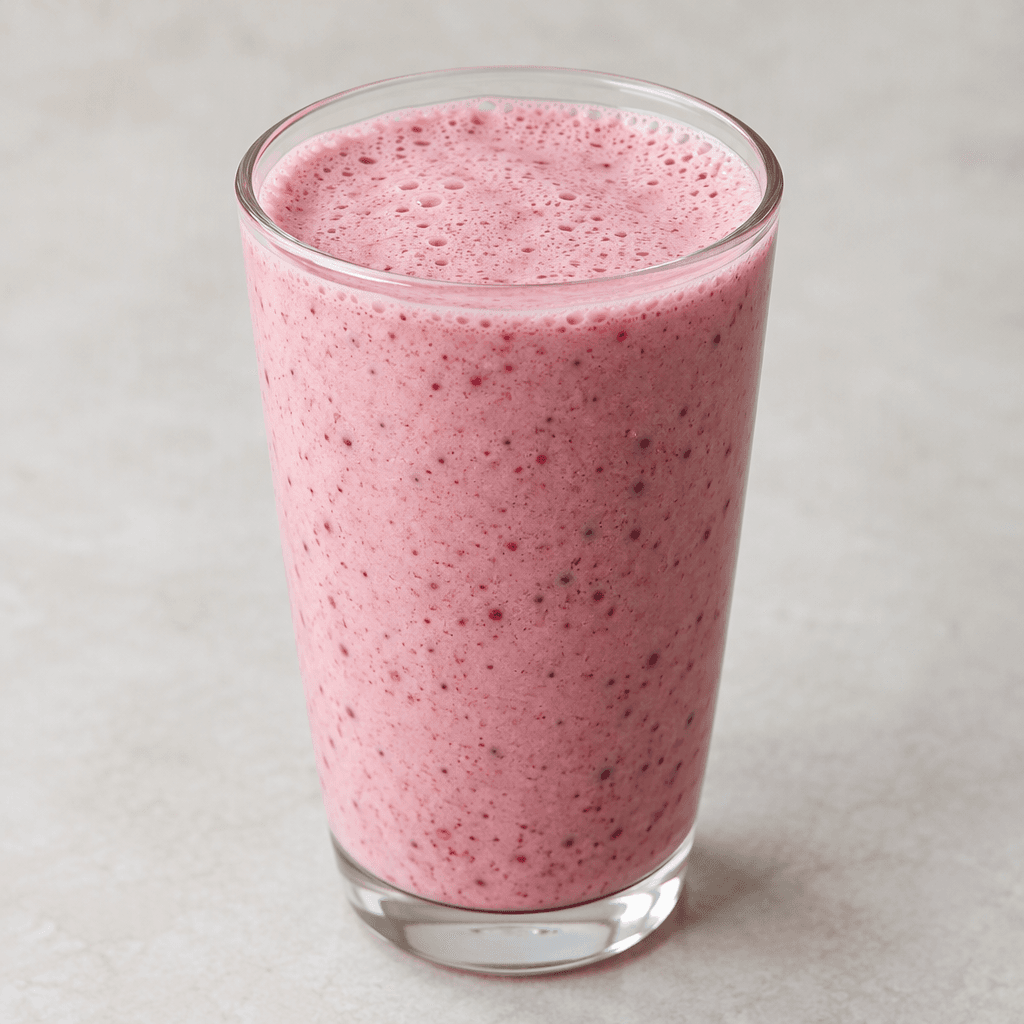
Probiotic yogurt drink, raspberry hibiscus Calories
Probiotic flavored fermented dairy drink
CALORIES
GI
POTASSIUM
FIBER
Quick answer
1 bottle (small) of Probiotic yogurt drink, raspberry hibiscus (250 g) has 180 calories. That works out to 72 calories per 100 g. It contains 28 g of carbs, 7 g of protein, 4.5 g of fat and 0.5 g of fiber. Its 0.8 µg of B12 covers 33% of the Daily Value. Its glycemic index is 38 (low), so it raises blood sugar slowly.
What is Probiotic yogurt drink, raspberry hibiscus?
A raspberry-hibiscus probiotic yogurt drink is a pourable, fermented dairy drink flavoured with fruit and hibiscus. Its smooth, lightly frothy texture brings together raspberry’s sweet-tart fruitiness and hibiscus’s gentle floral tang. It is a flavoured take on drinkable yogurt rather than a traditional savoury yogurt drink.
Serve it chilled as a quick breakfast addition or an easy snack; it also works on its own between meals. The yogurt gives it some protein, though it is not as protein-rich as a thicker strained yogurt, and the fruit flavour makes it more carbohydrate-forward than plain yogurt. Pair it with unsweetened oats or a handful of nuts if you want a more filling breakfast without adding extra sweetness.
Probiotic yogurt drink, raspberry hibiscus Nutrition Facts
Selected: 100 g
72
KCAL / 100G
Carbs
11.2g
· 4% DV
Protein
2.8g
· 6% DV
Fat
1.8g
· 2% DV
Fiber
0.2g
· 1% DV
DV is the share of the daily value covered, on a 2,000 kcal reference diet.
Calories come from: Carbs 62% · Protein 16% · Fat 22%
Probiotic yogurt drink, raspberry hibiscus Vitamins & Minerals
Vitamins
B12
0.32µg · 13% DV
B2
0.16mg · 12% DV
B5
0.32mg · 6% DV
Biotin
1.5µg · 5% DV
Minerals
Phosphorus
85mg · 12% DV
Calcium
110mg · 11% DV
Iodine
8µg · 5% DV
Selenium
2.5µg · 5% DV
How Nutritious Is Probiotic yogurt drink, raspberry hibiscus?
Nutrient density
Medium
How many vitamins, minerals and how much fiber this food carries per calorie. A high score means a lot of nutrition for few calories.
Satiety score
Medium
An EatBetter score computed from fiber, protein and calorie density. A high score means staying full longer on the same calories.
Both scores are calculated per 100 g and do not change with the selected portion. The satiety score is EatBetter's own calculation, not a clinical measure.
Probiotic yogurt drink, raspberry hibiscus Glycemic Index
GLYCEMIC INDEX
GLYCEMIC LOAD
Accounts for portion size — a more realistic measure than GI alone.
How to Burn Off Probiotic yogurt drink, raspberry hibiscus
To burn the 72 calories in 100 g:
🚶
Walking (5 km/h)
🏃
Running (8 km/h)
🚴
Cycling
🏊
Swimming
Times are calculated with the MET equation for a 70 kg adult. Actual burn varies with your weight, age and pace.
Is Probiotic yogurt drink, raspberry hibiscus Processed?
NOVA 3
Processed
1. Unprocessed
2. Minimally Processed
3. Processed
4. Ultra-Processed
NOVA classifies foods into 4 groups by industrial processing. NOVA 1 (unprocessed) is the healthiest.
Does Probiotic yogurt drink, raspberry hibiscus Contain Allergens?
Contains these allergens:
Which Diets Is Probiotic yogurt drink, raspberry hibiscus Good For?
Vegan
— Not suitable
Vegetarian
✓ Suitable
Gluten-Free
✓ Suitable
Dairy-Free
— Not suitable
Mediterranean
✓ Suitable
Paleo
— Not suitable
Whole30
— Not suitable
DASH
— Not suitable
Keto
— Not suitable
Low FODMAP
— Not suitable
Probiotic yogurt drink, raspberry hibiscus Fat Profile
SATURATED
1.1g
MONOUNSATURATED
0.5g
POLYUNSATURATED
0.07g
Omega 6:3 ratio 2.5:1
Below the ideal 4:1 — a good omega balance.
Compare Probiotic yogurt drink, raspberry hibiscus
Foods Similar to Probiotic yogurt drink, raspberry hibiscus
Frequently Asked Questions About Probiotic yogurt drink, raspberry hibiscus
Does the probiotic yogurt drink, raspberry hibiscus, contain live cultures?
It is a fermented yogurt drink presented as probiotic, but the strains and number of live cultures can vary by product and processing. Check the package for details about its cultures and storage; keeping it refrigerated helps follow the product’s intended handling.
Is the probiotic yogurt drink, raspberry hibiscus, the same as kefir?
No. Kefir is usually fermented with kefir grains, while yogurt drinks use yogurt cultures. They can differ in taste and microorganisms, and the raspberry and hibiscus flavor gives this drink a fruitier, more tart profile than plain kefir.
Does the probiotic yogurt drink, raspberry hibiscus, have caffeine?
No, yogurt, raspberries, and hibiscus do not naturally contain caffeine. This drink is not a caffeinated alternative to coffee or tea; check the ingredient list if you need to confirm that no caffeine has been added.
Does the probiotic yogurt drink, raspberry hibiscus, contain added sugar?
That depends on the recipe. Milk naturally contains lactose, but the raspberry-hibiscus flavor does not reveal whether extra sugar or another sweetener was added. Look at the ingredient list to distinguish added sweeteners from the sugars naturally present in dairy.
How should you store the probiotic yogurt drink, raspberry hibiscus, after opening?
Keep it capped in the refrigerator and follow the package’s instructions for use after opening. Avoid leaving it at room temperature for a long time, and discard it if its smell, appearance, or texture has changed unexpectedly.
Can you put the probiotic yogurt drink, raspberry hibiscus, in a smoothie?
Yes. Its pourable yogurt texture blends readily with fruit, and the raspberry-hibiscus flavor can add a tart, fruity note. Start with a small amount so its flavor does not overpower the other ingredients.
Can you freeze the probiotic yogurt drink, raspberry hibiscus?
Yes, but freezing can make it separate or change its texture after thawing. It may also affect the live cultures, so refrigeration is preferable when you want to drink it with its original consistency.
What does hibiscus add to the probiotic yogurt drink, raspberry hibiscus?
Hibiscus contributes a tangy, floral note that complements the raspberry and the natural tartness of yogurt. The exact balance depends on the recipe, so the drink may taste more berry-forward or more sharply tart from one product to another.
Is the probiotic yogurt drink, raspberry hibiscus, a good drink to have with breakfast?
Yes, it can be served with breakfast as a chilled, fruit-flavored dairy drink. Its tart raspberry-hibiscus taste pairs well with fruit or a mild breakfast, but it will not taste like plain yogurt or a savory yogurt drink.
Can the probiotic yogurt drink, raspberry hibiscus, replace breakfast?
No, it is a drink rather than a complete breakfast. Have it alongside foods such as oats, toast, or fruit if you want a more substantial meal; its yogurt base alone does not provide the variety of a full breakfast.
Have another question about Probiotic yogurt drink, raspberry hibiscus?
Ask the AI nutrition coach — calories, portions, alternatives and more, answered in seconds in the app.

Scan calories with your camera
Instant AI nutrition analysis

Nutrition data compiled from USDA FoodData Central and scientific sources.