

Ready & Packaged Foods
All →Vegetables & Legumes
All →Desserts & Confectionery
All →Meat & Protein
All →Grains & Bakery
All →Beverages
All →Milk & Dairy
All →

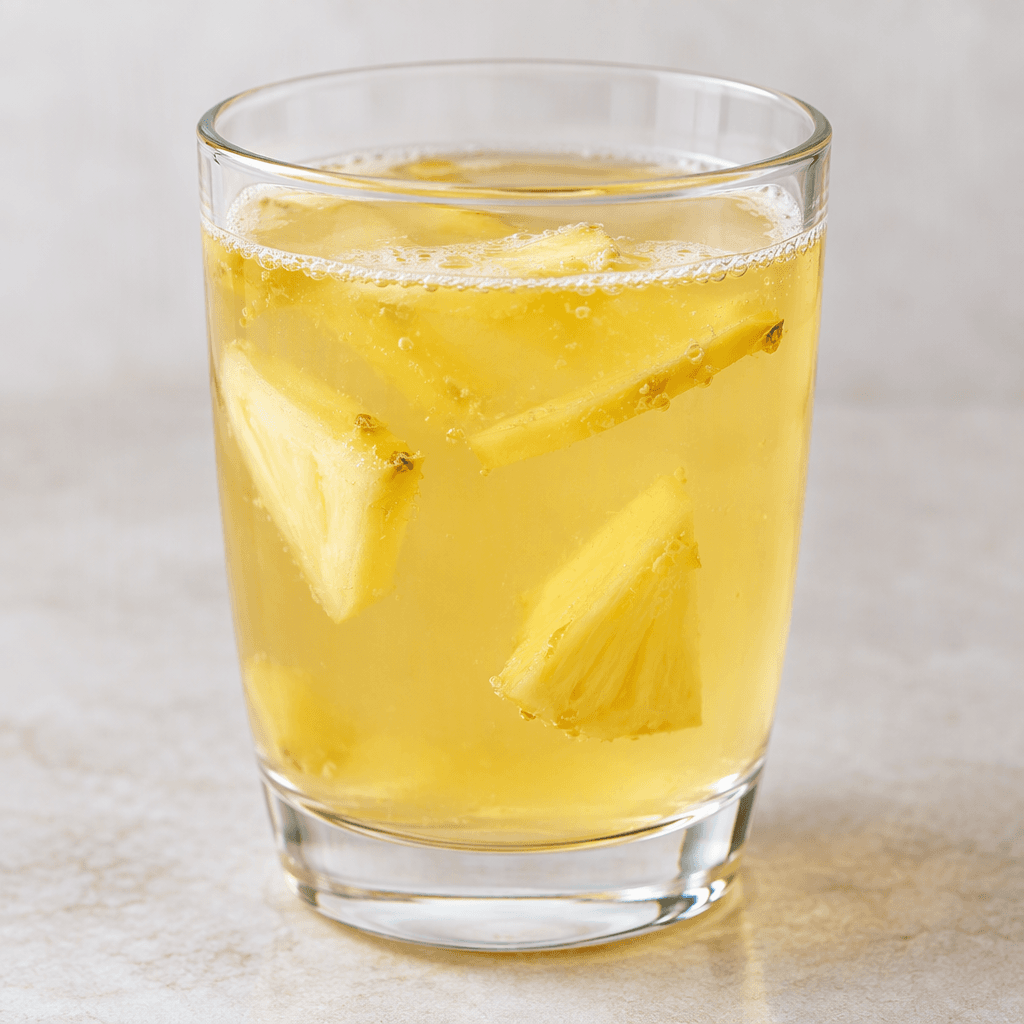
Pineapple vinegar water Calories
Fermented beverage, low calorie, probiotic potential
In season: Summer · Spring
CALORIES
GI
POTASSIUM
FIBER
Quick answer
1 cup (medium) of Pineapple vinegar water (240 g) has 19 calories. That works out to 8 calories per 100 g. It contains 4.8 g of carbs, 0 g of protein, 0 g of fat and 0 g of fiber. Its glycemic index is 15 (low), so it raises blood sugar slowly.
What is Pineapple vinegar water?
Pineapple vinegar water is made by diluting pineapple vinegar with water; some versions include a few pineapple pieces or slices. It is a simple drink rather than a dish tied to one established regional tradition, and the balance of vinegar and water can be adjusted to taste. The vinegar itself is made by fermenting pineapple or pineapple juice, though methods vary.
Its flavour is tangy and lightly fruity, and it is usually served chilled as a refreshing drink or alongside a meal. It is mostly water and low in calories, with 8 calories per 100 g. If the sharpness is too much, dilute it further; a little fresh pineapple can add fruitiness without needing extra sweetener.
Pineapple vinegar water Nutrition Facts
Selected: 100 g
8
KCAL / 100G
Carbs
2g
· 1% DV
Protein
0g
· 0% DV
Fat
0g
· 0% DV
Fiber
0g
· 0% DV
DV is the share of the daily value covered, on a 2,000 kcal reference diet.
Calories come from: Carbs 100% · Protein 0% · Fat 0%
Pineapple vinegar water Vitamins & Minerals
Vitamins
B1
0.01mg · 1% DV
B2
0.01mg · 1% DV
B6
0.01mg · 1% DV
Vitamin C
0.5mg · 1% DV
Minerals
Calcium
7mg · 1% DV
Iron
0mg · 0% DV
Magnesium
2mg · 0% DV
Zinc
0mg · 0% DV
How Nutritious Is Pineapple vinegar water?
Nutrient density
Low
How many vitamins, minerals and how much fiber this food carries per calorie. A high score means a lot of nutrition for few calories.
Satiety score
Medium
An EatBetter score computed from fiber, protein and calorie density. A high score means staying full longer on the same calories.
Both scores are calculated per 100 g and do not change with the selected portion. The satiety score is EatBetter's own calculation, not a clinical measure.
Pineapple vinegar water Glycemic Index
GLYCEMIC INDEX
GLYCEMIC LOAD
Accounts for portion size — a more realistic measure than GI alone.
How to Burn Off Pineapple vinegar water
To burn the 8 calories in 100 g:
🚶
Walking (5 km/h)
🏃
Running (8 km/h)
🚴
Cycling
🏊
Swimming
Times are calculated with the MET equation for a 70 kg adult. Actual burn varies with your weight, age and pace.
Is Pineapple vinegar water Processed?
NOVA 2
Minimally Processed
1. Unprocessed
2. Minimally Processed
3. Processed
4. Ultra-Processed
NOVA classifies foods into 4 groups by industrial processing. NOVA 1 (unprocessed) is the healthiest.
Does Pineapple vinegar water Contain Allergens?
No known major allergens
Which Diets Is Pineapple vinegar water Good For?
Vegan
✓ Suitable
Vegetarian
✓ Suitable
Gluten-Free
✓ Suitable
Dairy-Free
— Not suitable
Mediterranean
✓ Suitable
Paleo
— Not suitable
Whole30
— Not suitable
DASH
— Not suitable
Keto
— Not suitable
Low FODMAP
— Not suitable
Pineapple vinegar water Fat Profile
SATURATED
0g
MONOUNSATURATED
0g
POLYUNSATURATED
0g
Compare Pineapple vinegar water
Foods Similar to Pineapple vinegar water
Frequently Asked Questions About Pineapple vinegar water
What is pineapple vinegar water?
Pineapple vinegar water is water mixed with pineapple vinegar, a vinegar made by fermenting pineapple or pineapple scraps. Its flavor can be tangy and lightly fruity; it is not the same as pineapple juice, and fermentation does not make every version probiotic.
How do you make pineapple vinegar water?
Mix a small amount of pineapple vinegar into a glass of water, then adjust the dilution to taste. Avoid drinking vinegar undiluted. If making pineapple vinegar at home, use clean equipment and a reliable fermentation method to reduce contamination risks.
Does pineapple vinegar water help with weight loss?
No, pineapple vinegar water does not cause weight loss by itself. Replacing a sugary drink with it may reduce overall calorie intake, but there is no good evidence that pineapple vinegar burns fat or produces lasting weight loss.
Can you drink pineapple vinegar water every day?
You can, but there is no need to drink pineapple vinegar water daily. Frequent exposure to acidic drinks can erode tooth enamel or aggravate stomach symptoms. Dilute it well, avoid sipping it for long periods, and rinse your mouth with plain water afterward.
Is pineapple vinegar water a probiotic drink?
Not necessarily. Pineapple vinegar water may contain live microbes if it is made with unpasteurized, live-culture vinegar, but many products do not. Fermentation alone does not establish that a drink contains beneficial strains or provides a probiotic effect.
Should you drink pineapple vinegar water before or after a meal?
There is no proven best time to drink pineapple vinegar water. If it irritates your stomach on its own, have it with food or skip it; drinking it before meals has not been shown to reliably improve digestion or control appetite.
Can pineapple vinegar water damage your teeth?
Yes, frequent or undiluted pineapple vinegar water can wear away tooth enamel because it is acidic. Dilute the vinegar, drink it without prolonged sipping, rinse with plain water afterward, and wait before brushing your teeth.
Can pineapple vinegar water cause heartburn?
Yes, it can trigger or worsen heartburn in some people because vinegar is acidic. If you have reflux, notice whether symptoms follow the drink and avoid it if they do; persistent heartburn deserves medical advice.
How should you store homemade pineapple vinegar water?
Keep homemade pineapple vinegar water covered in the refrigerator and use clean utensils when serving it. Unlike vinegar on its own, diluted vinegar is less acidic, so it should not be assumed shelf-stable; discard it if its smell, appearance, or texture changes unexpectedly.
Can pineapple vinegar water interact with medicines?
Possibly, especially if you drink large amounts or have a condition affected by vinegar. If you take regular medication or have diabetes or kidney disease, ask your clinician or pharmacist whether pineapple vinegar water is suitable for you.
Have another question about Pineapple vinegar water?
Ask the AI nutrition coach — calories, portions, alternatives and more, answered in seconds in the app.

Scan calories with your camera
Instant AI nutrition analysis

Nutrition data compiled from USDA FoodData Central and scientific sources.