

Ready & Packaged Foods
All →Vegetables & Legumes
All →Desserts & Confectionery
All →Meat & Protein
All →Grains & Bakery
All →Beverages
All →Milk & Dairy
All →

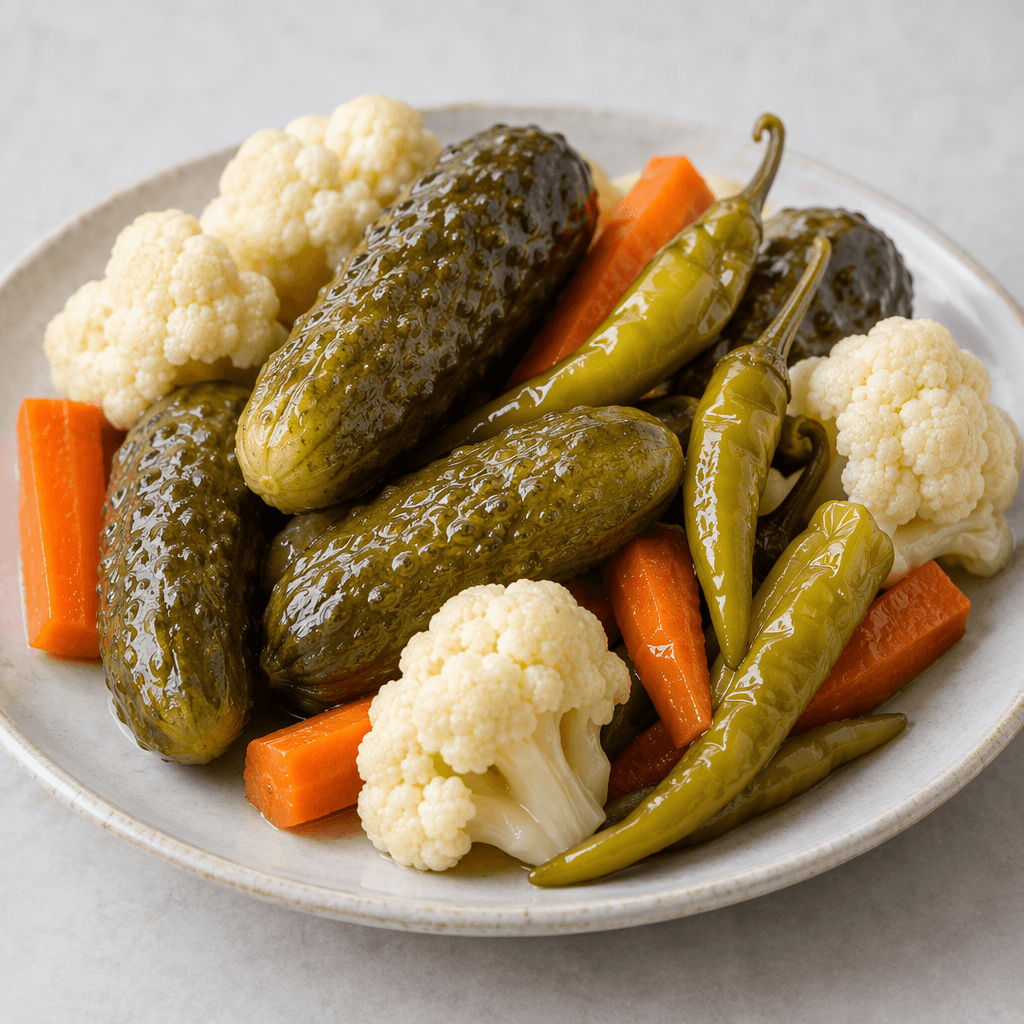
Pickles Calories
Low calorie, probiotic, salty, fermented cucumber
In season: Summer · Autumn · Winter
CALORIES
GI
POTASSIUM
FIBER
Quick answer
1 piece (medium) of Pickles (35 g) has 4 calories. That works out to 12 calories per 100 g. It contains 0.8 g of carbs, 0.1 g of protein, 0.1 g of fat and 0.4 g of fiber. Its 280 mg of Sodium covers 12% of the Daily Value. Its glycemic index is 15 (low), so it raises blood sugar slowly.
What is Pickles?
Pickles are cucumbers preserved in brine, vinegar, or a seasoned mixture. Brined cucumbers may ferment as they pickle; vinegar-pickled ones get their tang without fermentation. The result is usually crisp, with a sharp, salty-sour flavour, though the seasoning and degree of sourness vary.
Across the English-speaking world, pickles are a familiar addition to burgers and sandwiches, and they can also be served alongside a meal or on a snack board. They are low in calories and provide a little fibre, but can be quite salty. If you want a milder bite, briefly rinse them before serving; naturally fermented, unpasteurised pickles may contain live cultures.
Pickles Nutrition Facts
Selected: 100 g
12
KCAL / 100G
Carbs
2.3g
· 1% DV
Protein
0.3g
· 1% DV
Fat
0.2g
· 0% DV
Fiber
1g
· 4% DV
DV is the share of the daily value covered, on a 2,000 kcal reference diet.
Calories come from: Carbs 75% · Protein 10% · Fat 15%
Pickles Vitamins & Minerals
Vitamins
Vitamin K
16µg · 13% DV
B5
0.2mg · 4% DV
B1
0.02mg · 2% DV
B2
0.02mg · 2% DV
Minerals
Sodium
800mg · 35% DV
Phosphorus
18mg · 3% DV
Magnesium
8mg · 2% DV
Potassium ⭐
70mg · 2% DV
How Nutritious Is Pickles?
Nutrient density
Medium
How many vitamins, minerals and how much fiber this food carries per calorie. A high score means a lot of nutrition for few calories.
Satiety score
Medium
An EatBetter score computed from fiber, protein and calorie density. A high score means staying full longer on the same calories.
Both scores are calculated per 100 g and do not change with the selected portion. The satiety score is EatBetter's own calculation, not a clinical measure.
Pickles Glycemic Index
GLYCEMIC INDEX
GLYCEMIC LOAD
Accounts for portion size — a more realistic measure than GI alone.
How to Burn Off Pickles
To burn the 12 calories in 100 g:
🚶
Walking (5 km/h)
🏃
Running (8 km/h)
🚴
Cycling
🏊
Swimming
Times are calculated with the MET equation for a 70 kg adult. Actual burn varies with your weight, age and pace.
Is Pickles Processed?
NOVA 3
Processed
1. Unprocessed
2. Minimally Processed
3. Processed
4. Ultra-Processed
NOVA classifies foods into 4 groups by industrial processing. NOVA 1 (unprocessed) is the healthiest.
Does Pickles Contain Allergens?
No known major allergens
Which Diets Is Pickles Good For?
Vegan
✓ Suitable
Vegetarian
✓ Suitable
Gluten-Free
✓ Suitable
Dairy-Free
— Not suitable
Mediterranean
✓ Suitable
Paleo
✓ Suitable
Whole30
— Not suitable
DASH
— Not suitable
Keto
— Not suitable
Low FODMAP
— Not suitable
Pickles Fat Profile
SATURATED
0.03g
MONOUNSATURATED
0.02g
POLYUNSATURATED
0.03g
Omega 6:3 ratio 2:1
Below the ideal 4:1 — a good omega balance.
Compare Pickles
Foods Similar to Pickles
Frequently Asked Questions About Pickles
Are pickles fermented or made with vinegar?
Pickles can be made either way. Fermented cucumber pickles sour as naturally occurring bacteria act on salted brine, while quick vinegar pickles get their tang from added vinegar. Check how the pickles were made before assuming they contain live cultures.
Why are pickles cloudy?
Cloudy brine can be normal in fermented pickles because fermentation leaves microorganisms and sediment in the liquid. It is not a safety guarantee, though: discard the whole jar if the pickles smell foul, feel slimy, or show fuzzy or colored mold.
Why are pickles soft instead of crunchy?
Pickles often turn soft when the cucumbers were overripe, fermentation was too warm, or the brine had too little salt. Start with fresh, firm cucumbers, follow a tested brine recipe, and refrigerate fermented pickles once they reach the sourness you want.
Can you drink pickle juice?
Yes, you can drink pickle juice, but it can contain a lot of sodium. Keep the amount small, especially if you have been told to limit salt, and do not use it as a substitute for water to rehydrate.
Do pickles need to be refrigerated after opening?
Yes, refrigerate opened pickles and keep them covered by their brine. Use a clean utensil to take them out, and close the jar promptly. Refrigeration slows spoilage and helps fermented pickles retain their texture and flavor.
How long do pickles last after opening?
Opened pickles can keep for a while when refrigerated, sealed, and submerged in brine, but the exact shelf life varies by product and preparation. Follow the package’s storage guidance, and throw them away if you notice mold, a foul smell, or a slimy texture.
Are pickles probiotic?
Some fermented pickles may contain live microorganisms, but vinegar-pickled or heat-pasteurized pickles generally do not provide live cultures. Fermentation alone does not guarantee probiotics remain in the jar, so the preparation and processing matter.
Why are pickles hollow inside?
Pickles can develop hollow centers when cucumbers are overripe or have been stored too long before pickling; warm, rapid fermentation can also contribute. Choose small, firm cucumbers and ferment them in a cool place for a better chance of a solid, crisp center.
Can you freeze pickles?
Yes, pickles can be frozen, but freezing usually makes cucumber pieces softer and less crisp after thawing. Freeze them only if you plan to use them in a cooked dish or do not mind a softer texture; keep the brine in a freezer-safe container.
Are pickles bad for high blood pressure?
Pickles can make it harder to manage high blood pressure because their brine is often high in sodium. A small serving may fit some people’s eating plan, but if you have a prescribed sodium limit, ask your clinician how pickles fit it.
Have another question about Pickles?
Ask the AI nutrition coach — calories, portions, alternatives and more, answered in seconds in the app.

Scan calories with your camera
Instant AI nutrition analysis

Nutrition data compiled from USDA FoodData Central and scientific sources.