

Ready & Packaged Foods
All →Vegetables & Legumes
All →Desserts & Confectionery
All →Meat & Protein
All →Grains & Bakery
All →Beverages
All →Milk & Dairy
All →

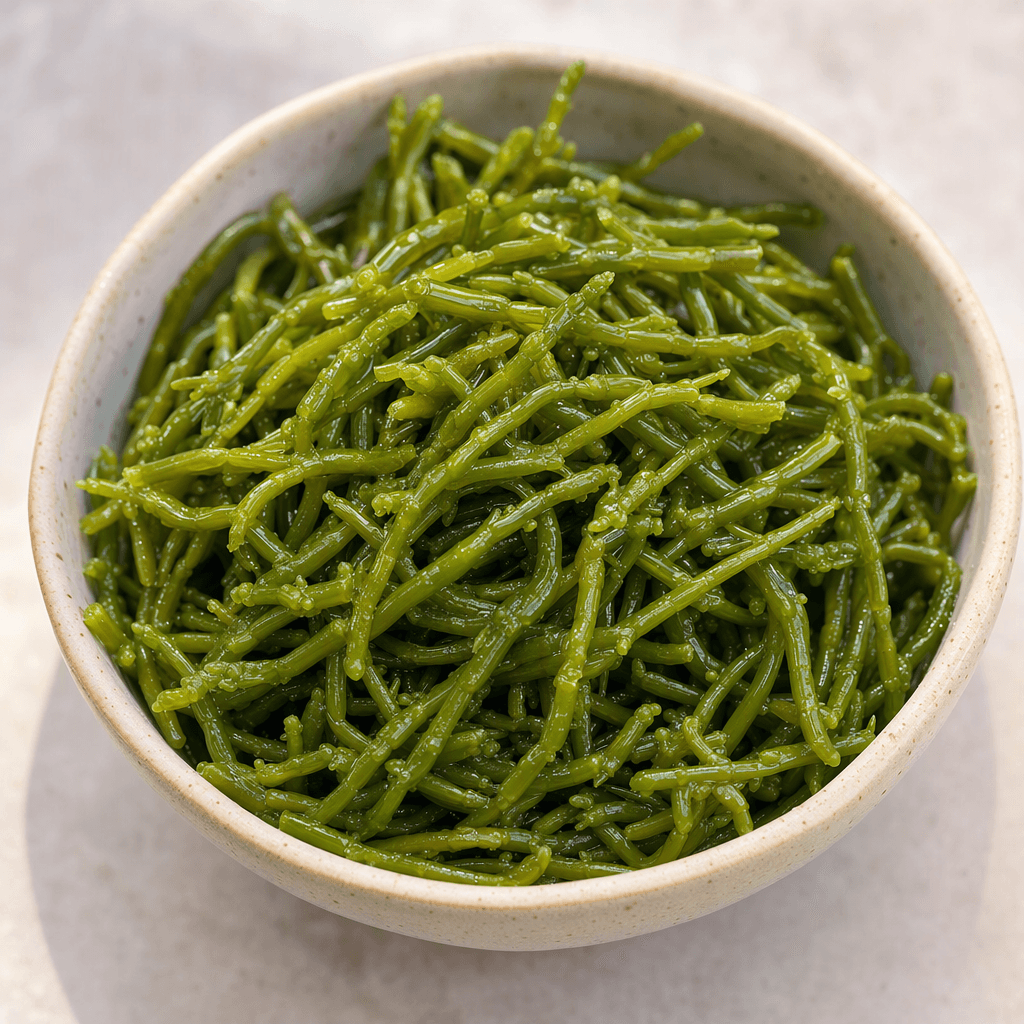
Pickled samphire Calories
Very low-calorie pickled sea vegetable with high sodium and some fiber
CALORIES
GI
POTASSIUM
FIBER
Quick answer
2 tablespoon (chopped) of Pickled samphire (30 g) has 5 calories. That works out to 18 calories per 100 g. It contains 0.8 g of carbs, 0.5 g of protein, 0.1 g of fat and 0.6 g of fiber. Its 435 mg of Sodium covers 19% of the Daily Value. Its glycemic index is 15 (low), so it raises blood sugar slowly.
What is Pickled samphire?
Pickled samphire is made from the slender, fleshy stems of samphire, a salt-tolerant coastal plant, preserved in brine or vinegar. Pickling styles vary, but garlic, lemon or herbs may be added. In Mediterranean coastal cooking, samphire is also served fresh or lightly cooked; the pickled version brings a sharper, saltier note to the table.
Its crisp, slightly succulent bite and tang make it a natural fit for an antipasto or small side dish, especially alongside fish, grilled vegetables or other savoury plates. It is very low in calories and provides some fibre, but can be high in sodium. Drain it well, or rinse it briefly if you prefer a milder saltiness.
Pickled samphire Nutrition Facts
Selected: 100 g
18
KCAL / 100G
Carbs
2.8g
· 1% DV
Protein
1.5g
· 3% DV
Fat
0.3g
· 0% DV
Fiber
1.9g
· 7% DV
DV is the share of the daily value covered, on a 2,000 kcal reference diet.
Calories come from: Carbs 56% · Protein 30% · Fat 14%
Pickled samphire Vitamins & Minerals
Vitamins
Vitamin K
28µg · 23% DV
Vitamin C
6mg · 7% DV
Folate
18µg · 5% DV
B2
0.05mg · 4% DV
Minerals
Sodium
1450mg · 63% DV
Iodine
35µg · 23% DV
Iron
2mg · 11% DV
Calcium
65mg · 7% DV
How Nutritious Is Pickled samphire?
Nutrient density
High
How many vitamins, minerals and how much fiber this food carries per calorie. A high score means a lot of nutrition for few calories.
Satiety score
Medium
An EatBetter score computed from fiber, protein and calorie density. A high score means staying full longer on the same calories.
Both scores are calculated per 100 g and do not change with the selected portion. The satiety score is EatBetter's own calculation, not a clinical measure.
Pickled samphire Glycemic Index
GLYCEMIC INDEX
GLYCEMIC LOAD
Accounts for portion size — a more realistic measure than GI alone.
How to Burn Off Pickled samphire
To burn the 18 calories in 100 g:
🚶
Walking (5 km/h)
🏃
Running (8 km/h)
🚴
Cycling
🏊
Swimming
Times are calculated with the MET equation for a 70 kg adult. Actual burn varies with your weight, age and pace.
Is Pickled samphire Processed?
NOVA 3
Processed
1. Unprocessed
2. Minimally Processed
3. Processed
4. Ultra-Processed
NOVA classifies foods into 4 groups by industrial processing. NOVA 1 (unprocessed) is the healthiest.
Does Pickled samphire Contain Allergens?
No known major allergens
Which Diets Is Pickled samphire Good For?
Vegan
✓ Suitable
Vegetarian
✓ Suitable
Gluten-Free
✓ Suitable
Dairy-Free
— Not suitable
Mediterranean
✓ Suitable
Paleo
✓ Suitable
Whole30
— Not suitable
DASH
— Not suitable
Keto
— Not suitable
Low FODMAP
— Not suitable
Pickled samphire Fat Profile
SATURATED
0.05g
MONOUNSATURATED
0.03g
POLYUNSATURATED
0.08g
Omega 6:3 ratio 1.7:1
Below the ideal 4:1 — a good omega balance.
Compare Pickled samphire
Foods Similar to Pickled samphire
Frequently Asked Questions About Pickled samphire
What is pickled samphire?
Pickled samphire is samphire preserved in a salty, acidic brine, often made with vinegar. It has a crisp, briny, tangy taste and is commonly served as a condiment or side rather than as a fresh vegetable.
How do you eat pickled samphire?
Eat pickled samphire cold as a side, appetizer, or garnish. Drain it first, then try it with olive oil, lemon, or chopped herbs; taste it before adding salt, since the brine can already make it quite salty.
Do you need to rinse pickled samphire before eating it?
No, pickled samphire does not need rinsing for safety if it has been stored properly. Rinse or briefly soak it only if the brine tastes too salty or sharp, then drain it well so it does not water down a dish.
Can you cook with pickled samphire?
Yes, you can add pickled samphire to salads, sandwiches, potato dishes, or grain bowls. Its sharp, salty flavor works best as a finishing ingredient; add it near the end of cooking so it keeps its texture and does not over-season the dish.
How do you make pickled samphire at home?
To make pickled samphire, clean and briefly blanch the stems, then pack them into a clean jar and cover them with a vinegar-and-water brine seasoned with salt. Keep the stems submerged and refrigerate homemade pickles unless you are following a tested canning method.
How should you store pickled samphire after opening?
Store opened pickled samphire in the refrigerator in a tightly closed container, with the stems covered by brine. Use a clean utensil each time you serve it, and follow the product’s storage instructions if it is commercially packaged.
Is pickled samphire the same as fresh samphire?
No, pickled samphire is fresh samphire preserved in brine, so it tastes more acidic and salty and has a different texture. Fresh samphire is usually briefly cooked or dressed, while pickled samphire can be served straight from its container.
What does pickled samphire taste like?
Pickled samphire tastes salty, tangy, and distinctly briny, with a crisp texture when it has been prepared well. Its flavor can vary with the vinegar and brine, so pair it with mild foods if you want its sharpness to stand out less.
What goes well with pickled samphire?
Pickled samphire pairs especially well with fish, seafood, grilled vegetables, and rich or oily dishes. Its acidity cuts through richer flavors, while its saltiness means it is best paired with foods that have not been heavily salted.
Is pickled samphire high in sodium?
Yes, pickled samphire can be high in sodium because it is preserved in salty brine. If you need to limit sodium, have a smaller serving or rinse it before eating; people following a medically advised restriction should ask their clinician about suitable portions.
Have another question about Pickled samphire?
Ask the AI nutrition coach — calories, portions, alternatives and more, answered in seconds in the app.

Scan calories with your camera
Instant AI nutrition analysis

Nutrition data compiled from USDA FoodData Central and scientific sources.