

Ready & Packaged Foods
All →Vegetables & Legumes
All →Desserts & Confectionery
All →Meat & Protein
All →Grains & Bakery
All →Beverages
All →Milk & Dairy
All →

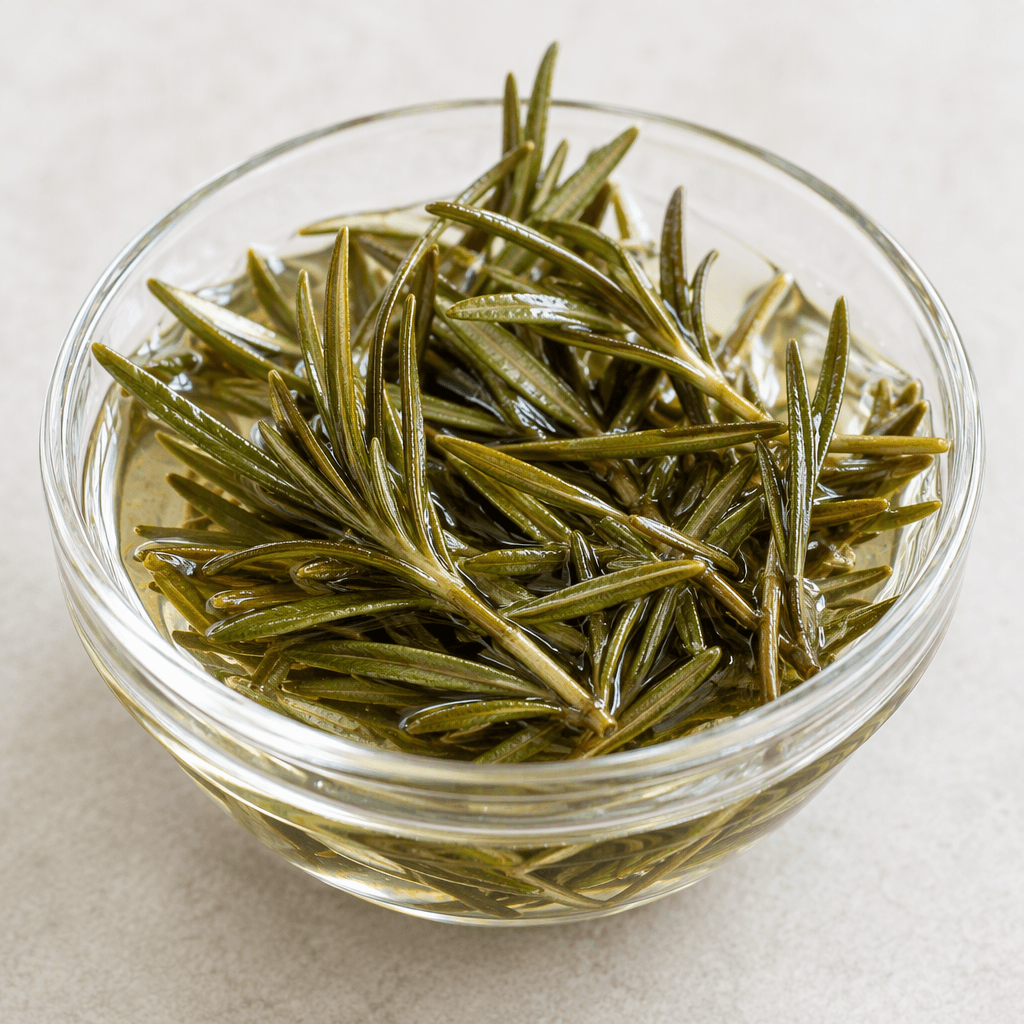
Pickled Rosemary Calories
Aromatic, antioxidant, low calorie, probiotic effect
In season: Spring · Summer · Autumn · Winter
CALORIES
GI
POTASSIUM
FIBER
Quick answer
1 tablespoon (medium) of Pickled Rosemary (10 g) has 4 calories. That works out to 35 calories per 100 g. It contains 0.6 g of carbs, 0.1 g of protein, 0.1 g of fat and 0.4 g of fiber. Its 13.1 µg of Vitamin K covers 11% of the Daily Value. Its glycemic index is 15 (low), so it raises blood sugar slowly.
What is Pickled Rosemary?
Pickled Rosemary is made by preserving rosemary sprigs or needle-like leaves in brine. Rosemary is a fragrant Mediterranean herb, and pickling gives its piney, resinous aroma a salty, tangy edge while the leaves retain some bite.
It is not an everyday pickle in most kitchens, so use it more like a seasoning than a side dish. A little works well with grilled vegetables, fish or meat, and can add a sharp herbal note to salads, olives or a cheese board. It is low in calories, with 3.8 g of fibre per 100 g. Drain it before serving if you want to keep the brine from making a dish too salty; its concentrated flavour means a small amount goes a long way.
Pickled Rosemary Nutrition Facts
Selected: 100 g
35
KCAL / 100G
Carbs
6.2g
· 2% DV
Protein
1.3g
· 3% DV
Fat
0.6g
· 1% DV
Fiber
3.8g
· 14% DV
DV is the share of the daily value covered, on a 2,000 kcal reference diet.
Calories come from: Carbs 70% · Protein 15% · Fat 15%
Pickled Rosemary Vitamins & Minerals
Vitamins
Vitamin K
131µg · 109% DV
Vitamin C
21.8mg · 24% DV
B6
0.34mg · 20% DV
Vitamin E
2.8mg · 19% DV
Minerals
Sodium
1100mg · 48% DV
Manganese
1mg · 43% DV
Iron
7mg · 39% DV
Calcium
317mg · 32% DV
How Nutritious Is Pickled Rosemary?
Nutrient density
High
How many vitamins, minerals and how much fiber this food carries per calorie. A high score means a lot of nutrition for few calories.
Satiety score
Medium
An EatBetter score computed from fiber, protein and calorie density. A high score means staying full longer on the same calories.
Both scores are calculated per 100 g and do not change with the selected portion. The satiety score is EatBetter's own calculation, not a clinical measure.
Pickled Rosemary Glycemic Index
GLYCEMIC INDEX
GLYCEMIC LOAD
Accounts for portion size — a more realistic measure than GI alone.
How to Burn Off Pickled Rosemary
To burn the 35 calories in 100 g:
🚶
Walking (5 km/h)
🏃
Running (8 km/h)
🚴
Cycling
🏊
Swimming
Times are calculated with the MET equation for a 70 kg adult. Actual burn varies with your weight, age and pace.
Is Pickled Rosemary Processed?
NOVA 3
Processed
1. Unprocessed
2. Minimally Processed
3. Processed
4. Ultra-Processed
NOVA classifies foods into 4 groups by industrial processing. NOVA 1 (unprocessed) is the healthiest.
Does Pickled Rosemary Contain Allergens?
No known major allergens
Which Diets Is Pickled Rosemary Good For?
Vegan
✓ Suitable
Vegetarian
✓ Suitable
Gluten-Free
✓ Suitable
Dairy-Free
— Not suitable
Mediterranean
✓ Suitable
Paleo
✓ Suitable
Whole30
— Not suitable
DASH
— Not suitable
Keto
✓ Suitable
Low FODMAP
— Not suitable
Pickled Rosemary Fat Profile
SATURATED
0.17g
MONOUNSATURATED
0.09g
POLYUNSATURATED
0.11g
Omega 6:3 ratio 2.7:1
Below the ideal 4:1 — a good omega balance.
Compare Pickled Rosemary
Foods Similar to Pickled Rosemary
Frequently Asked Questions About Pickled Rosemary
What is pickled rosemary?
Pickled rosemary is fresh rosemary preserved in a brine, usually made with vinegar or salt water. It keeps rosemary’s pine-like aroma while adding a sour, salty note, and the exact flavor depends on the pickling method and seasonings.
How do you use pickled rosemary?
Use pickled rosemary as a sharp, savory garnish or chop its leaves into dishes. It pairs well with roasted vegetables, grilled meat or fish, salads, and sandwiches; start with a small amount because its concentrated flavor can take over.
How do you make pickled rosemary?
To make pickled rosemary, cover clean fresh sprigs with vinegar brine or a salt-water brine in a clean jar. Recipes differ, and shelf-stable canning requires a tested method; refrigerate homemade batches unless the recipe specifically provides safe canning instructions.
What does pickled rosemary taste like?
Pickled rosemary tastes herbal and resinous, with a tangy, salty edge from the brine. Vinegar-pickled versions are often sharply sour, while fermented versions can develop a rounder acidity; garlic, peppercorns, and other spices change the flavor.
Is pickled rosemary fermented or made with vinegar?
Pickled rosemary can be either vinegar-pickled or fermented in salt water. Vinegar supplies the sourness immediately, whereas fermentation develops acidity over time through microbial activity; the word “pickled” alone does not tell you which method was used.
How should you store pickled rosemary after opening?
Store opened pickled rosemary in the refrigerator in a tightly closed container, keeping the sprigs submerged in brine. Use a clean utensil each time, and discard it if you see mold or notice an unusual odor or texture.
Can you eat the stems in pickled rosemary?
You can eat the tender leaves of pickled rosemary, but its woody stems may be tough and unpleasant to chew. Strip off the leaves for eating, or add a whole sprig to a dish for flavor and remove the stem before serving.
Is pickled rosemary a probiotic food?
Pickled rosemary is not automatically probiotic. A naturally fermented, unpasteurized version may contain live microbes, but vinegar-pickled or heat-treated rosemary generally should not be assumed to provide live cultures.
Can you cook with pickled rosemary?
Yes, pickled rosemary can be cooked with, but prolonged heat may dull its distinctive aroma. Add chopped leaves near the end of cooking for a brighter flavor, or simmer a whole sprig briefly and remove it before serving.
Can you make pickled rosemary with dried rosemary?
Fresh rosemary sprigs are usually better for pickling than dried rosemary. Dried leaves can absorb brine unevenly and become soft or gritty, while fresh, clean sprigs keep their shape and are easier to lift out and use.
Have another question about Pickled Rosemary?
Ask the AI nutrition coach — calories, portions, alternatives and more, answered in seconds in the app.

Scan calories with your camera
Instant AI nutrition analysis

Nutrition data compiled from USDA FoodData Central and scientific sources.