

Ready & Packaged Foods
All →Vegetables & Legumes
All →Desserts & Confectionery
All →Meat & Protein
All →Grains & Bakery
All →Beverages
All →Milk & Dairy
All →

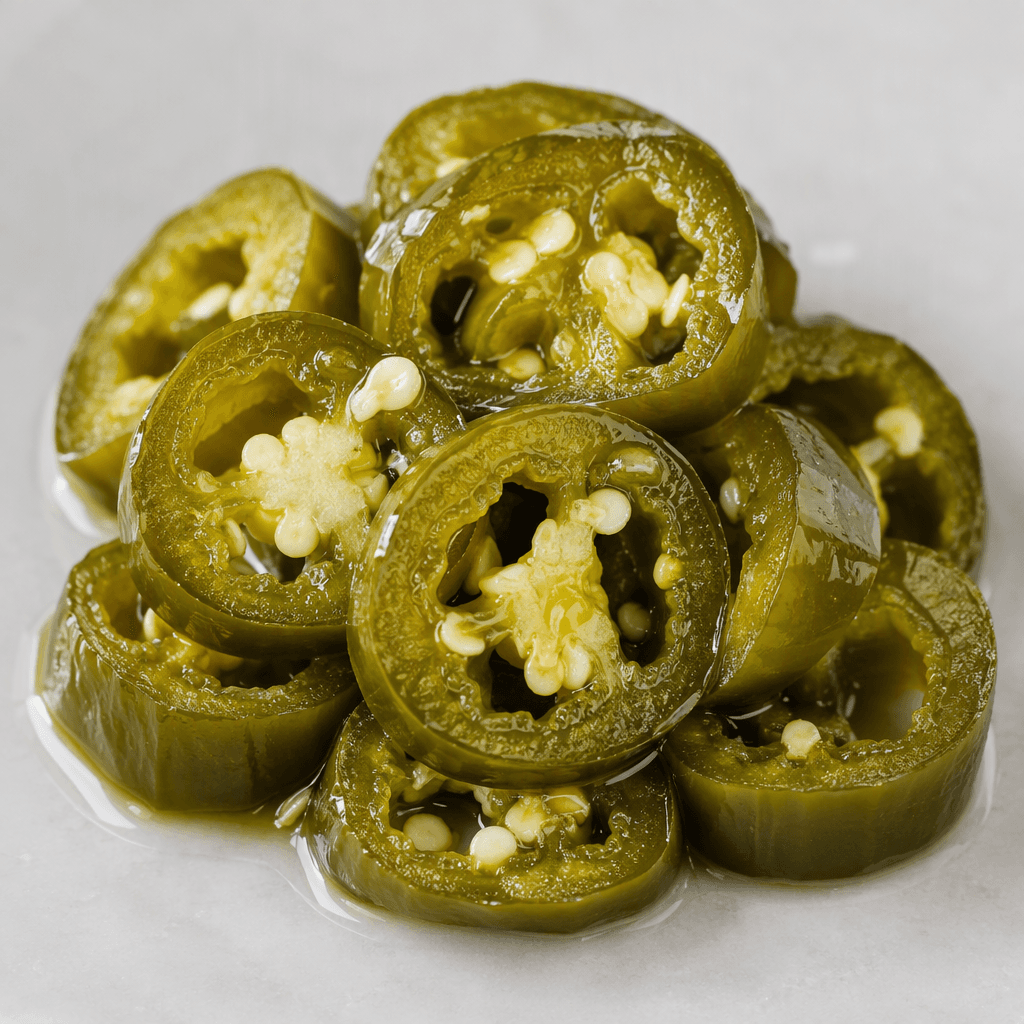
Pickled jalapeño pepper Calories
Spicy, low calorie, source of vitamin C, potential probiotics
In season: Summer · Autumn
CALORIES
GI
POTASSIUM
FIBER
Quick answer
6 slice (medium) of Pickled jalapeño pepper (30 g) has 8 calories. That works out to 27 calories per 100 g. It contains 1.7 g of carbs, 0.3 g of protein, 0.1 g of fat and 0.8 g of fiber. Its 204 mg of Sodium covers 9% of the Daily Value. Its glycemic index is 15 (low), so it raises blood sugar slowly.
What is Pickled jalapeño pepper?
Pickled jalapeño pepper is made by preserving jalapeño chilies in vinegar or brine, a familiar condiment in Mexican cooking. The peppers are often sliced into glossy rings, with their seeds left in for extra heat. Their tangy bite and slight crunch enliven tacos, nachos, burgers, sandwiches and beans; they can also be served alongside grilled food. For English-speaking home cooks, a few slices add plenty of sharp, spicy flavour without much energy, along with some fibre and vitamin C. Start with a small amount if you are unsure about the heat, or serve the rings on the side so everyone can choose how much to add.
Pickled jalapeño pepper Nutrition Facts
Selected: 100 g
27
KCAL / 100G
Carbs
5.5g
· 2% DV
Protein
1g
· 2% DV
Fat
0.3g
· 0% DV
Fiber
2.6g
· 9% DV
DV is the share of the daily value covered, on a 2,000 kcal reference diet.
Calories come from: Carbs 77% · Protein 14% · Fat 9%
Pickled jalapeño pepper Vitamins & Minerals
Vitamins
Vitamin C
25mg · 28% DV
B6
0.15mg · 9% DV
Vitamin A
60µg · 7% DV
Vitamin K
7µg · 6% DV
Minerals
Sodium
680mg · 30% DV
Magnesium
13mg · 3% DV
Phosphorus
22mg · 3% DV
Potassium ⭐
110mg · 3% DV
How Nutritious Is Pickled jalapeño pepper?
Nutrient density
Medium
How many vitamins, minerals and how much fiber this food carries per calorie. A high score means a lot of nutrition for few calories.
Satiety score
Medium
An EatBetter score computed from fiber, protein and calorie density. A high score means staying full longer on the same calories.
Both scores are calculated per 100 g and do not change with the selected portion. The satiety score is EatBetter's own calculation, not a clinical measure.
Pickled jalapeño pepper Glycemic Index
GLYCEMIC INDEX
GLYCEMIC LOAD
Accounts for portion size — a more realistic measure than GI alone.
How to Burn Off Pickled jalapeño pepper
To burn the 27 calories in 100 g:
🚶
Walking (5 km/h)
🏃
Running (8 km/h)
🚴
Cycling
🏊
Swimming
Times are calculated with the MET equation for a 70 kg adult. Actual burn varies with your weight, age and pace.
Is Pickled jalapeño pepper Processed?
NOVA 3
Processed
1. Unprocessed
2. Minimally Processed
3. Processed
4. Ultra-Processed
NOVA classifies foods into 4 groups by industrial processing. NOVA 1 (unprocessed) is the healthiest.
Does Pickled jalapeño pepper Contain Allergens?
No known major allergens
Which Diets Is Pickled jalapeño pepper Good For?
Vegan
✓ Suitable
Vegetarian
✓ Suitable
Gluten-Free
✓ Suitable
Dairy-Free
— Not suitable
Mediterranean
✓ Suitable
Paleo
✓ Suitable
Whole30
— Not suitable
DASH
— Not suitable
Keto
— Not suitable
Low FODMAP
— Not suitable
Pickled jalapeño pepper Fat Profile
SATURATED
0.04g
MONOUNSATURATED
0.02g
POLYUNSATURATED
0.06g
Omega 6:3 ratio 5:1
Above the ideal 4:1 (5:1).
Compare Pickled jalapeño pepper
Foods Similar to Pickled jalapeño pepper
Frequently Asked Questions About Pickled jalapeño pepper
What is pickled jalapeño pepper made of?
Pickled jalapeño pepper is made from sliced or whole jalapeños preserved in a brine, commonly containing vinegar, water, and salt. Garlic, sugar, or spices may also be added, depending on the recipe or product.
Is pickled jalapeño pepper hotter than fresh jalapeño?
Not necessarily; pickling does not reliably make jalapeños hotter than fresh ones. Heat varies by pepper, and seeds and the pale inner ribs can contribute to the burn. Rinsing the slices or removing the seeds can make them milder.
How do you make pickled jalapeño pepper at home?
To make pickled jalapeño pepper, pour a hot mixture of vinegar, water, and salt over sliced peppers in a clean jar. Refrigerate the jar rather than storing this quick-pickle recipe at room temperature.
Does pickled jalapeño pepper need to be refrigerated after opening?
Yes, refrigerate pickled jalapeño pepper after opening. Keep the slices covered with brine and use a clean utensil to take them out; this helps preserve their quality and reduces the chance of contamination.
What do you eat pickled jalapeño pepper with?
Pickled jalapeño pepper goes well with tacos, nachos, burgers, sandwiches, and pizza. Its tangy heat also adds contrast to eggs, beans, grain bowls, and creamy dips.
Is pickled jalapeño pepper fermented or made with vinegar?
Most packaged pickled jalapeño pepper is acidified with vinegar rather than fermented. Naturally fermented versions are different, and pasteurization can eliminate live cultures, so not every jar provides probiotics.
Can you reduce the heat of pickled jalapeño pepper?
Yes, you can reduce the heat of pickled jalapeño pepper by rinsing the slices and removing their seeds and inner ribs. Pairing them with yogurt, cheese, or avocado can also soften the spicy sensation.
How long does pickled jalapeño pepper last after opening?
Opened pickled jalapeño pepper usually keeps its quality for weeks when refrigerated, sealed, and submerged in brine. Discard it if you notice mold, an unusual smell, or a marked change in appearance; homemade batches vary with preparation and storage.
Can you freeze pickled jalapeño pepper?
Yes, you can freeze pickled jalapeño pepper, but thawed slices may be softer and less crisp. Freeze small portions in an airtight container and use them in cooked dishes where texture matters less.
Why is pickled jalapeño pepper sometimes not crunchy?
Pickled jalapeño pepper can lose its crunch when slices are thin, softened by heat during processing, or stored for a long time. For a crisper homemade batch, use fresh, firm peppers and avoid overheating them in the brine.
Have another question about Pickled jalapeño pepper?
Ask the AI nutrition coach — calories, portions, alternatives and more, answered in seconds in the app.

Scan calories with your camera
Instant AI nutrition analysis

Nutrition data compiled from USDA FoodData Central and scientific sources.