

Ready & Packaged Foods
All →Vegetables & Legumes
All →Desserts & Confectionery
All →Meat & Protein
All →Grains & Bakery
All →Beverages
All →Milk & Dairy
All →

Pickle juice Calories
Pickle juice
In season: Spring · Summer · Autumn · Winter
CALORIES
GI
POTASSIUM
FIBER
Quick answer
1 cup (medium) of Pickle juice (240 g) has 29 calories. That works out to 12 calories per 100 g. It contains 5.3 g of carbs, 0.5 g of protein, 0.2 g of fat and 0.5 g of fiber. Its 2088 mg of Sodium covers 91% of the Daily Value. Its glycemic index is 15 (low), so it raises blood sugar slowly.
What is Pickle juice?
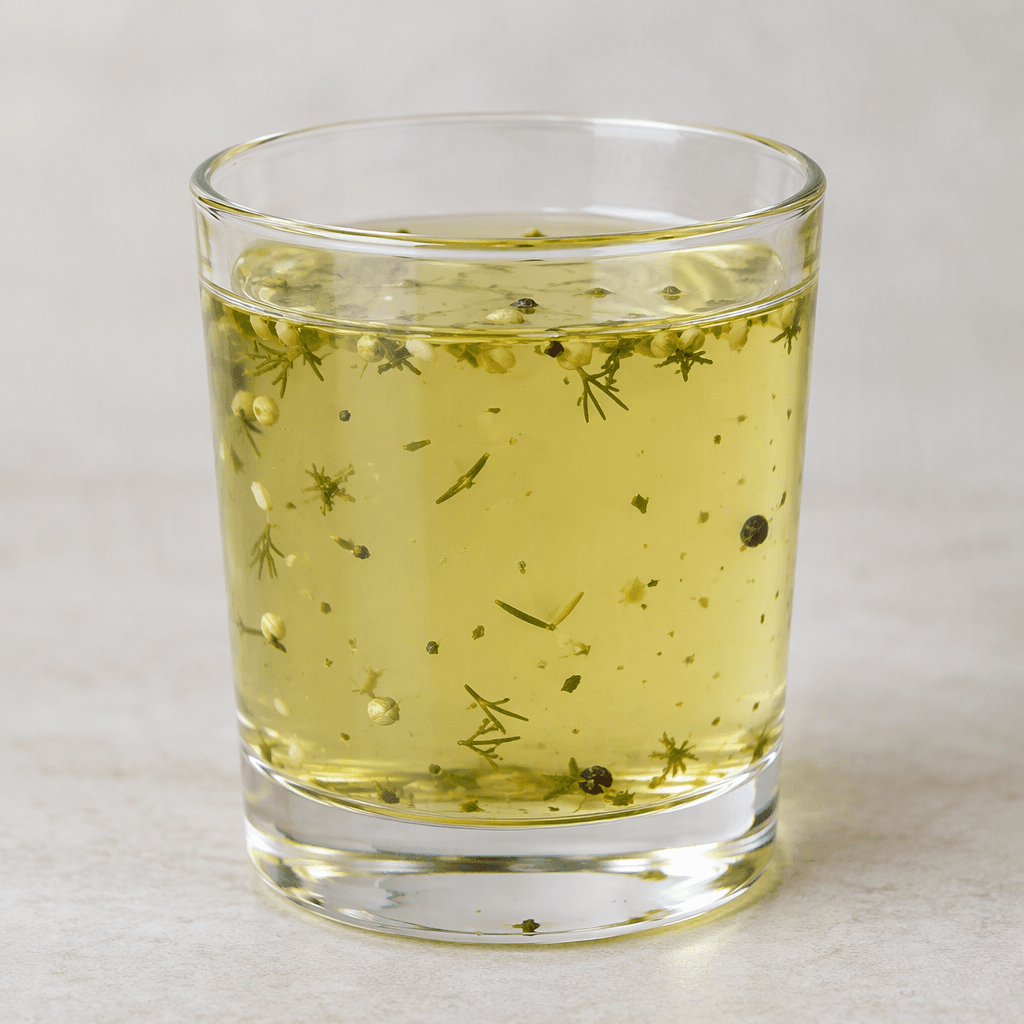
Pickle juice is the tangy brine left after vegetables—often cucumbers, but also cabbage or peppers—have soaked with salt, acidity and seasonings such as garlic and dill. Its exact flavour depends on the vegetables and whether the brine is vinegar-based or fermented.
It is commonly sipped alongside pickles or a meal, and some people use a splash to sharpen dressings, marinades or drinks. The taste is distinctly sour and salty, with a light, watery texture. It is low in calories and provides little protein or fibre, so it is more of a flavourful accompaniment than a substantial snack. If you are watching your salt intake, keep the portion modest; it pairs especially well with sandwiches and savoury foods.
Pickle juice Nutrition Facts
Selected: 100 g
12
KCAL / 100G
Carbs
2.2g
· 1% DV
Protein
0.2g
· 0% DV
Fat
0.1g
· 0% DV
Fiber
0.2g
· 1% DV
DV is the share of the daily value covered, on a 2,000 kcal reference diet.
Calories come from: Carbs 84% · Protein 8% · Fat 8%
Pickle juice Vitamins & Minerals
Vitamins
Vitamin C
1.5mg · 2% DV
Vitamin K
2µg · 2% DV
B1
0.01mg · 1% DV
B2
0.01mg · 1% DV
Minerals
Sodium
870mg · 38% DV
Calcium
10mg · 1% DV
Magnesium
4mg · 1% DV
Iodine
1µg · 1% DV
How Nutritious Is Pickle juice?
Nutrient density
Low
How many vitamins, minerals and how much fiber this food carries per calorie. A high score means a lot of nutrition for few calories.
Satiety score
Medium
An EatBetter score computed from fiber, protein and calorie density. A high score means staying full longer on the same calories.
Both scores are calculated per 100 g and do not change with the selected portion. The satiety score is EatBetter's own calculation, not a clinical measure.
Pickle juice Glycemic Index
GLYCEMIC INDEX
GLYCEMIC LOAD
Accounts for portion size — a more realistic measure than GI alone.
How to Burn Off Pickle juice
To burn the 12 calories in 100 g:
🚶
Walking (5 km/h)
🏃
Running (8 km/h)
🚴
Cycling
🏊
Swimming
Times are calculated with the MET equation for a 70 kg adult. Actual burn varies with your weight, age and pace.
Is Pickle juice Processed?
NOVA 3
Processed
1. Unprocessed
2. Minimally Processed
3. Processed
4. Ultra-Processed
NOVA classifies foods into 4 groups by industrial processing. NOVA 1 (unprocessed) is the healthiest.
Does Pickle juice Contain Allergens?
No known major allergens
Which Diets Is Pickle juice Good For?
Vegan
✓ Suitable
Vegetarian
✓ Suitable
Gluten-Free
✓ Suitable
Dairy-Free
— Not suitable
Mediterranean
✓ Suitable
Paleo
✓ Suitable
Whole30
— Not suitable
DASH
— Not suitable
Keto
— Not suitable
Low FODMAP
— Not suitable
Pickle juice Fat Profile
SATURATED
0.02g
MONOUNSATURATED
0.02g
POLYUNSATURATED
0.02g
Omega 6:3 ratio 1:1
Below the ideal 4:1 — a good omega balance.
Compare Pickle juice
Foods Similar to Pickle juice
Frequently Asked Questions About Pickle juice
Does pickle juice help with muscle cramps?
It may ease a cramp quickly for some people. Limited research suggests the sharp taste can trigger a nerve response that interrupts cramping; pickle juice is not a proven way to prevent cramps or replace fluids after exercise.
Does pickle juice help a hangover?
No, pickle juice is not a proven hangover remedy. Its salt does not reverse alcohol’s effects, and the vinegar may irritate an already unsettled stomach. Water and time are more useful; avoid more alcohol.
Is pickle juice good for hydration after a workout?
Pickle juice can provide fluid and salt, but it is very salty and is not necessary for most workouts. For ordinary exercise, water is usually enough; after prolonged, sweaty activity, choose a drink suited to replacing fluids and electrolytes.
Is pickle juice good for you?
Pickle juice can add a sharp flavor and may briefly ease cramps, but it is not a health tonic. Its main drawback is often its salt content, so drinking large amounts can add substantial sodium to your diet.
Does pickle juice contain probiotics?
Sometimes. Juice from naturally fermented, unpasteurized pickles may contain live microbes, while vinegar-pickled or heat-treated products may not. The brine’s sour taste alone does not tell you whether it has live cultures.
How much pickle juice should you drink for cramps?
There is no established amount that reliably treats cramps. Research has tested small servings, but drinking more is not proven to work better and can add a lot of salt; use water for routine hydration.
Can you use pickle juice to marinate meat?
Yes, pickle juice works as a tangy marinade, especially for chicken. Its salt and acidity season the surface, so marinate in the refrigerator and avoid adding extra salt until you taste the cooked food.
Can pickle juice make heartburn worse?
Yes, it can worsen heartburn for some people because its vinegar and acidity may aggravate reflux symptoms. If pickle juice reliably triggers burning or sour burps, avoid drinking it, especially close to bedtime.
How long does pickle juice last after opening?
Keep opened pickle juice refrigerated and use clean utensils when serving it. Follow the product’s storage directions; discard it if you see mold, notice an unusual smell, or the brine’s appearance changes unexpectedly.
How do you make pickle juice at home?
Mix water, vinegar, salt, and optional spices for a quick pickle brine, or collect the brine from a batch of pickles. For home canning or fermentation, follow a tested recipe rather than guessing the salt and vinegar amounts.
Have another question about Pickle juice?
Ask the AI nutrition coach — calories, portions, alternatives and more, answered in seconds in the app.

Scan calories with your camera
Instant AI nutrition analysis

Nutrition data compiled from USDA FoodData Central and scientific sources.