

Ready & Packaged Foods
All →Vegetables & Legumes
All →Desserts & Confectionery
All →Meat & Protein
All →Grains & Bakery
All →Beverages
All →Milk & Dairy
All →

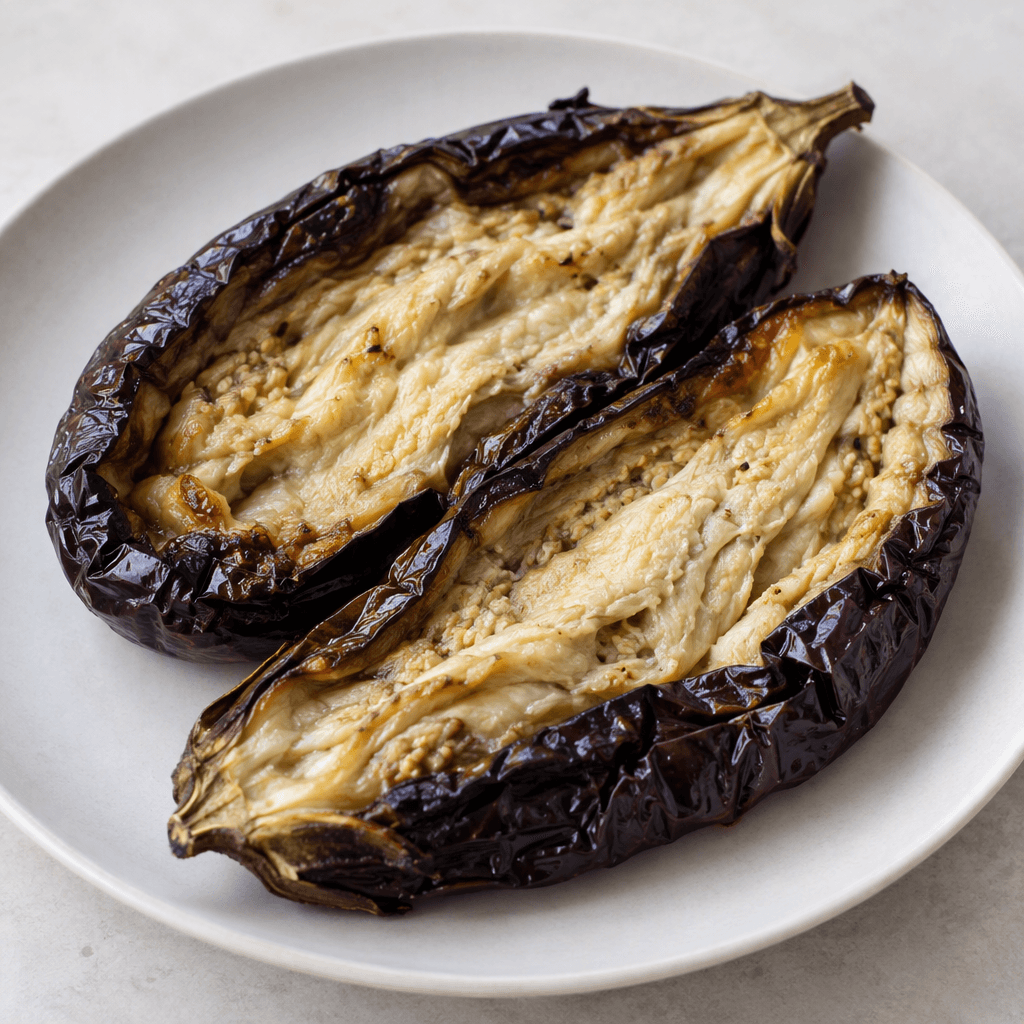
Roasted Eggplant Calories
Low calorie, high fiber, rich in antioxidants
In season: Summer · Autumn
CALORIES
GI
POTASSIUM
FIBER
Quick answer
1 piece (medium) of Roasted Eggplant (120 g) has 42 calories. That works out to 35 calories per 100 g. It contains 9.6 g of carbs, 1.2 g of protein, 0.2 g of fat and 3 g of fiber. Its 0.3 mg of Manganese covers 12% of the Daily Value. Its glycemic index is 15 (low), so it raises blood sugar slowly.
What is Roasted Eggplant?
Roasted Eggplant is made by cooking whole or halved eggplants over a flame or in an oven until the skins are dark and the flesh turns soft and creamy. It is common in Turkish and wider Mediterranean cooking, where the smoky, gently sweet flesh is often peeled, chopped and dressed with olive oil, lemon and garlic.
Serve it as a mezze, fold it into salads, or pair it with grilled foods; in Turkey, it is also mixed with yoghurt. Roasted Eggplant is a low-calorie, fibre-containing vegetable, with 35 calories per 100 g. For a lighter serving, use olive oil sparingly and add fresh herbs or chopped tomato for brightness.
Roasted Eggplant Nutrition Facts
Selected: 100 g
35
KCAL / 100G
Carbs
8g
· 3% DV
Protein
1g
· 2% DV
Fat
0.2g
· 0% DV
Fiber
2.5g
· 9% DV
DV is the share of the daily value covered, on a 2,000 kcal reference diet.
Calories come from: Carbs 85% · Protein 11% · Fat 4%
Roasted Eggplant Vitamins & Minerals
Vitamins
B5
0.28mg · 6% DV
Folate
22µg · 6% DV
B6
0.08mg · 5% DV
B2
0.05mg · 4% DV
Minerals
Potassium ⭐
120mg · 4% DV
Magnesium
14mg · 3% DV
Phosphorus
24mg · 3% DV
Calcium
9mg · 1% DV
How Nutritious Is Roasted Eggplant?
Nutrient density
Medium
How many vitamins, minerals and how much fiber this food carries per calorie. A high score means a lot of nutrition for few calories.
Satiety score
Medium
An EatBetter score computed from fiber, protein and calorie density. A high score means staying full longer on the same calories.
Both scores are calculated per 100 g and do not change with the selected portion. The satiety score is EatBetter's own calculation, not a clinical measure.
Roasted Eggplant Glycemic Index
GLYCEMIC INDEX
GLYCEMIC LOAD
Accounts for portion size — a more realistic measure than GI alone.
How to Burn Off Roasted Eggplant
To burn the 35 calories in 100 g:
🚶
Walking (5 km/h)
🏃
Running (8 km/h)
🚴
Cycling
🏊
Swimming
Times are calculated with the MET equation for a 70 kg adult. Actual burn varies with your weight, age and pace.
Is Roasted Eggplant Processed?
NOVA 2
Minimally Processed
1. Unprocessed
2. Minimally Processed
3. Processed
4. Ultra-Processed
NOVA classifies foods into 4 groups by industrial processing. NOVA 1 (unprocessed) is the healthiest.
Does Roasted Eggplant Contain Allergens?
No known major allergens
Which Diets Is Roasted Eggplant Good For?
Vegan
✓ Suitable
Vegetarian
✓ Suitable
Gluten-Free
✓ Suitable
Dairy-Free
— Not suitable
Mediterranean
✓ Suitable
Paleo
✓ Suitable
Whole30
— Not suitable
DASH
— Not suitable
Keto
✓ Suitable
Low FODMAP
— Not suitable
Roasted Eggplant Fat Profile
SATURATED
0.04g
MONOUNSATURATED
0.02g
POLYUNSATURATED
0.04g
Omega 6:3 ratio 3:1
Below the ideal 4:1 — a good omega balance.
Compare Roasted Eggplant
Foods Similar to Roasted Eggplant
Frequently Asked Questions About Roasted Eggplant
How do you make roasted eggplant?
Roasted eggplant is made by cooking whole or halved eggplants until the flesh is tender and the skin is charred. Prick whole eggplants first to let steam escape, and turn them as they cook for more even charring.
How can you tell when roasted eggplant is done?
Roasted eggplant is done when its flesh feels very soft and collapses easily under gentle pressure. The skin should be blistered or charred; if the center is still firm, keep cooking so it softens throughout.
How do you peel roasted eggplant easily?
Roasted eggplant peels more easily after it rests briefly in a covered bowl. Trapped steam loosens the charred skin from the flesh. Peel it while warm, using tongs if needed, and avoid rinsing away its smoky flavor.
Can you freeze roasted eggplant?
Yes, roasted eggplant freezes well, although thawed flesh will be softer. Let it cool, peel it, and freeze it in airtight portions. Thaw it in the refrigerator and use it in dips, sauces, or cooked dishes rather than expecting a firm texture.
How long does roasted eggplant last in the fridge?
Roasted eggplant keeps for about 3–4 days in a covered container in the refrigerator. Refrigerate it promptly after cooking, and discard it if it develops mold, an unpleasant smell, or a slimy texture.
Why does roasted eggplant taste bitter?
Roasted eggplant can taste bitter when the raw eggplant was overmature or naturally bitter. Charring and seasoning may soften mild bitterness, but discard the flesh if it tastes strongly unpleasant or has other signs of spoilage.
What can you make with roasted eggplant?
Roasted eggplant works well in baba ganoush, dips, salads, pasta sauces, and vegetable stews. Mash it with tahini, lemon, and garlic for a classic dip, or pair it with tomatoes and herbs for a simple side.
Can you eat the skin of roasted eggplant?
Yes, roasted eggplant skin is edible, but it is often removed because charring makes it tough or bitter. For a smoother dip, peel the eggplant; if the skin is tender and not heavily burnt, you can leave it on.
How do you stop roasted eggplant from turning brown?
To slow browning, toss peeled roasted eggplant with lemon juice and store it in an airtight container. The discoloration happens when its flesh meets air; it does not by itself mean the eggplant has spoiled.
Is roasted eggplant healthy?
Yes, roasted eggplant can be a nutritious part of a meal, especially when prepared with modest amounts of added oil. It provides fiber, and roasting keeps it tender without requiring breading or deep-frying.
Have another question about Roasted Eggplant?
Ask the AI nutrition coach — calories, portions, alternatives and more, answered in seconds in the app.

Scan calories with your camera
Instant AI nutrition analysis

Nutrition data compiled from USDA FoodData Central and scientific sources.