

Ready & Packaged Foods
All →Vegetables & Legumes
All →Desserts & Confectionery
All →Meat & Protein
All →Grains & Bakery
All →Beverages
All →Milk & Dairy
All →

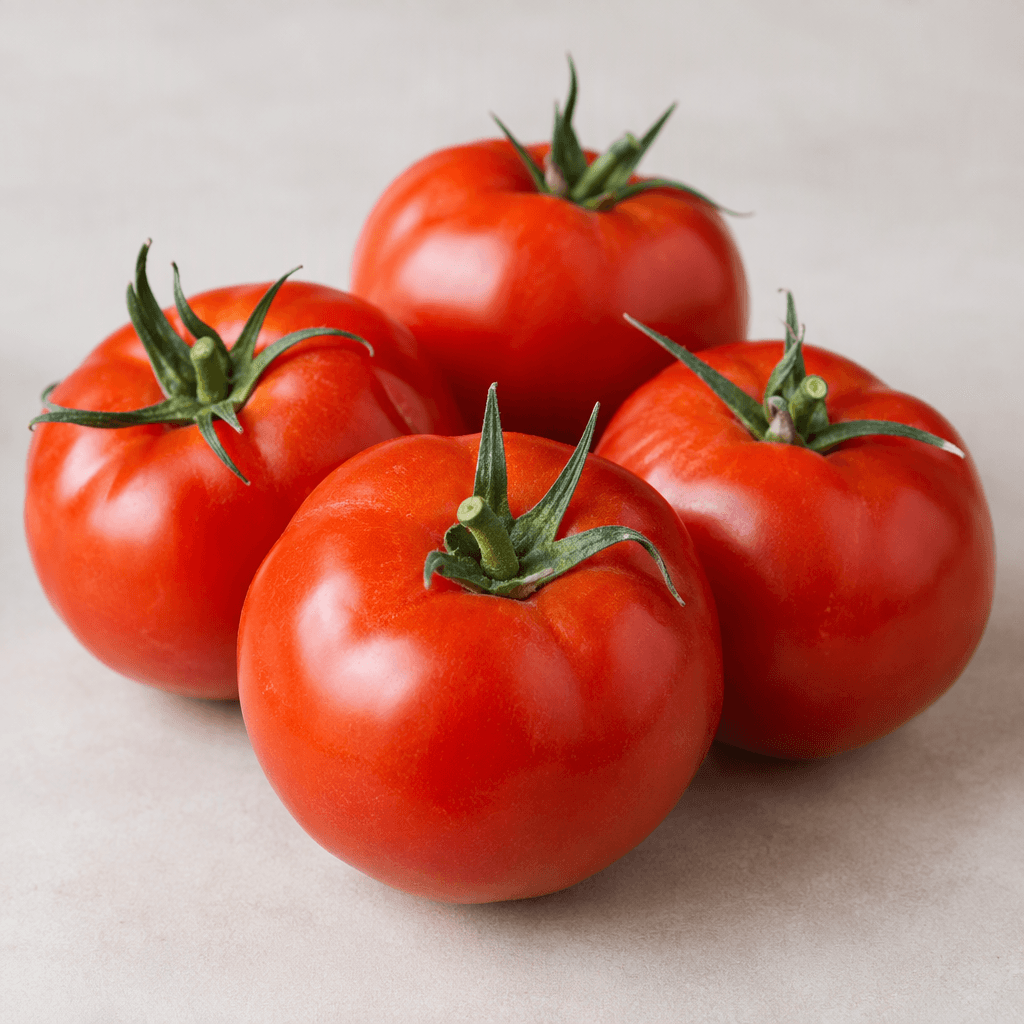
Tomatoes Calories
High in vitamin C, low calorie, antioxidant lycopene
In season: Spring · Summer · Autumn
CALORIES
GI
POTASSIUM
FIBER
Quick answer
1 piece (medium) of Tomatoes (120 g) has 22 calories. That works out to 18 calories per 100 g. It contains 4.7 g of carbs, 1.1 g of protein, 0.2 g of fat and 1.4 g of fiber. Its 16.4 mg of Vitamin C covers 18% of the Daily Value. Its glycemic index is 15 (low), so it raises blood sugar slowly.
What is Tomatoes?
Tomatoes are juicy, fleshy fruits used as vegetables in cooking. They originated in the Americas and became a staple in many cuisines, including Mediterranean cooking. Ripe tomatoes are usually red, though varieties differ in shape, colour and sweetness.
Their fresh, gently tangy flavour works in salads, sandwiches and sauces; they are also roasted, stewed or served alongside eggs. In Turkey, tomatoes commonly appear at breakfast and in dishes such as menemen, while elsewhere they are a familiar salad and cooking ingredient. They are mostly water, low in calories and provide vitamin C and lycopene. Pair them with beans, eggs or cheese for a more filling meal.
Tomatoes Nutrition Facts
Selected: 100 g
18
KCAL / 100G
Carbs
3.9g
· 1% DV
Protein
0.9g
· 2% DV
Fat
0.2g
· 0% DV
Fiber
1.2g
· 4% DV
DV is the share of the daily value covered, on a 2,000 kcal reference diet.
Calories come from: Carbs 74% · Protein 17% · Fat 9%
Tomatoes Vitamins & Minerals
Vitamins
Vitamin C
13.7mg · 15% DV
Vitamin K
7.9µg · 7% DV
Vitamin A
42µg · 5% DV
B6
0.08mg · 5% DV
Minerals
Potassium ⭐
237mg · 7% DV
Magnesium
11mg · 3% DV
Phosphorus
24mg · 3% DV
Calcium
10mg · 1% DV
How Nutritious Is Tomatoes?
Nutrient density
Very high
How many vitamins, minerals and how much fiber this food carries per calorie. A high score means a lot of nutrition for few calories.
Satiety score
Medium
An EatBetter score computed from fiber, protein and calorie density. A high score means staying full longer on the same calories.
Both scores are calculated per 100 g and do not change with the selected portion. The satiety score is EatBetter's own calculation, not a clinical measure.
Tomatoes Glycemic Index
GLYCEMIC INDEX
GLYCEMIC LOAD
Accounts for portion size — a more realistic measure than GI alone.
How to Burn Off Tomatoes
To burn the 18 calories in 100 g:
🚶
Walking (5 km/h)
🏃
Running (8 km/h)
🚴
Cycling
🏊
Swimming
Times are calculated with the MET equation for a 70 kg adult. Actual burn varies with your weight, age and pace.
Is Tomatoes Processed?
NOVA 1
Unprocessed
1. Unprocessed
2. Minimally Processed
3. Processed
4. Ultra-Processed
NOVA classifies foods into 4 groups by industrial processing. NOVA 1 (unprocessed) is the healthiest.
Does Tomatoes Contain Allergens?
No known major allergens
Which Diets Is Tomatoes Good For?
Vegan
✓ Suitable
Vegetarian
✓ Suitable
Gluten-Free
✓ Suitable
Dairy-Free
— Not suitable
Mediterranean
✓ Suitable
Paleo
✓ Suitable
Whole30
— Not suitable
DASH
— Not suitable
Keto
✓ Suitable
Low FODMAP
— Not suitable
Tomatoes Fat Profile
SATURATED
0.03g
MONOUNSATURATED
0.03g
POLYUNSATURATED
0.05g
Omega 6:3 ratio 3:1
Below the ideal 4:1 — a good omega balance.
Compare Tomatoes
Foods Similar to Tomatoes
Frequently Asked Questions About Tomatoes
Are tomatoes fruits or vegetables?
Botanically, tomatoes are fruits because they develop from a flower and contain seeds. In cooking, they are treated as vegetables because they are usually used in savoury dishes rather than desserts.
Should tomatoes be kept in the refrigerator?
Only refrigerate tomatoes once they are fully ripe and you need to slow further softening. Cold can dull their flavour and make the texture mealy, so let refrigerated tomatoes return to room temperature before eating.
Can you freeze tomatoes?
Yes, tomatoes freeze well for later cooking, though thawed tomatoes become soft and release liquid. Freeze them whole or chopped, then use them in soups, stews, and sauces rather than salads.
Do tomatoes ripen after they are picked?
Yes, mature green tomatoes can continue to ripen after picking. Leave them at room temperature away from direct sun and check them regularly; tomatoes picked too early may soften without developing much flavour.
Can you eat green tomatoes?
Yes, green tomatoes can be eaten, especially firm unripe ones used in cooked dishes. They contain more tomatine than ripe tomatoes, so avoid eating large amounts; some tomato varieties also stay green when fully ripe.
Are cooked tomatoes healthier than raw tomatoes?
Neither form is universally better. Cooking makes lycopene easier for the body to absorb, while raw tomatoes retain more heat-sensitive vitamin C. Include whichever form you enjoy, or eat both.
Do you need to peel tomatoes before eating them?
No, tomato skins are edible and do not need to be removed. Peeling is mainly useful when you want a smoother sauce or soup, since the skins can remain noticeable after cooking.
Why do tomatoes split on the plant?
Tomatoes often split when they take up water quickly after a dry spell, causing the flesh to expand faster than the skin. Keep watering consistent, and use split tomatoes promptly if they have no signs of spoilage.
Why do tomatoes sometimes taste mealy?
Tomatoes can turn mealy when they have been stored too cold, which damages their texture. Keep unripe tomatoes at room temperature and refrigerate only ripe ones when necessary; letting chilled tomatoes warm up can improve their flavour.
Can tomatoes trigger heartburn?
Yes, tomatoes can trigger heartburn in people sensitive to acidic foods. If you notice symptoms after eating them, try a smaller serving or avoid the tomato forms—such as raw tomatoes or sauce—that seem to cause the problem.
Have another question about Tomatoes?
Ask the AI nutrition coach — calories, portions, alternatives and more, answered in seconds in the app.

Scan calories with your camera
Instant AI nutrition analysis

Nutrition data compiled from USDA FoodData Central and scientific sources.