

Ready & Packaged Foods
All →Vegetables & Legumes
All →Desserts & Confectionery
All →Meat & Protein
All →Grains & Bakery
All →Beverages
All →Milk & Dairy
All →

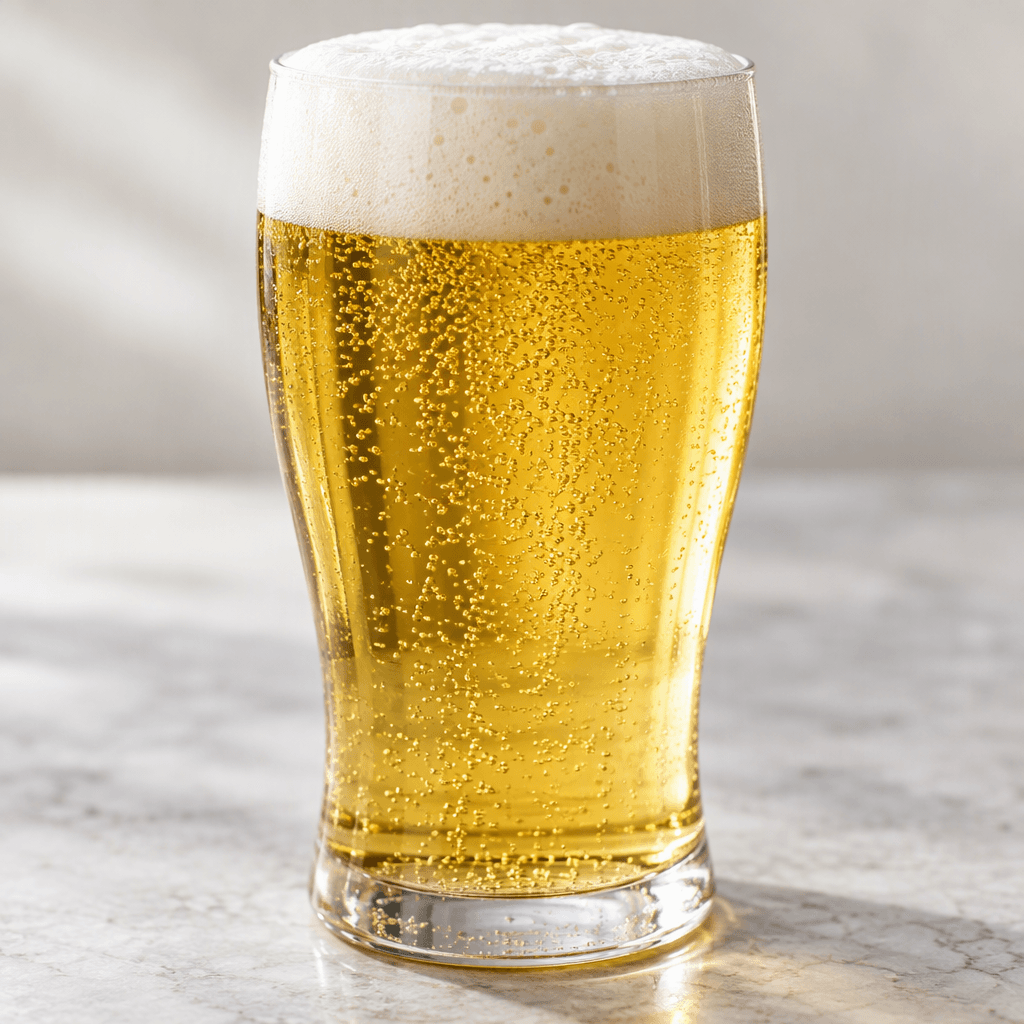
Pale Beer Calories
Light, refreshing, low to moderate alcohol beer
In season: Spring · Summer · Autumn · Winter
CALORIES
GI
POTASSIUM
FIBER
Quick answer
1 bottle (medium) of Pale Beer (330 g) has 142 calories. That works out to 43 calories per 100 g. It contains 11.9 g of carbs, 1.3 g of protein, 0 g of fat and 0 g of fiber. Its 1.7 mg of B3 covers 10% of the Daily Value. Its glycemic index is 100 (high), so it raises blood sugar quickly.
What is Pale Beer?
Pale beer is a broad term for beer brewed with lighter-coloured malts, rather than one single recipe or style. It is often clear and straw to golden in colour, with a foamy head. The flavour can be gently malty and crisp, while hop bitterness varies from mild to pronounced.
It is commonly served chilled with meals or savoury snacks, and enjoyed in casual social settings; styles and serving customs differ around the world. Pale beer provides some carbohydrate and contains alcohol, with strength varying by type. It has 43 kcal per 100 g. For a lighter pairing, serve it with grilled vegetables or a fresh salad; choose a non-alcoholic option if you want to avoid alcohol.
Pale Beer Nutrition Facts
Selected: 100 g
43
KCAL / 100G
Carbs
3.6g
· 1% DV
Protein
0.4g
· 1% DV
Fat
0g
· 0% DV
Fiber
0g
· 0% DV
DV is the share of the daily value covered, on a 2,000 kcal reference diet.
Calories come from: Carbs 90% · Protein 10% · Fat 0%
Pale Beer Vitamins & Minerals
Vitamins
B3
0.5mg · 3% DV
B1
0.02mg · 2% DV
B6
0.03mg · 2% DV
Biotin
0.5µg · 2% DV
Minerals
Phosphorus
13mg · 2% DV
Magnesium
6mg · 1% DV
Selenium
0.5µg · 1% DV
Potassium ⭐
27mg · 1% DV
How Nutritious Is Pale Beer?
Nutrient density
Low
How many vitamins, minerals and how much fiber this food carries per calorie. A high score means a lot of nutrition for few calories.
Satiety score
Medium
An EatBetter score computed from fiber, protein and calorie density. A high score means staying full longer on the same calories.
Both scores are calculated per 100 g and do not change with the selected portion. The satiety score is EatBetter's own calculation, not a clinical measure.
Pale Beer Glycemic Index
GLYCEMIC INDEX
GLYCEMIC LOAD
Accounts for portion size — a more realistic measure than GI alone.
How to Burn Off Pale Beer
To burn the 43 calories in 100 g:
🚶
Walking (5 km/h)
🏃
Running (8 km/h)
🚴
Cycling
🏊
Swimming
Times are calculated with the MET equation for a 70 kg adult. Actual burn varies with your weight, age and pace.
Is Pale Beer Processed?
NOVA 3
Processed
1. Unprocessed
2. Minimally Processed
3. Processed
4. Ultra-Processed
NOVA classifies foods into 4 groups by industrial processing. NOVA 1 (unprocessed) is the healthiest.
Does Pale Beer Contain Allergens?
Contains these allergens:
Which Diets Is Pale Beer Good For?
Vegan
✓ Suitable
Vegetarian
✓ Suitable
Gluten-Free
— Not suitable
Dairy-Free
— Not suitable
Mediterranean
✓ Suitable
Paleo
— Not suitable
Whole30
— Not suitable
DASH
— Not suitable
Keto
— Not suitable
Low FODMAP
— Not suitable
Pale Beer Fat Profile
SATURATED
0g
MONOUNSATURATED
0g
POLYUNSATURATED
0g
Compare Pale Beer
Foods Similar to Pale Beer
Frequently Asked Questions About Pale Beer
What is pale beer?
Pale beer is beer with a light gold or straw-colored appearance, rather than the deeper color of dark beer. The term describes color, not one single recipe; many pale beers are lagers, including Helles-style beers.
What does pale beer taste like?
Pale beer often tastes crisp and refreshing, with mild malt notes and less roasted flavor than dark beer. A Helles-style pale lager can have a soft, bready malt character, while bitterness varies by style.
Is pale beer the same as pale ale?
No, pale beer is a broad description of color, while pale ale is a specific ale style. A pale beer can be a lager, such as Helles, so not every pale beer is a pale ale.
Is pale beer a lager?
Often, but not always. Many pale beers are lagers, and Helles is a classic pale lager; the word “pale” refers to appearance, so some pale-colored beers are made as ales instead.
How strong is pale beer?
Pale beer is usually alcoholic, but its strength depends on the style and the brewer. Alcohol-free versions also exist, so check the bottle or can for the alcohol percentage rather than assuming all pale beers are alike.
Is pale beer the same as light beer?
No. “Pale” generally describes a beer’s color, whereas “light beer” often refers to a product made with less alcohol or fewer calories. A pale beer is not automatically a light beer in that nutritional sense.
What food goes well with pale beer?
Pale beer pairs well with grilled meats, fried foods, salty snacks, and mild cheeses. Its crisp taste can refresh the palate between richer or spicy bites, making it a versatile choice for a casual meal.
Why does pale beer have a foamy head?
Pale beer forms a foamy head when dissolved carbon dioxide escapes as the beer is poured. A clean glass and a gentle pour help create a stable head; traces of grease or detergent can make foam collapse.
How should you serve pale beer?
Serve pale beer chilled in a clean glass, pouring gently with the glass tilted and straightening it near the end. Avoid serving it extremely cold, since very low temperatures can make its malt and aroma harder to notice.
Does pale beer hydrate you?
No, pale beer should not be relied on for hydration. Alcohol can increase urination, so water is a better choice for replacing fluids; have water alongside beer if you choose to drink it.
Have another question about Pale Beer?
Ask the AI nutrition coach — calories, portions, alternatives and more, answered in seconds in the app.

Scan calories with your camera
Instant AI nutrition analysis

Nutrition data compiled from USDA FoodData Central and scientific sources.