

Ready & Packaged Foods
All →Vegetables & Legumes
All →Desserts & Confectionery
All →Meat & Protein
All →Grains & Bakery
All →Beverages
All →Milk & Dairy
All →

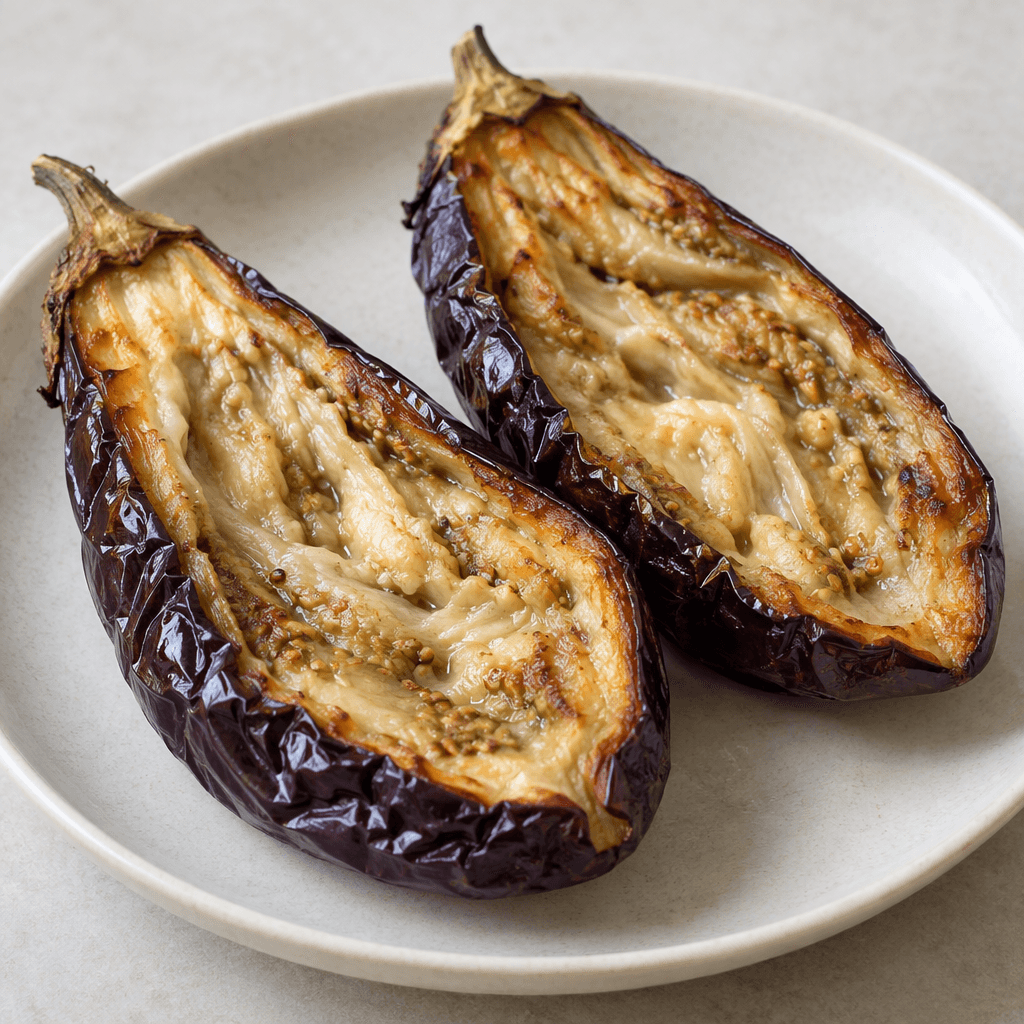
Oven-Roasted Eggplant Calories
Fiber- and antioxidant-rich, low-calorie vegetable
In season: Summer · Autumn
CALORIES
GI
POTASSIUM
FIBER
Quick answer
1 piece (medium) of Oven-Roasted Eggplant (120 g) has 42 calories. That works out to 35 calories per 100 g. It contains 9.4 g of carbs, 1.3 g of protein, 0.4 g of fat and 3.5 g of fiber. Its 0.3 mg of Manganese covers 12% of the Daily Value. Its glycemic index is 15 (low), so it raises blood sugar slowly.
What is Oven-Roasted Eggplant?
Oven-Roasted Eggplant is made by baking whole or halved eggplants until the flesh turns tender and the skin wrinkles. It fits naturally into Turkish and wider Mediterranean home cooking, where the soft flesh may be dressed with olive oil, garlic or tomato, or served with a spoonful of yogurt.
Its interior is creamy and mild, with a gently sweet, browned edge. Serve it as a side, part of a mezze spread, or a simple meal with bread; in Turkey it is also commonly paired with grilled foods. Eggplant is low in calories and provides fibre, so it works well in a vegetable-forward meal. Add chickpeas or another protein-rich accompaniment for more staying power, and keep the oil modest if you want a lighter plate.
Oven-Roasted Eggplant Nutrition Facts
Selected: 100 g
35
KCAL / 100G
Carbs
7.8g
· 3% DV
Protein
1.1g
· 2% DV
Fat
0.3g
· 0% DV
Fiber
2.9g
· 10% DV
DV is the share of the daily value covered, on a 2,000 kcal reference diet.
Calories come from: Carbs 81% · Protein 11% · Fat 8%
Oven-Roasted Eggplant Vitamins & Minerals
Vitamins
B5
0.28mg · 6% DV
Folate
22µg · 6% DV
B6
0.08mg · 5% DV
B3
0.6mg · 4% DV
Minerals
Potassium ⭐
230mg · 7% DV
Magnesium
14mg · 3% DV
Phosphorus
24mg · 3% DV
Calcium
9mg · 1% DV
How Nutritious Is Oven-Roasted Eggplant?
Nutrient density
High
How many vitamins, minerals and how much fiber this food carries per calorie. A high score means a lot of nutrition for few calories.
Satiety score
Medium
An EatBetter score computed from fiber, protein and calorie density. A high score means staying full longer on the same calories.
Both scores are calculated per 100 g and do not change with the selected portion. The satiety score is EatBetter's own calculation, not a clinical measure.
Oven-Roasted Eggplant Glycemic Index
GLYCEMIC INDEX
GLYCEMIC LOAD
Accounts for portion size — a more realistic measure than GI alone.
How to Burn Off Oven-Roasted Eggplant
To burn the 35 calories in 100 g:
🚶
Walking (5 km/h)
🏃
Running (8 km/h)
🚴
Cycling
🏊
Swimming
Times are calculated with the MET equation for a 70 kg adult. Actual burn varies with your weight, age and pace.
Is Oven-Roasted Eggplant Processed?
NOVA 2
Minimally Processed
1. Unprocessed
2. Minimally Processed
3. Processed
4. Ultra-Processed
NOVA classifies foods into 4 groups by industrial processing. NOVA 1 (unprocessed) is the healthiest.
Does Oven-Roasted Eggplant Contain Allergens?
No known major allergens
Which Diets Is Oven-Roasted Eggplant Good For?
Vegan
✓ Suitable
Vegetarian
✓ Suitable
Gluten-Free
✓ Suitable
Dairy-Free
— Not suitable
Mediterranean
✓ Suitable
Paleo
✓ Suitable
Whole30
— Not suitable
DASH
— Not suitable
Keto
— Not suitable
Low FODMAP
— Not suitable
Oven-Roasted Eggplant Fat Profile
SATURATED
0.07g
MONOUNSATURATED
0.02g
POLYUNSATURATED
0.06g
Omega 6:3 ratio 2:1
Below the ideal 4:1 — a good omega balance.
Compare Oven-Roasted Eggplant
Foods Similar to Oven-Roasted Eggplant
Frequently Asked Questions About Oven-Roasted Eggplant
How do you make oven-roasted eggplant?
To make oven-roasted eggplant, halve the eggplant lengthwise, score the cut flesh, and brush it lightly with oil. Roast cut-side up until the flesh is tender and the edges are browned. The exact cooking time varies with the eggplant’s size and how thickly it is cut.
Should you peel eggplant before making oven-roasted eggplant?
No, you usually do not need to peel eggplant for oven-roasted eggplant. The skin softens during roasting and helps hold the flesh together. Wash it well first, and remove the skin after cooking if it remains tough or you prefer a smoother texture.
Can you roast a whole eggplant for oven-roasted eggplant?
Yes, you can roast a whole eggplant, but prick the skin in several places first so steam can escape. Halving it makes the flesh cook and brown more quickly. Whole roasted eggplant is especially handy when you plan to scoop out the flesh for a dip.
How do you keep oven-roasted eggplant from turning soggy?
To keep oven-roasted eggplant from turning soggy, dry it after washing, leave space between pieces, and roast it on a hot tray. Crowding traps steam instead of letting moisture escape. Use just enough oil to coat the surface rather than letting the pieces sit in it.
Do you need to salt eggplant before making oven-roasted eggplant?
No, salting is not essential for oven-roasted eggplant. Modern eggplants are not usually very bitter, and salting can draw out moisture that slows browning. If an eggplant tastes bitter, salt the cut pieces briefly, then rinse and dry them before roasting.
Why does oven-roasted eggplant turn brown after it is cut?
Oven-roasted eggplant may look brown because its cut flesh oxidizes when exposed to air; this is normal and does not necessarily mean it has spoiled. To limit discoloration before cooking, cut the eggplant just before roasting or lightly coat the exposed flesh with lemon juice.
What is the best way to season oven-roasted eggplant?
Oven-roasted eggplant works well with olive oil, salt, black pepper, and garlic. For a Mediterranean-style flavor, add herbs such as oregano or thyme; for a brighter finish, use lemon juice after roasting. Add delicate herbs at the end so they do not burn.
What should you serve with oven-roasted eggplant?
Serve oven-roasted eggplant with yogurt or tahini sauce, tomatoes, grains, or other roasted vegetables. It also works as a side for grilled foods or as the base for a dip: scoop out the flesh and mix it with lemon, garlic, and olive oil.
How long does oven-roasted eggplant keep in the fridge?
Oven-roasted eggplant keeps for about three to four days in a sealed container in the refrigerator. Refrigerate it promptly after it has cooled, rather than leaving it out for an extended time. Reheat only the portion you plan to eat.
Can you freeze oven-roasted eggplant?
Yes, oven-roasted eggplant freezes well, though its flesh may become softer and wetter after thawing. Let it cool, divide it into portions, and freeze it in an airtight container. The thawed eggplant is best used in dips, sauces, or cooked dishes.
Have another question about Oven-Roasted Eggplant?
Ask the AI nutrition coach — calories, portions, alternatives and more, answered in seconds in the app.

Scan calories with your camera
Instant AI nutrition analysis

Nutrition data compiled from USDA FoodData Central and scientific sources.