

Ready & Packaged Foods
All →Vegetables & Legumes
All →Desserts & Confectionery
All →Meat & Protein
All →Grains & Bakery
All →Beverages
All →Milk & Dairy
All →

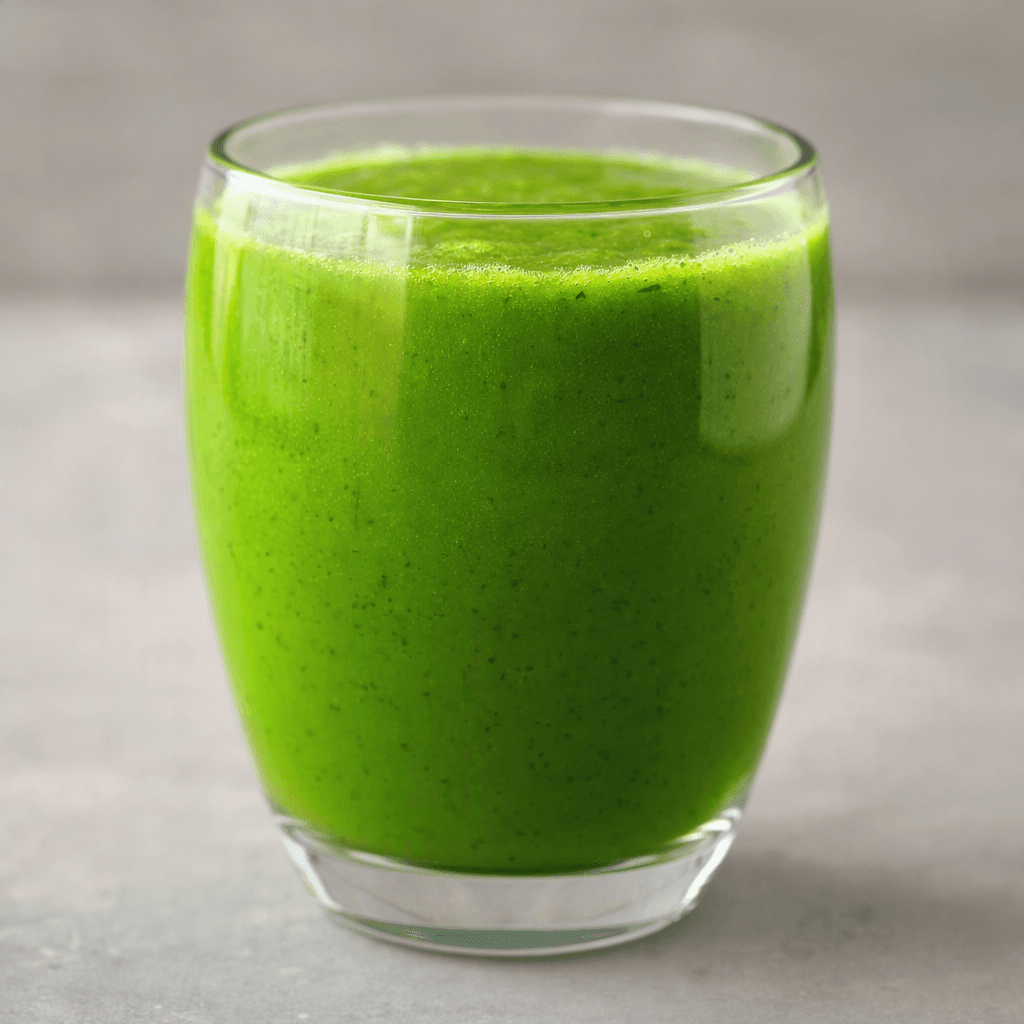
Organic Green Vegetable Juice Calories
Rich in vitamins and minerals, low calorie, antioxidant content
In season: Spring · Summer · Autumn · Winter
CALORIES · 100 G
GI
POTASSIUM · 100 G
FIBER · 100 G
Quick answer
1 cup (medium) of Organic Green Vegetable Juice (240 g) has 67 calories. That works out to 28 calories per 100 g. It contains 12.5 g of carbs, 3.4 g of protein, 0.5 g of fat and 2.6 g of fiber. Its 768 µg of Vitamin A covers 85% of the Daily Value. Its glycemic index is 25 (low), so it raises blood sugar slowly.
Organic Green Vegetable Juice Nutrition Facts
Selected: 1 cup (medium) · 240 g
67
KCAL / 240G
Carbs
12.5g
· 5% DV
Protein
3.4g
· 7% DV
Fat
0.5g
· 1% DV
Fiber
2.6g
· 9% DV
DV is the share of the daily value covered, on a 2,000 kcal reference diet.
Calories come from: Carbs 73% · Protein 20% · Fat 7%
Organic Green Vegetable Juice nutrition facts table · 1 cup (medium) (240 g)
| Nutrient | Amount | % DV |
|---|---|---|
| Calories | 67 kcal | |
| Total fat | 0.5 g | 1% |
| Saturated fat | 0.07 g | 0% |
| Trans fat | 0 g | |
| Sodium | 101 mg | 4% |
| Total carbohydrate | 12.5 g | 5% |
| Fiber | 2.6 g | 9% |
| Protein | 3.4 g | 7% |
Calories: Calories measure energy. Average daily need is 2,000 kcal. Excess calories are stored as fat, too few cause weight loss.
Carbs: Your body's primary energy source. The brain runs exclusively on carbs. Daily need: 275g.
Protein: Essential for muscle repair and cell growth. Daily need: 50g. Keeps you full and boosts metabolism.
Fat: Needed for hormone production and vitamin absorption. Daily need: 78g. Limit saturated fats, choose unsaturated.
Fiber: Critical for digestive health and satiety. Daily need: 28g. Stabilizes blood sugar, lowers cholesterol.

Log this food in EatBetter
100,000+ people use it
- Get your daily calorie target
- Snap your meal, log it in seconds
- See every vitamin and mineral

📸 Scan the code to get the app free.

How Many Calories in 1 Cup of Organic Green Vegetable Juice?
| Serving | Amount | Calories |
|---|---|---|
| 1 cup (medium) | 240 g | 67 kcal |
| 100 g | 100 g | 28 kcal |
| 1 serving (small) | 100 g | 28 kcal |
| 1 cup (small) | 120 g | 34 kcal |
| 1 pack (small) | 200 g | 56 kcal |
| 1 serving (medium) | 250 g | 70 kcal |
| 1 bottle (medium) | 330 g | 92 kcal |
| 1 cup (large) | 350 g | 98 kcal |
| 1 pack (large) | 400 g | 112 kcal |
| 1 bottle (large) | 500 g | 140 kcal |
Calculated from 28 calories per 100 g.
Frequently Asked Questions About Organic Green Vegetable Juice
What vegetables are in Organic Green Vegetable Juice?
Organic Green Vegetable Juice has no single standard recipe. Common ingredients include spinach, cucumber, celery, kale, and parsley, but the blend varies by maker. Check the ingredient list for the particular juice if you need to know exactly what it contains.
Is Organic Green Vegetable Juice better than eating whole vegetables?
No, it does not replace whole vegetables. Juicing or straining removes much of the vegetables’ fiber, while eating them whole also provides texture and makes a more filling snack or meal component. Juice can still be a convenient way to add vegetables.
Can you make Organic Green Vegetable Juice without a juicer?
Yes. Blend washed green vegetables with a little water, then strain the mixture through a fine sieve or clean cloth if you want a juice-like texture. Leaving it unstrained makes it thicker and retains more of the vegetables’ pulp.
How long does homemade Organic Green Vegetable Juice last?
Homemade Organic Green Vegetable Juice is best soon after preparation. If you need to save it, refrigerate it promptly in a tightly sealed container and use it within a day or two; discard it if its smell, appearance, or taste changes noticeably.
Is Organic Green Vegetable Juice good to drink every day?
Yes, it can be part of a daily diet, but vary the vegetables and do not use juice as a substitute for all whole produce. If you have kidney disease or take medication affected by foods such as leafy greens, ask your healthcare professional about the ingredients.
Does Organic Green Vegetable Juice detox your body?
No. Organic Green Vegetable Juice does not flush toxins from your body or replace the work of your liver and kidneys. It can contribute vegetables to your diet, but detox claims about juice cleanses are not supported by good evidence.
Does juicing vegetables remove the fiber from Organic Green Vegetable Juice?
Yes, straining Organic Green Vegetable Juice removes much of the fiber that was in the vegetables. An unstrained blend keeps more pulp, and using the leftover pulp in a soup or sauce can help reduce food waste.
Can you freeze Organic Green Vegetable Juice?
Yes, you can freeze Organic Green Vegetable Juice in a freezer-safe container, leaving room for expansion. Thaw it in the refrigerator and shake or stir it well, since the texture may separate. The flavor and color may be less fresh after freezing.
What is the best time to drink Organic Green Vegetable Juice?
There is no proven best time to drink Organic Green Vegetable Juice. Have it with breakfast or another meal if that suits you; drinking it first thing in the morning does not provide a special cleansing or fat-burning effect.
Can Organic Green Vegetable Juice replace a meal?
Usually not on its own. Organic Green Vegetable Juice may not provide the protein, fiber, and lasting fullness of a balanced meal. Pair it with a source of protein and a more substantial food if you are using it as part of breakfast or lunch.
Organic Green Vegetable Juice Vitamins & Minerals
Vitamins
Vitamin A
768µg · 85% DV
Vitamin K
91.2µg · 76% DV
Vitamin C
45.6mg · 51% DV
Folate
76.8µg · 19% DV
Minerals
Manganese
0.43mg · 19% DV
Copper
0.17mg · 19% DV
Potassium ⭐
504mg · 15% DV
Calcium
130mg · 13% DV
Sodium
101mg · 4% DV
Organic Green Vegetable Juice Glycemic Index
GLYCEMIC INDEX
GLYCEMIC LOAD
Accounts for portion size — a more realistic measure than GI alone.
How to Burn Off Organic Green Vegetable Juice
To burn the 67 calories in 1 cup (medium) (240 g):
🚶
Walking (5 km/h)
🏃
Running (8 km/h)
🚴
Cycling
🏊
Swimming
Times are calculated with the MET equation for a 70 kg adult. Actual burn varies with your weight, age and pace.
What is Organic Green Vegetable Juice?
Organic Green Vegetable Juice is a vividly coloured drink made by juicing organically grown green vegetables. It may look smooth while retaining a little pulp and tiny flecks, and its precise flavour depends on the vegetables used. Expect a fresh, mildly grassy taste, sometimes with a gentle sweetness.
Serve it chilled at breakfast, as a light drink between meals, or alongside a simple lunch. It offers vitamins and minerals while being low in calories, but juice is not a substitute for eating whole vegetables, which provide more fibre. Pair it with toast or a savoury breakfast for a more filling start, or add a squeeze of lemon to brighten the flavour.
How Nutritious Is Organic Green Vegetable Juice?
Nutrient density
Very high
How many vitamins, minerals and how much fiber this food carries per calorie. A high score means a lot of nutrition for few calories.
Satiety score
Medium
An EatBetter score computed from fiber, protein and calorie density. A high score means staying full longer on the same calories.
Both scores are calculated per 100 g and do not change with the selected portion. The satiety score is EatBetter's own calculation, not a clinical measure.
Is Organic Green Vegetable Juice Processed?
NOVA 2
Minimally Processed
1. Unprocessed
2. Minimally Processed
3. Processed
4. Ultra-Processed
NOVA classifies foods into 4 groups by industrial processing. NOVA 1 (unprocessed) is the healthiest.
Does Organic Green Vegetable Juice Contain Allergens?
No known major allergens
Which Diets Is Organic Green Vegetable Juice Good For?
Vegan
✓ Suitable
Vegetarian
✓ Suitable
Gluten-Free
✓ Suitable
Dairy-Free
— Not suitable
Mediterranean
✓ Suitable
Paleo
✓ Suitable
Whole30
— Not suitable
DASH
— Not suitable
Keto
— Not suitable
Low FODMAP
— Not suitable
Organic Green Vegetable Juice Fat Profile
SATURATED
0.07g
MONOUNSATURATED
0.05g
POLYUNSATURATED
0.14g
Omega 6:3 ratio 0.5:1
Below the ideal 4:1 — a good omega balance.
Compare Organic Green Vegetable Juice
Foods Similar to Organic Green Vegetable Juice
Have another question about Organic Green Vegetable Juice?
Ask the AI nutrition coach — calories, portions, alternatives and more, answered in seconds in the app.

Scan calories with your camera
Instant AI nutrition analysis

Nutrition data compiled from USDA FoodData Central and scientific sources.