

Ready & Packaged Foods
All →Vegetables & Legumes
All →Desserts & Confectionery
All →Meat & Protein
All →Grains & Bakery
All →Beverages
All →Milk & Dairy
All →

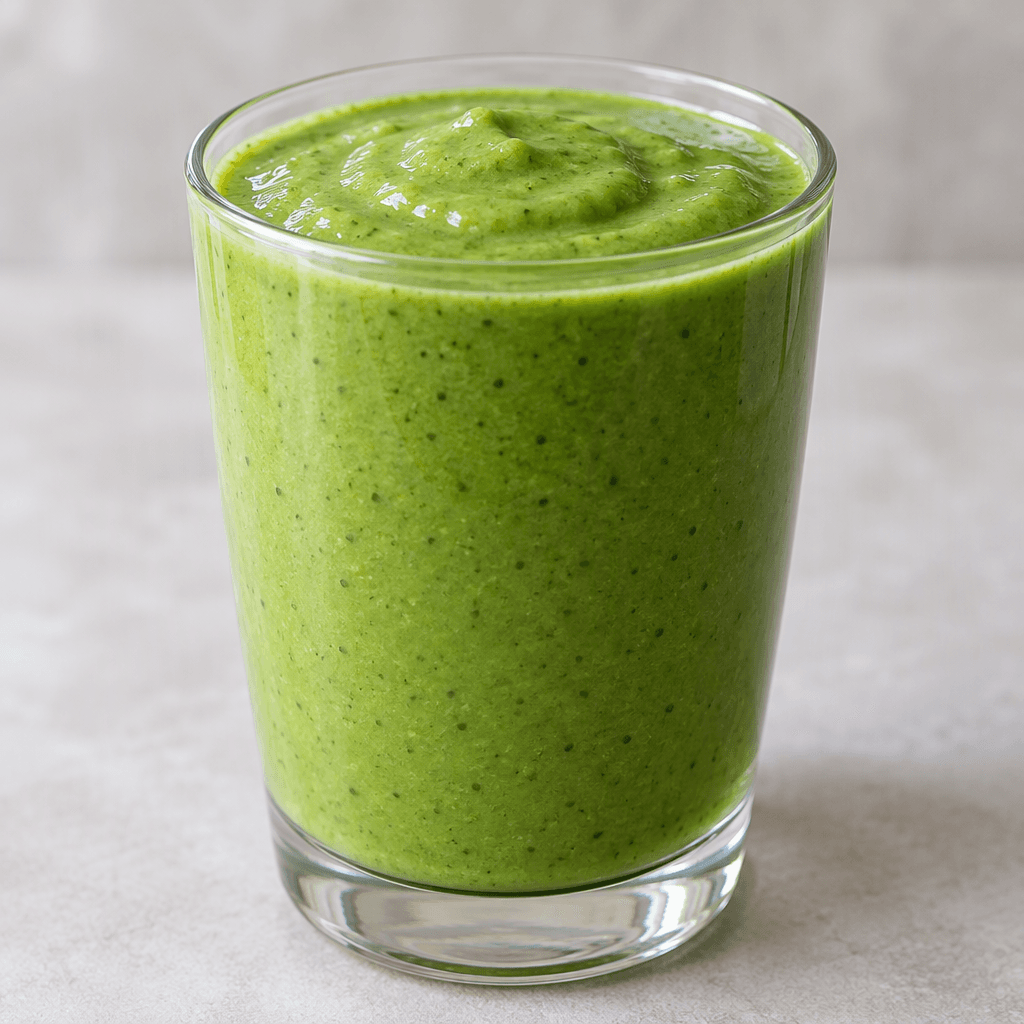
Organic Green Smoothie Calories
Made with organic vegetables and fruits, rich in fiber and vitamins, low-calorie beverage.
In season: Spring · Summer · Autumn · Winter
CALORIES · 100 G
GI
POTASSIUM · 100 G
FIBER · 100 G
Quick answer
1 cup (medium) of Organic Green Smoothie (240 g) has 108 calories. That works out to 45 calories per 100 g. It contains 24.5 g of carbs, 2.9 g of protein, 0.7 g of fat and 5 g of fiber. Its 76.8 µg of Vitamin K covers 64% of the Daily Value. Its glycemic index is 40 (low), so it raises blood sugar slowly.
Organic Green Smoothie Nutrition Facts
Selected: 1 cup (medium) · 240 g
108
KCAL / 240G
Carbs
24.5g
· 9% DV
Protein
2.9g
· 6% DV
Fat
0.7g
· 1% DV
Fiber
5g
· 18% DV
DV is the share of the daily value covered, on a 2,000 kcal reference diet.
Calories come from: Carbs 85% · Protein 10% · Fat 5%
Organic Green Smoothie nutrition facts table · 1 cup (medium) (240 g)
| Nutrient | Amount | % DV |
|---|---|---|
| Calories | 108 kcal | |
| Total fat | 0.7 g | 1% |
| Saturated fat | 0.14 g | 1% |
| Trans fat | 0 g | |
| Sodium | 43 mg | 2% |
| Total carbohydrate | 24.5 g | 9% |
| Fiber | 5 g | 18% |
| Protein | 2.9 g | 6% |
Calories: Calories measure energy. Average daily need is 2,000 kcal. Excess calories are stored as fat, too few cause weight loss.
Carbs: Your body's primary energy source. The brain runs exclusively on carbs. Daily need: 275g.
Protein: Essential for muscle repair and cell growth. Daily need: 50g. Keeps you full and boosts metabolism.
Fat: Needed for hormone production and vitamin absorption. Daily need: 78g. Limit saturated fats, choose unsaturated.
Fiber: Critical for digestive health and satiety. Daily need: 28g. Stabilizes blood sugar, lowers cholesterol.

Log this food in EatBetter
100,000+ people use it
- Get your daily calorie target
- Snap your meal, log it in seconds
- See every vitamin and mineral

📸 Scan the code to get the app free.

How Many Calories in 1 Cup of Organic Green Smoothie?
| Serving | Amount | Calories |
|---|---|---|
| 1 cup (medium) | 240 g | 108 kcal |
| 100 g | 100 g | 45 kcal |
| 1 cup (small) | 150 g | 68 kcal |
| 1 serving (small) | 200 g | 90 kcal |
| 1 pack (medium) | 250 g | 113 kcal |
| 1 serving (large) | 300 g | 135 kcal |
| 1 bottle (medium) | 330 g | 149 kcal |
| 1 cup (large) | 350 g | 158 kcal |
| 1 bottle (large) | 500 g | 225 kcal |
Calculated from 45 calories per 100 g.
Frequently Asked Questions About Organic Green Smoothie
What goes into an Organic Green Smoothie?
An Organic Green Smoothie usually combines leafy greens, fruit and a liquid such as water or milk. Spinach with banana is a mild-tasting starting point; add ingredients gradually so the greens do not overpower the fruit.
Can an Organic Green Smoothie replace breakfast?
An Organic Green Smoothie can be part of breakfast, but a fruit-and-greens blend alone may not keep you full for long. Add a source of protein or fat, such as yogurt, nut butter or seeds, or pair it with a solid breakfast food.
How long does an Organic Green Smoothie last in the fridge?
An Organic Green Smoothie is best soon after blending, but it can be refrigerated in a sealed container and used within a day. It may separate or darken as it stands; shake it before drinking and discard it if it smells off.
Can you freeze an Organic Green Smoothie?
Yes, an Organic Green Smoothie can be frozen in an airtight container, leaving room for expansion. Thaw it in the refrigerator and blend or shake it again, since freezing and thawing can change its smooth texture.
Why does an Organic Green Smoothie taste bitter?
An Organic Green Smoothie can taste bitter when it contains strongly flavored greens such as kale or arugula, especially in large amounts. Try milder spinach, remove tough stems, or balance the flavor with citrus or a small amount of fruit.
Is an Organic Green Smoothie good for weight loss?
An Organic Green Smoothie can fit a weight-loss plan when it replaces a more energy-dense snack or drink. It is not automatically a weight-loss food: sweetened juice, honey and generous spoonfuls of nut butter can make it much more filling and energy-rich.
Does an Organic Green Smoothie raise blood sugar?
An Organic Green Smoothie can raise blood sugar because fruit contains natural sugars, even though the blended drink retains much of its fiber. The effect varies with the ingredients and portion; people managing diabetes should plan it with their clinician or dietitian.
Should you use a blender or juicer for an Organic Green Smoothie?
Use a blender for an Organic Green Smoothie. Blending keeps the fruit and vegetable pulp in the drink, while a juicer separates much of that pulp and produces juice rather than a smoothie.
Can you make an Organic Green Smoothie with frozen spinach?
Yes, frozen spinach works in an Organic Green Smoothie and can make it cold and thick without watering it down. Break up large frozen clumps before blending, and do not refreeze spinach that has already thawed.
Can you drink an Organic Green Smoothie every day?
Yes, an Organic Green Smoothie can be a daily drink, but vary the greens and fruit rather than relying on one recipe. Keep whole fruits and vegetables in your meals too, since smoothies do not replace the chewing and variety of solid foods.
Organic Green Smoothie Vitamins & Minerals
Vitamins
Vitamin K
76.8µg · 64% DV
Vitamin C
38.4mg · 43% DV
Vitamin A
288µg · 32% DV
Folate
67.2µg · 17% DV
Minerals
Manganese
0.43mg · 19% DV
Copper
0.17mg · 19% DV
Potassium ⭐
504mg · 15% DV
Phosphorus
77mg · 11% DV
Sodium
43mg · 2% DV
Organic Green Smoothie Glycemic Index
GLYCEMIC INDEX
GLYCEMIC LOAD
Accounts for portion size — a more realistic measure than GI alone.
How to Burn Off Organic Green Smoothie
To burn the 108 calories in 1 cup (medium) (240 g):
🚶
Walking (5 km/h)
🏃
Running (8 km/h)
🚴
Cycling
🏊
Swimming
Times are calculated with the MET equation for a 70 kg adult. Actual burn varies with your weight, age and pace.
What is Organic Green Smoothie?
An Organic Green Smoothie is a blended drink made from green vegetables and fruit. It has no single traditional place of origin, and recipes vary; blending keeps the drink thick and smooth rather than clear like juice. Depending on the fruit and greens used, the flavour can be gently sweet or more vegetal.
It’s commonly enjoyed chilled at breakfast or as a snack, whether homemade or bought ready to drink. The fruit and vegetables provide fibre, while the drink is relatively light at 45 calories per 100 g. For a more substantial breakfast, serve it alongside something with protein, or blend in oats; if the fruit gives enough sweetness, there’s no need to add extra sweetener.
How Nutritious Is Organic Green Smoothie?
Nutrient density
High
How many vitamins, minerals and how much fiber this food carries per calorie. A high score means a lot of nutrition for few calories.
Satiety score
Medium
An EatBetter score computed from fiber, protein and calorie density. A high score means staying full longer on the same calories.
Both scores are calculated per 100 g and do not change with the selected portion. The satiety score is EatBetter's own calculation, not a clinical measure.
Is Organic Green Smoothie Processed?
NOVA 2
Minimally Processed
1. Unprocessed
2. Minimally Processed
3. Processed
4. Ultra-Processed
NOVA classifies foods into 4 groups by industrial processing. NOVA 1 (unprocessed) is the healthiest.
Does Organic Green Smoothie Contain Allergens?
No known major allergens
Which Diets Is Organic Green Smoothie Good For?
Vegan
✓ Suitable
Vegetarian
✓ Suitable
Gluten-Free
✓ Suitable
Dairy-Free
— Not suitable
Mediterranean
✓ Suitable
Paleo
✓ Suitable
Whole30
— Not suitable
DASH
— Not suitable
Keto
— Not suitable
Low FODMAP
— Not suitable
Organic Green Smoothie Fat Profile
SATURATED
0.14g
MONOUNSATURATED
0.1g
POLYUNSATURATED
0.17g
Omega 6:3 ratio 0.7:1
Below the ideal 4:1 — a good omega balance.
Compare Organic Green Smoothie
Foods Similar to Organic Green Smoothie
Have another question about Organic Green Smoothie?
Ask the AI nutrition coach — calories, portions, alternatives and more, answered in seconds in the app.

Scan calories with your camera
Instant AI nutrition analysis

Nutrition data compiled from USDA FoodData Central and scientific sources.