

Ready & Packaged Foods
All →Vegetables & Legumes
All →Desserts & Confectionery
All →Meat & Protein
All →Grains & Bakery
All →Beverages
All →Milk & Dairy
All →

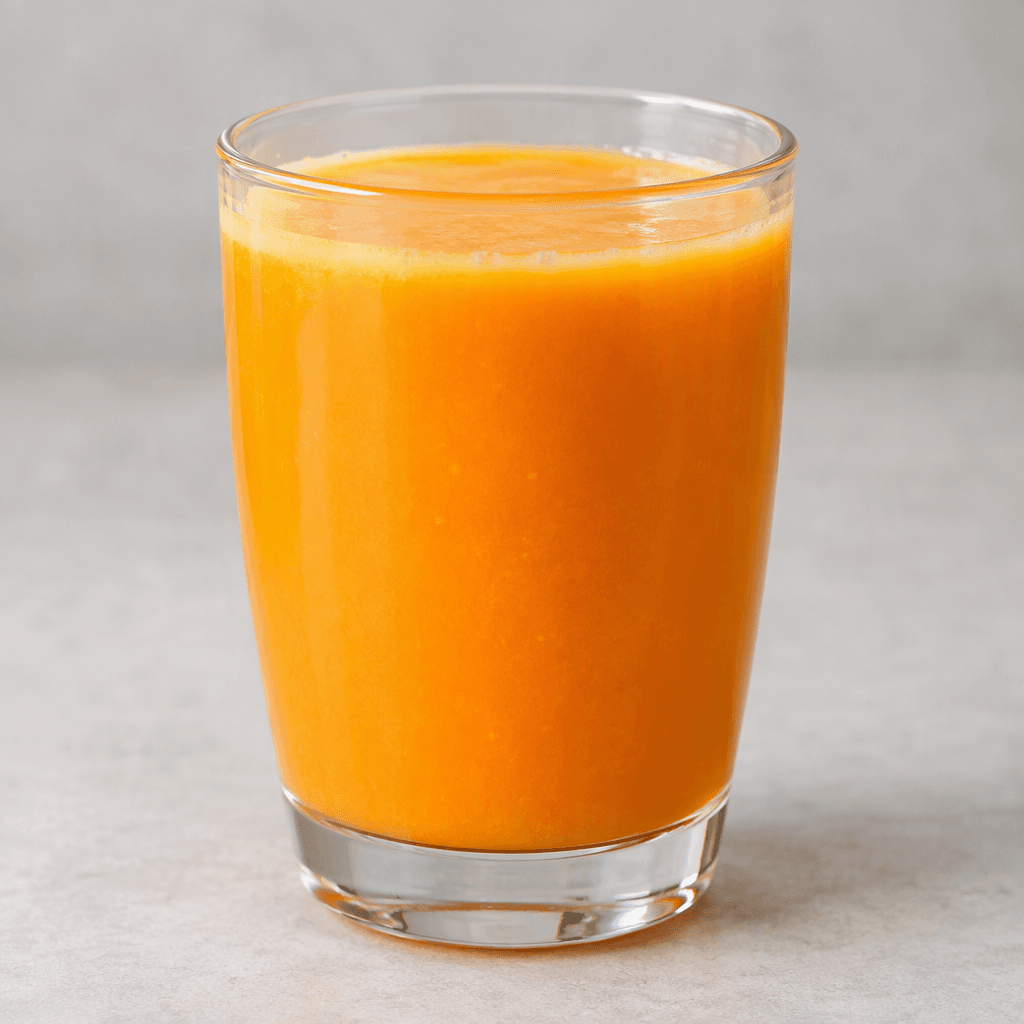
Orange Nectar Calories
Sweetened orange fruit drink
In season: Spring · Summer · Autumn · Winter
CALORIES
GI
POTASSIUM
FIBER
Quick answer
1 cup (medium) of Orange Nectar (200 g) has 96 calories. That works out to 48 calories per 100 g. It contains 23 g of carbs, 0.6 g of protein, 0.2 g of fat and 0.4 g of fiber. Its 36 mg of Vitamin C covers 40% of the Daily Value. Its glycemic index is 50 (medium), so it raises blood sugar at a moderate pace.
What is Orange Nectar?
Orange nectar is a fruit drink made by diluting orange juice or purée with water; some versions also contain added sugar. It is sold ready to drink in many countries and is not necessarily the same as 100% orange juice. Its smooth, opaque appearance and fuller texture set it apart from a thinner juice.
Serve it chilled at breakfast, alongside a casual meal, or as a refreshing drink on a warm day. Its sweetness and bright citrus flavour also make it an easy option for children’s parties or a simple afternoon drink. Nutritionally, it is mainly a source of carbohydrates, with little protein or fibre. If you prefer a less sweet, lighter drink, pour it over ice or dilute it with a little water.
Orange Nectar Nutrition Facts
Selected: 100 g
48
KCAL / 100G
Carbs
11.5g
· 4% DV
Protein
0.3g
· 1% DV
Fat
0.1g
· 0% DV
Fiber
0.2g
· 1% DV
DV is the share of the daily value covered, on a 2,000 kcal reference diet.
Calories come from: Carbs 96% · Protein 2% · Fat 2%
Orange Nectar Vitamins & Minerals
Vitamins
Vitamin C
18mg · 20% DV
B1
0.03mg · 3% DV
B5
0.15mg · 3% DV
Folate
10µg · 3% DV
Minerals
Phosphorus
12mg · 2% DV
Potassium ⭐
80mg · 2% DV
Calcium
8mg · 1% DV
Magnesium
6mg · 1% DV
How Nutritious Is Orange Nectar?
Nutrient density
Low
How many vitamins, minerals and how much fiber this food carries per calorie. A high score means a lot of nutrition for few calories.
Satiety score
Medium
An EatBetter score computed from fiber, protein and calorie density. A high score means staying full longer on the same calories.
Both scores are calculated per 100 g and do not change with the selected portion. The satiety score is EatBetter's own calculation, not a clinical measure.
Orange Nectar Glycemic Index
GLYCEMIC INDEX
GLYCEMIC LOAD
Accounts for portion size — a more realistic measure than GI alone.
How to Burn Off Orange Nectar
To burn the 48 calories in 100 g:
🚶
Walking (5 km/h)
🏃
Running (8 km/h)
🚴
Cycling
🏊
Swimming
Times are calculated with the MET equation for a 70 kg adult. Actual burn varies with your weight, age and pace.
Is Orange Nectar Processed?
NOVA 3
Processed
1. Unprocessed
2. Minimally Processed
3. Processed
4. Ultra-Processed
NOVA classifies foods into 4 groups by industrial processing. NOVA 1 (unprocessed) is the healthiest.
Does Orange Nectar Contain Allergens?
No known major allergens
Which Diets Is Orange Nectar Good For?
Vegan
✓ Suitable
Vegetarian
✓ Suitable
Gluten-Free
✓ Suitable
Dairy-Free
— Not suitable
Mediterranean
✓ Suitable
Paleo
— Not suitable
Whole30
— Not suitable
DASH
— Not suitable
Keto
— Not suitable
Low FODMAP
— Not suitable
Orange Nectar Fat Profile
SATURATED
0.01g
MONOUNSATURATED
0.01g
POLYUNSATURATED
0.01g
Compare Orange Nectar
Foods Similar to Orange Nectar
Frequently Asked Questions About Orange Nectar
Is orange nectar the same as orange juice?
No. Orange nectar is generally made by blending orange juice or purée with water, and it is often sweetened. Orange juice is squeezed from the fruit; nectar’s fruit content and sweetness vary by product.
Does orange nectar contain real oranges?
Yes, orange nectar is made with orange juice or orange purée, though it is usually diluted with water. The proportion of orange can differ between products, so “nectar” does not mean the drink is undiluted juice.
Is orange nectar healthy to drink every day?
Orange nectar can be enjoyed as a drink, but it is often sweetened and contains far less fibre than a whole orange. For everyday hydration, water is a better choice, with whole fruit providing more fibre.
Is orange nectar sweetened?
Usually, yes: orange nectar is commonly sweetened, though recipes vary. Some products use added sugar or another sweetener, while homemade versions can be made without it. The ingredient list tells you which kind you have.
How is orange nectar made?
Orange nectar is made by combining orange juice or purée with water and, commonly, a sweetener. Commercial versions are typically heat-treated for safety and shelf life, so they are different from freshly squeezed orange juice.
Can you dilute orange nectar with water?
Yes, you can dilute orange nectar with water if you prefer a lighter taste or less sweetness per glass. It is usually sold ready to drink, so dilution is optional rather than necessary.
How long does orange nectar last after opening?
Keep orange nectar refrigerated and tightly closed after opening. The safe storage period varies by product and packaging, so follow its storage directions and discard it if the smell, appearance, or container changes noticeably.
Can you freeze orange nectar?
Yes, orange nectar can be frozen, but thawing may make its texture uneven as the liquid and orange solids separate. Leave room in a freezer-safe container for expansion, thaw it in the refrigerator, and shake well before serving.
Can orange nectar replace orange juice in baking?
Sometimes, but orange nectar is usually sweeter and more diluted than orange juice, so it can change a recipe’s flavour and moisture. It works best in recipes where a sweeter orange taste is welcome; reduce other liquid or sugar if needed.
Why does orange nectar separate in the glass?
Orange nectar can separate because its orange pulp settles while the thinner liquid rises. This is normal for many fruit drinks; shake the container or stir the glass to bring the mixture back together.
Have another question about Orange Nectar?
Ask the AI nutrition coach — calories, portions, alternatives and more, answered in seconds in the app.

Scan calories with your camera
Instant AI nutrition analysis

Nutrition data compiled from USDA FoodData Central and scientific sources.