

Ready & Packaged Foods
All →Vegetables & Legumes
All →Desserts & Confectionery
All →Meat & Protein
All →Grains & Bakery
All →Beverages
All →Milk & Dairy
All →

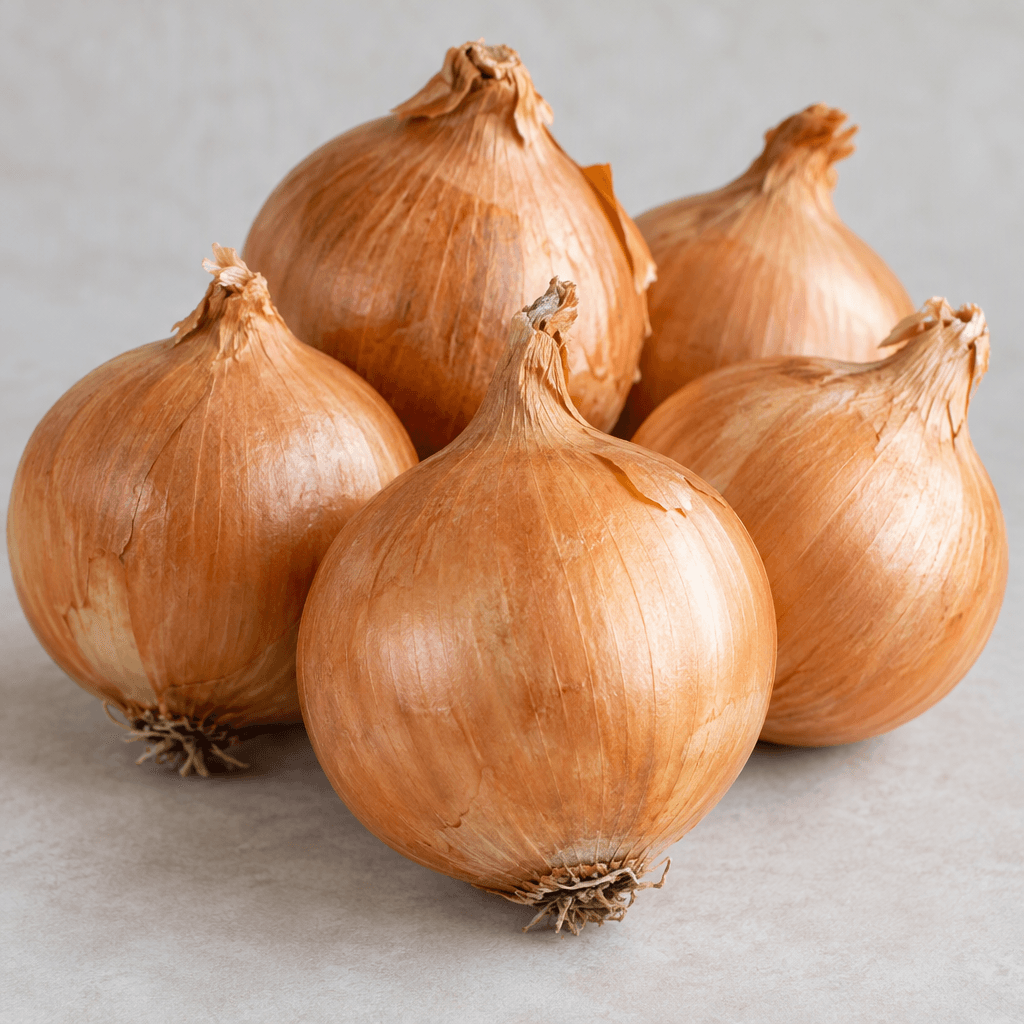
Onions Calories
Source of vitamin C, low calorie, fibrous vegetable
In season: Spring · Summer · Autumn · Winter
CALORIES
GI
POTASSIUM
FIBER
Quick answer
1 piece (medium) of Onions (80 g) has 32 calories. That works out to 40 calories per 100 g. It contains 7.4 g of carbs, 0.9 g of protein, 0.1 g of fat and 1.4 g of fiber. Its 5.9 mg of Vitamin C covers 7% of the Daily Value. Its glycemic index is 15 (low), so it raises blood sugar slowly.
What is Onions?
Onions are rounded bulbs made up of layers of edible leaves, used as a staple ingredient in kitchens around the world. They are often chopped as the starting point for soups, stews, sauces and stir-fries, or sliced raw into salads and sandwiches. In many cuisines, they are also grilled, pickled or served alongside meat and fish.
Raw onions are crisp, juicy and sharp; cooking softens their bite and brings out a mild sweetness. They are low in calories and provide fibre and vitamin C. For a gentler flavor in salads, soak sliced onions briefly in cold water, or cook them with just a little oil for a lighter base.
Onions Nutrition Facts
Selected: 100 g
40
KCAL / 100G
Carbs
9.3g
· 3% DV
Protein
1.1g
· 2% DV
Fat
0.1g
· 0% DV
Fiber
1.7g
· 6% DV
DV is the share of the daily value covered, on a 2,000 kcal reference diet.
Calories come from: Carbs 88% · Protein 10% · Fat 2%
Onions Vitamins & Minerals
Vitamins
Vitamin C
7.4mg · 8% DV
B6
0.12mg · 7% DV
Folate
19µg · 5% DV
B1
0.04mg · 3% DV
Minerals
Phosphorus
29mg · 4% DV
Potassium ⭐
146mg · 4% DV
Calcium
23mg · 2% DV
Magnesium
10mg · 2% DV
How Nutritious Is Onions?
Nutrient density
High
How many vitamins, minerals and how much fiber this food carries per calorie. A high score means a lot of nutrition for few calories.
Satiety score
Medium
An EatBetter score computed from fiber, protein and calorie density. A high score means staying full longer on the same calories.
Both scores are calculated per 100 g and do not change with the selected portion. The satiety score is EatBetter's own calculation, not a clinical measure.
Onions Glycemic Index
GLYCEMIC INDEX
GLYCEMIC LOAD
Accounts for portion size — a more realistic measure than GI alone.
How to Burn Off Onions
To burn the 40 calories in 100 g:
🚶
Walking (5 km/h)
🏃
Running (8 km/h)
🚴
Cycling
🏊
Swimming
Times are calculated with the MET equation for a 70 kg adult. Actual burn varies with your weight, age and pace.
Is Onions Processed?
NOVA 1
Unprocessed
1. Unprocessed
2. Minimally Processed
3. Processed
4. Ultra-Processed
NOVA classifies foods into 4 groups by industrial processing. NOVA 1 (unprocessed) is the healthiest.
Does Onions Contain Allergens?
No known major allergens
Which Diets Is Onions Good For?
Vegan
✓ Suitable
Vegetarian
✓ Suitable
Gluten-Free
✓ Suitable
Dairy-Free
— Not suitable
Mediterranean
✓ Suitable
Paleo
✓ Suitable
Whole30
— Not suitable
DASH
— Not suitable
Keto
✓ Suitable
Low FODMAP
— Not suitable
Onions Fat Profile
SATURATED
0.03g
MONOUNSATURATED
0.01g
POLYUNSATURATED
0.02g
Omega 6:3 ratio 1:1
Below the ideal 4:1 — a good omega balance.
Compare Onions
Foods Similar to Onions
Frequently Asked Questions About Onions
How should you store onions?
Store whole, dry onions in a cool, dry, well-ventilated place, such as a mesh bag or open basket. Keep them away from moisture and avoid storing them next to potatoes, which can make both produce items spoil faster.
How do you stop onions from making you cry?
Chill the onion before cutting it and use a sharp knife. A sharp blade crushes fewer onion cells, releasing fewer eye-irritating compounds. Cutting the root end last can also help limit their release while you chop.
Can you eat a sprouted onion?
Yes, a sprouted onion is generally fine to eat if it is still firm and has no mold or unpleasant smell. You can remove the green shoot if you prefer, though it is edible; the onion may taste sharper or less fresh.
Can you freeze onions?
Yes, chopped onions freeze well for cooking. Pack them in an airtight freezer bag, remove excess air, and freeze. They soften after thawing, so use them in soups, sauces, and cooked dishes rather than expecting a crisp texture.
How long do cut onions last in the fridge?
Keep cut onions in a sealed container in the refrigerator and use them within a few days. Discard them if they develop mold, a slimy surface, or an unpleasant odor. Don’t leave cut onions sitting at room temperature for long.
Should you wash onions before cutting them?
You usually don’t need to wash an onion before peeling it. Remove the dry outer layers and root end; if the peeled onion has dirt on it, rinse it briefly and dry it with a clean towel before cutting.
Are raw onions healthier than cooked onions?
Neither form is automatically better; raw onions have a sharper bite, while cooking makes them softer and sweeter. Raw onions can cause gas or stomach discomfort for some people, and cooking often makes their flavor gentler.
What is the difference between yellow, white, and red onions?
Yellow onions have a balanced, robust flavor and work well in many cooked dishes. White onions tend to taste sharper, while red onions are often milder and commonly used raw. Flavor varies by variety, and they can usually substitute for one another.
How do you caramelize onions?
Cook thinly sliced onions slowly in a pan with a little oil or butter, stirring occasionally until deeply softened and browned. Keep the heat moderate or low; high heat can burn the outside before the onions develop their mellow, sweet flavor.
How can you tell if an onion has gone bad?
Throw an onion away if it is mushy, moldy, or has a sour or rotten smell. Loose, papery outer skin is normal; check that the onion underneath remains firm and smells fresh before using it.
Have another question about Onions?
Ask the AI nutrition coach — calories, portions, alternatives and more, answered in seconds in the app.

Scan calories with your camera
Instant AI nutrition analysis

Nutrition data compiled from USDA FoodData Central and scientific sources.