

Ready & Packaged Foods
All →Vegetables & Legumes
All →Desserts & Confectionery
All →Meat & Protein
All →Grains & Bakery
All →Beverages
All →Milk & Dairy
All →

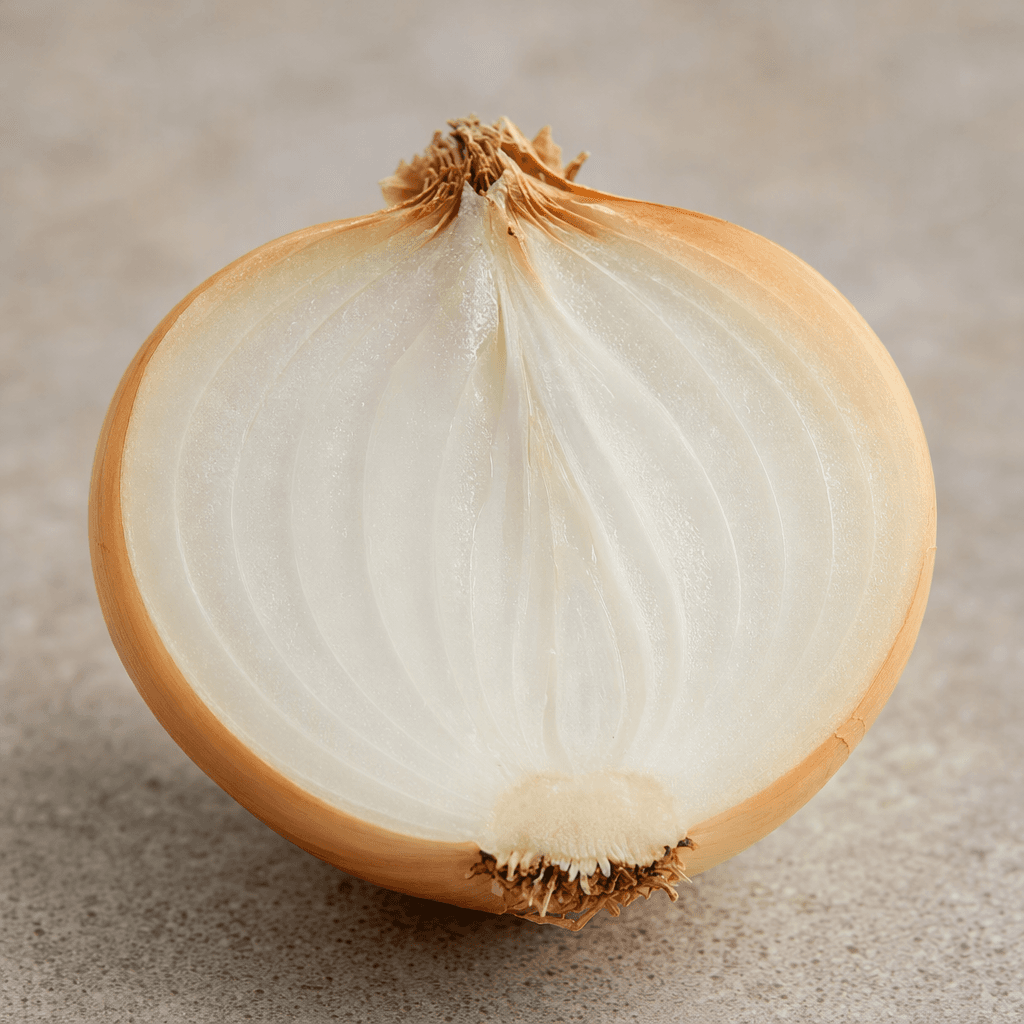
Half Onion Calories
Low calorie, source of fiber, contains vitamin C
In season: Spring · Summer · Autumn · Winter
CALORIES
GI
POTASSIUM
FIBER
Quick answer
1 piece (half) of Half Onion (75 g) has 30 calories. That works out to 40 calories per 100 g. It contains 7 g of carbs, 0.8 g of protein, 0.1 g of fat and 1.3 g of fiber. Its 5.6 mg of Vitamin C covers 6% of the Daily Value. Its glycemic index is 15 (low), so it raises blood sugar slowly.
What is Half Onion?
A half onion is simply one portion of a whole bulb onion, a kitchen staple used in cuisines around the world. Its crisp, juicy flesh tastes sharp when raw and turns sweeter and softer as it cooks. Use it finely chopped as a base for soups, stews and sauces, or slice it into salads, sandwiches and burgers; it is also commonly grilled or roasted alongside other vegetables. Onion is low in calories and contributes some fibre and vitamin C. For a lighter dish, soften it with a little oil rather than frying it until heavily browned. Cover the cut side and refrigerate any remainder for another meal.
Half Onion Nutrition Facts
Selected: 100 g
40
KCAL / 100G
Carbs
9.3g
· 3% DV
Protein
1.1g
· 2% DV
Fat
0.1g
· 0% DV
Fiber
1.7g
· 6% DV
DV is the share of the daily value covered, on a 2,000 kcal reference diet.
Calories come from: Carbs 88% · Protein 10% · Fat 2%
Half Onion Vitamins & Minerals
Vitamins
Vitamin C
7.4mg · 8% DV
B6
0.12mg · 7% DV
Folate
19µg · 5% DV
B1
0.04mg · 3% DV
Minerals
Phosphorus
29mg · 4% DV
Potassium ⭐
146mg · 4% DV
Calcium
23mg · 2% DV
Magnesium
10mg · 2% DV
How Nutritious Is Half Onion?
Nutrient density
High
How many vitamins, minerals and how much fiber this food carries per calorie. A high score means a lot of nutrition for few calories.
Satiety score
Medium
An EatBetter score computed from fiber, protein and calorie density. A high score means staying full longer on the same calories.
Both scores are calculated per 100 g and do not change with the selected portion. The satiety score is EatBetter's own calculation, not a clinical measure.
Half Onion Glycemic Index
GLYCEMIC INDEX
GLYCEMIC LOAD
Accounts for portion size — a more realistic measure than GI alone.
How to Burn Off Half Onion
To burn the 40 calories in 100 g:
🚶
Walking (5 km/h)
🏃
Running (8 km/h)
🚴
Cycling
🏊
Swimming
Times are calculated with the MET equation for a 70 kg adult. Actual burn varies with your weight, age and pace.
Is Half Onion Processed?
NOVA 1
Unprocessed
1. Unprocessed
2. Minimally Processed
3. Processed
4. Ultra-Processed
NOVA classifies foods into 4 groups by industrial processing. NOVA 1 (unprocessed) is the healthiest.
Does Half Onion Contain Allergens?
No known major allergens
Which Diets Is Half Onion Good For?
Vegan
✓ Suitable
Vegetarian
✓ Suitable
Gluten-Free
✓ Suitable
Dairy-Free
— Not suitable
Mediterranean
✓ Suitable
Paleo
✓ Suitable
Whole30
— Not suitable
DASH
— Not suitable
Keto
✓ Suitable
Low FODMAP
— Not suitable
Half Onion Fat Profile
SATURATED
0.03g
MONOUNSATURATED
0.01g
POLYUNSATURATED
0.02g
Omega 6:3 ratio 2:1
Below the ideal 4:1 — a good omega balance.
Compare Half Onion
Foods Similar to Half Onion
Frequently Asked Questions About Half Onion
How do you stop a half onion from making you cry?
Chill the half onion before cutting it and use a sharp knife. Both steps can reduce the amount of irritating compounds released into the air. Cutting near a working extractor fan can also help carry them away.
How should you store a half onion?
Cover the cut face of a half onion and refrigerate it in a sealed container or tightly wrapped food-safe packaging. This limits drying and helps keep its strong smell from transferring to other foods.
How long does a half onion last in the fridge?
Use a refrigerated half onion within a few days. Throw it away if it becomes slimy, develops mold, or smells unpleasant; keep it covered and use a clean knife when cutting it.
Can you freeze a half onion?
Yes, you can freeze a half onion, preferably chopped and sealed in a freezer-safe container. It may turn soft after thawing, so use it in soups, sauces, or other cooked dishes rather than raw salads.
Why does a half onion turn blue or green in a pickle?
A blue or green tint can appear when natural compounds in onion react with the acidic pickling liquid. The color alone does not mean the onion has spoiled, but discard it if you also notice mold, a bad smell, or a slimy texture.
Can you eat a half onion that has started to sprout?
Yes, a firm half onion with a small sprout and no mold can generally be eaten. The sprout may taste sharper or bitter, so you can remove it; discard the onion if it is soft, rotten, or smells bad.
Should you wash a half onion before cutting it?
Yes, rinse the unpeeled onion under running water and dry it before cutting. A knife can transfer dirt from the outer skin to the inside as it passes through; peeling it before rinsing is another practical option.
How do you get the smell of a half onion off your hands?
Wash your hands with soap and running water as soon as you finish cutting the half onion. Rubbing your hands against a stainless-steel surface under running water may help with the lingering smell, but avoid touching your eyes meanwhile.
Is a half onion better raw or cooked?
A half onion can be eaten either raw or cooked. Raw onion has a sharper flavor and crisp texture, while sautéing, roasting, or simmering makes its flavor milder and its texture softer.
Why does a half onion taste bitter after being cut?
A half onion may taste more pungent or bitter when it is old, bruised, or stored after cutting without being covered. Trim away a dry cut edge if the rest is firm and smells fresh; discard it if it is slimy or spoiled.
Have another question about Half Onion?
Ask the AI nutrition coach — calories, portions, alternatives and more, answered in seconds in the app.

Scan calories with your camera
Instant AI nutrition analysis

Nutrition data compiled from USDA FoodData Central and scientific sources.