

Ready & Packaged Foods
All →Vegetables & Legumes
All →Desserts & Confectionery
All →Meat & Protein
All →Grains & Bakery
All →Beverages
All →Milk & Dairy
All →

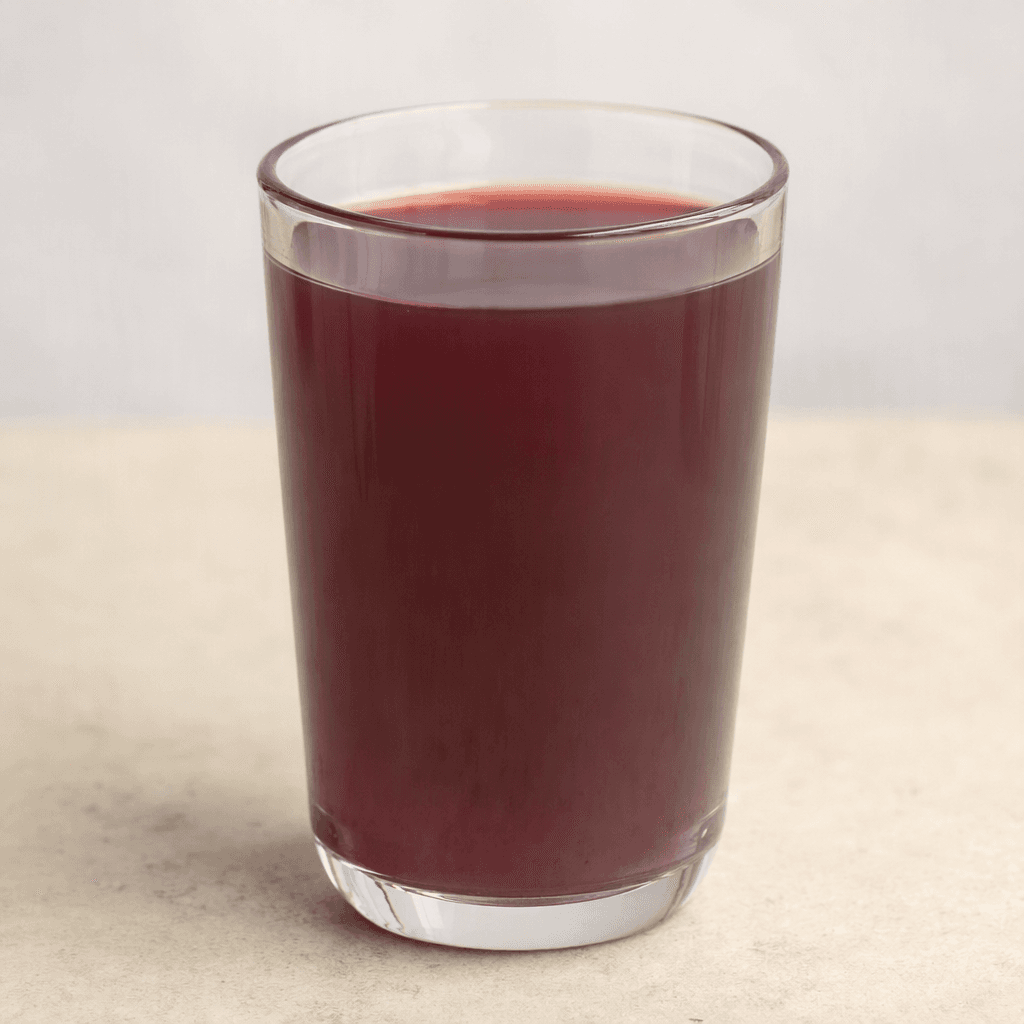
Natural grape juice Calories
Freshly pressed, additive-free natural grape juice. Source of antioxidants and vitamin C.
In season: Summer · Autumn
CALORIES · 100 G
GI
POTASSIUM · 100 G
FIBER · 100 G
Quick answer
1 cup (medium) of Natural grape juice (240 g) has 144 calories. That works out to 60 calories per 100 g. It contains 36 g of carbs, 1 g of protein, 0.2 g of fat and 0.5 g of fiber. Its 24 mg of Vitamin C covers 27% of the Daily Value. Its glycemic index is 58 (medium), so it raises blood sugar at a moderate pace.
Natural grape juice Nutrition Facts
Selected: 1 cup (medium) · 240 g
144
KCAL / 240G
Carbs
36g
· 13% DV
Protein
1g
· 2% DV
Fat
0.2g
· 0% DV
Fiber
0.5g
· 2% DV
DV is the share of the daily value covered, on a 2,000 kcal reference diet.
Calories come from: Carbs 96% · Protein 3% · Fat 1%
Natural grape juice nutrition facts table · 1 cup (medium) (240 g)
| Nutrient | Amount | % DV |
|---|---|---|
| Calories | 144 kcal | |
| Total fat | 0.2 g | 0% |
| Saturated fat | 0.02 g | 0% |
| Trans fat | 0 g | |
| Sodium | 12 mg | 1% |
| Total carbohydrate | 36 g | 13% |
| Fiber | 0.5 g | 2% |
| Protein | 1 g | 2% |
Calories: Calories measure energy. Average daily need is 2,000 kcal. Excess calories are stored as fat, too few cause weight loss.
Carbs: Your body's primary energy source. The brain runs exclusively on carbs. Daily need: 275g.
Protein: Essential for muscle repair and cell growth. Daily need: 50g. Keeps you full and boosts metabolism.
Fat: Needed for hormone production and vitamin absorption. Daily need: 78g. Limit saturated fats, choose unsaturated.
Fiber: Critical for digestive health and satiety. Daily need: 28g. Stabilizes blood sugar, lowers cholesterol.

Log this food in EatBetter
100,000+ people use it
- Get your daily calorie target
- Snap your meal, log it in seconds
- See every vitamin and mineral

📸 Scan the code to get the app free.

How Many Calories in 1 Cup of Natural grape juice?
| Serving | Amount | Calories |
|---|---|---|
| 1 cup (medium) | 240 g | 144 kcal |
| 100 g | 100 g | 60 kcal |
| 1 serving (small) | 100 g | 60 kcal |
| 1 cup (small) | 180 g | 108 kcal |
| 1 serving (medium) | 200 g | 120 kcal |
| 1 cup (large) | 300 g | 180 kcal |
| 1 bottle (medium) | 330 g | 198 kcal |
| 1 bottle (large) | 500 g | 300 kcal |
| 1 pack (large) | 1000 g | 600 kcal |
Calculated from 60 calories per 100 g.
Frequently Asked Questions About Natural grape juice
How is natural grape juice made?
Natural grape juice is made by crushing or pressing grapes and separating the liquid from the skins and pulp. Freshly pressed juice is minimally processed, but it should be refrigerated and used promptly unless it has been treated for longer storage.
Does natural grape juice ferment?
Yes, natural grape juice can ferment because its sugars feed naturally occurring yeast. Keep fresh juice refrigerated, and discard it if it becomes fizzy, develops an alcoholic or sour smell, or the container swells.
How long does fresh natural grape juice last in the refrigerator?
Fresh, unpasteurized natural grape juice usually keeps for about 2–3 days in the refrigerator. Store it in a clean, sealed container and discard it if you notice fizzing, an off smell, or an unexpectedly sour taste.
Can you freeze natural grape juice?
Yes, natural grape juice freezes well. Leave room in the container for expansion, thaw it in the refrigerator, and use it soon after thawing; freezing may slightly change its texture or leave more sediment.
Why is natural grape juice cloudy or sedimented?
Cloudiness or sediment in natural grape juice usually comes from grape pulp and other suspended particles, especially in freshly pressed juice. It is not automatically a sign of spoilage; discard the juice if it also smells off or fizzes.
Is natural grape juice healthier than eating whole grapes?
Whole grapes are generally the more filling choice because they retain their fiber and take longer to eat. Natural grape juice can be convenient, but it is easier to drink quickly and does not provide the same amount of fiber.
Does natural grape juice raise blood sugar?
Yes, natural grape juice can raise blood sugar because it contains readily available natural sugars and little fiber. If you have diabetes, ask your clinician or dietitian how to fit it into your personal meal plan.
Can natural grape juice replace wine in cooking?
Natural grape juice can replace wine in some recipes, but it is sweeter and lacks wine’s acidity. Add a little lemon juice or vinegar when appropriate, and adjust the recipe’s other sweet ingredients.
Does natural grape juice need to be pasteurized?
Pasteurization is not required for juice to be called natural, but it reduces harmful microbes and helps juice keep longer. Fresh, unpasteurized juice needs refrigeration; pregnant people, young children, older adults, and people with weakened immunity should avoid it.
Can natural grape juice be used as a sports drink?
Natural grape juice supplies carbohydrate, so it can provide energy during activity, but it does not replace the fluid and electrolytes of a formulated sports drink. For ordinary exercise, water is usually enough for hydration.
Natural grape juice Vitamins & Minerals
Vitamins
Vitamin C
24mg · 27% DV
B6
0.14mg · 8% DV
B1
0.1mg · 8% DV
Biotin
1.2µg · 4% DV
Minerals
Copper
0.12mg · 13% DV
Potassium ⭐
288mg · 8% DV
Manganese
0.12mg · 5% DV
Iron
0.72mg · 4% DV
Sodium
12mg · 1% DV
Natural grape juice Glycemic Index
GLYCEMIC INDEX
GLYCEMIC LOAD
Accounts for portion size — a more realistic measure than GI alone.
How to Burn Off Natural grape juice
To burn the 144 calories in 1 cup (medium) (240 g):
🚶
Walking (5 km/h)
🏃
Running (8 km/h)
🚴
Cycling
🏊
Swimming
Times are calculated with the MET equation for a 70 kg adult. Actual burn varies with your weight, age and pace.
What is Natural grape juice?
Natural grape juice is made by pressing ripe grapes, without fermentation. When freshly pressed and additive-free, it keeps the fruit’s characteristic aroma; its colour and sweetness vary with the grape variety and ripeness.
Its flavour is fruity and sweet, and it is often served chilled as a refreshing drink. In grape-growing regions, it may be enjoyed during harvest season; elsewhere, it fits easily at breakfast or as an occasional drink with a meal. Most of its energy comes from grape sugars, while it provides little protein or fat. Because juice has very little fibre, pair a small glass with a meal or choose whole grapes when you want something more filling.
How Nutritious Is Natural grape juice?
Nutrient density
Medium
How many vitamins, minerals and how much fiber this food carries per calorie. A high score means a lot of nutrition for few calories.
Satiety score
Medium
An EatBetter score computed from fiber, protein and calorie density. A high score means staying full longer on the same calories.
Both scores are calculated per 100 g and do not change with the selected portion. The satiety score is EatBetter's own calculation, not a clinical measure.
Is Natural grape juice Processed?
NOVA 2
Minimally Processed
1. Unprocessed
2. Minimally Processed
3. Processed
4. Ultra-Processed
NOVA classifies foods into 4 groups by industrial processing. NOVA 1 (unprocessed) is the healthiest.
Does Natural grape juice Contain Allergens?
No known major allergens
Which Diets Is Natural grape juice Good For?
Vegan
✓ Suitable
Vegetarian
✓ Suitable
Gluten-Free
✓ Suitable
Dairy-Free
— Not suitable
Mediterranean
✓ Suitable
Paleo
— Not suitable
Whole30
— Not suitable
DASH
— Not suitable
Keto
— Not suitable
Low FODMAP
— Not suitable
Natural grape juice Fat Profile
SATURATED
0.02g
MONOUNSATURATED
0.02g
POLYUNSATURATED
0.07g
Omega 6:3 ratio 3.5:1
Below the ideal 4:1 — a good omega balance.
Compare Natural grape juice
Foods Similar to Natural grape juice
Have another question about Natural grape juice?
Ask the AI nutrition coach — calories, portions, alternatives and more, answered in seconds in the app.

Scan calories with your camera
Instant AI nutrition analysis

Nutrition data compiled from USDA FoodData Central and scientific sources.