

Ready & Packaged Foods
All →Vegetables & Legumes
All →Desserts & Confectionery
All →Meat & Protein
All →Grains & Bakery
All →Beverages
All →Milk & Dairy
All →

Mountain Tea Calories
Rich in antioxidants, traditional herbal tea
In season: Spring · Summer · Autumn
CALORIES
GI
POTASSIUM
FIBER
Quick answer
1 cup (medium) of Mountain Tea (250 g) has 3 calories. That works out to 1 calories per 100 g. It contains 0.5 g of carbs, 0.3 g of protein, 0 g of fat and 0.3 g of fiber. Its glycemic index is 0 (low), so it raises blood sugar slowly.
What is Mountain Tea?
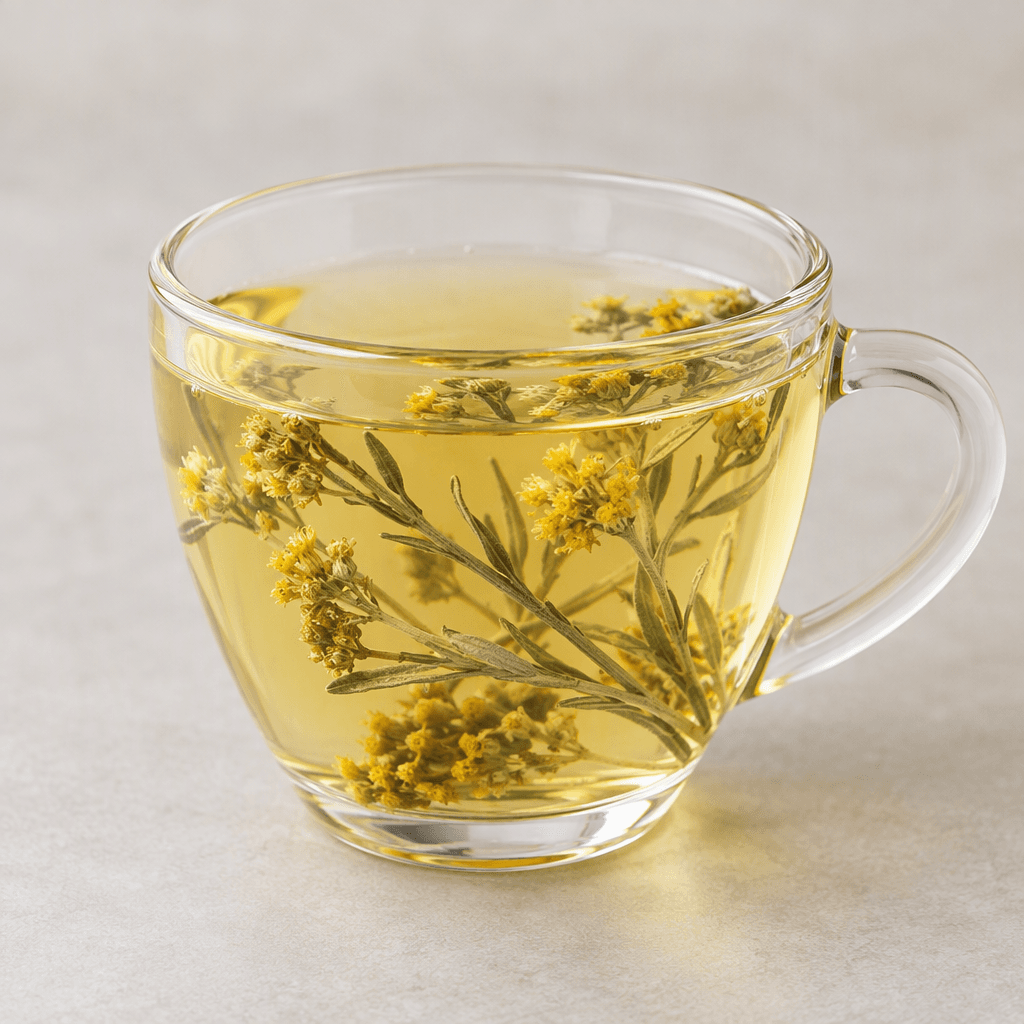
Mountain tea is an infusion made from the stems and small flowers of Sideritis, a hardy herb native to mountainous parts of the eastern Mediterranean, including Turkey and Greece. It is not made from the leaves of the conventional tea plant. The brew is pale golden, with a gentle floral, herbal flavour and a clean finish.
It is commonly served hot, either on its own or with a little honey and lemon; in Turkey and the Balkans, it is also enjoyed after meals or as an everyday tea. The infusion is mostly water and contributes very little energy, so it suits a light tea break. Steep the stems until fragrant, then strain them for a clear cup, or leave them in for a more rustic presentation.
Mountain Tea Nutrition Facts
Selected: 100 g
1
KCAL / 100G
Carbs
0.2g
· 0% DV
Protein
0.1g
· 0% DV
Fat
0g
· 0% DV
Fiber
0.1g
· 0% DV
DV is the share of the daily value covered, on a 2,000 kcal reference diet.
Calories come from: Carbs 67% · Protein 33% · Fat 0%
Mountain Tea Vitamins & Minerals
Vitamins
B1
0.01mg · 1% DV
B2
0.01mg · 1% DV
B6
0.01mg · 1% DV
Vitamin C
1mg · 1% DV
Minerals
Calcium
2mg · 0% DV
Iron
0mg · 0% DV
Magnesium
1mg · 0% DV
Zinc
0mg · 0% DV
How Nutritious Is Mountain Tea?
Nutrient density
Low
How many vitamins, minerals and how much fiber this food carries per calorie. A high score means a lot of nutrition for few calories.
Satiety score
Medium
An EatBetter score computed from fiber, protein and calorie density. A high score means staying full longer on the same calories.
Both scores are calculated per 100 g and do not change with the selected portion. The satiety score is EatBetter's own calculation, not a clinical measure.
Mountain Tea Glycemic Index
GLYCEMIC INDEX
GLYCEMIC LOAD
Accounts for portion size — a more realistic measure than GI alone.
How to Burn Off Mountain Tea
To burn the 1 calories in 100 g:
🚶
Walking (5 km/h)
🏃
Running (8 km/h)
🚴
Cycling
🏊
Swimming
Times are calculated with the MET equation for a 70 kg adult. Actual burn varies with your weight, age and pace.
Is Mountain Tea Processed?
NOVA 2
Minimally Processed
1. Unprocessed
2. Minimally Processed
3. Processed
4. Ultra-Processed
NOVA classifies foods into 4 groups by industrial processing. NOVA 1 (unprocessed) is the healthiest.
Does Mountain Tea Contain Allergens?
No known major allergens
Which Diets Is Mountain Tea Good For?
Vegan
✓ Suitable
Vegetarian
✓ Suitable
Gluten-Free
✓ Suitable
Dairy-Free
— Not suitable
Mediterranean
✓ Suitable
Paleo
✓ Suitable
Whole30
— Not suitable
DASH
— Not suitable
Keto
— Not suitable
Low FODMAP
— Not suitable
Mountain Tea Fat Profile
SATURATED
0g
MONOUNSATURATED
0g
POLYUNSATURATED
0g
Compare Mountain Tea
Foods Similar to Mountain Tea
Frequently Asked Questions About Mountain Tea
What is mountain tea?
Mountain tea is an herbal infusion usually made from Sideritis plants, also called ironwort, using their stems, leaves, and small flowers. It is not made from the tea plant used for black or green tea.
How do you brew mountain tea?
Simmer a few dried mountain tea stems in water, or steep them in freshly boiled water for about 5–10 minutes, then strain. A little lemon or honey can be added, but the tea is also commonly enjoyed plain.
Does mountain tea contain caffeine?
No, pure mountain tea is naturally caffeine-free because it comes from Sideritis rather than the Camellia sinensis tea plant. Blends may include other caffeinated teas, so check the ingredients if you are avoiding caffeine.
What does mountain tea taste like?
Mountain tea has a mild, herbaceous flavor, often described as earthy with light floral or citrus-like notes. The taste varies by Sideritis species and growing region; steeping it longer generally makes the herbal flavor more pronounced.
What are the benefits of mountain tea?
Mountain tea contains antioxidant compounds and is traditionally enjoyed as a soothing herbal drink. These properties do not mean it prevents or treats disease, and research on specific health effects in people is still limited.
Where does mountain tea come from?
Mountain tea comes from Sideritis species native to mountainous parts of the Mediterranean and Balkan regions. Different species grow in places including Greece and Turkey, so the plant used in a particular tea can vary by origin.
Is mountain tea the same as green tea?
No, mountain tea and green tea come from different plants. Mountain tea is made from Sideritis, while green tea comes from Camellia sinensis; their flavors and natural caffeine content are therefore different.
Can mountain tea help soothe a sore throat or cold?
Mountain tea does not cure a cold, but drinking it warm may temporarily soothe an irritated throat and help with fluid intake. Seek medical advice for severe symptoms, breathing difficulty, or symptoms that persist.
Can you drink mountain tea before bed?
Yes, mountain tea is caffeine-free, so it is suitable as an evening drink for most people. Its warmth may feel relaxing, but there is no good evidence that mountain tea itself improves sleep.
Is mountain tea safe during pregnancy?
There is not enough reliable evidence to establish the safety of mountain tea during pregnancy. If you are pregnant, ask your healthcare professional before drinking it regularly or using concentrated preparations; herbal does not automatically mean pregnancy-safe.
Have another question about Mountain Tea?
Ask the AI nutrition coach — calories, portions, alternatives and more, answered in seconds in the app.

Scan calories with your camera
Instant AI nutrition analysis

Nutrition data compiled from USDA FoodData Central and scientific sources.