

Ready & Packaged Foods
All →Vegetables & Legumes
All →Desserts & Confectionery
All →Meat & Protein
All →Grains & Bakery
All →Beverages
All →Milk & Dairy
All →

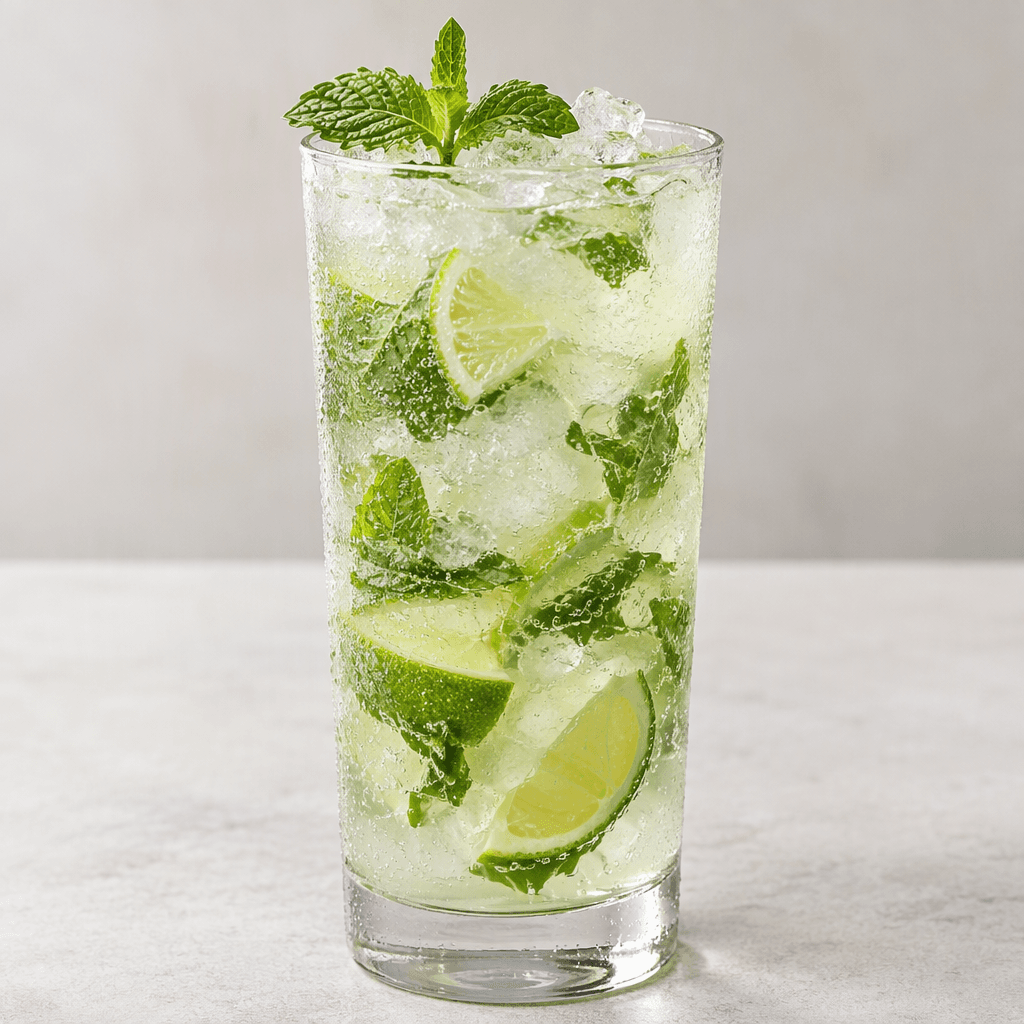
Mojito Calories
Refreshing cocktail made with mint, lime, white rum, soda, and sugar
In season: Summer
CALORIES
GI
POTASSIUM
FIBER
Quick answer
1 cup (medium) of Mojito (220 g) has 187 calories. That works out to 85 calories per 100 g. It contains 23.1 g of carbs, 0.2 g of protein, 0 g of fat and 0.7 g of fiber. Its 17.6 mg of Vitamin C covers 20% of the Daily Value. Its glycemic index is 65 (medium), so it raises blood sugar at a moderate pace.
What is Mojito?
Mojito is a Cuban cocktail made with white rum, lime, mint, sugar and soda water. The mint and lime are gently muddled in the glass, then the drink is poured over plenty of ice and finished with soda.
It tastes bright and citrusy, with cooling mint, a touch of sweetness and a fizzy, icy texture. In Cuba and at bars around the world, it is commonly served cold as a summery drink, on its own or alongside a meal. Most of its carbohydrates come from sugar, while protein and fat are negligible. For a less-sweet version, ask for less syrup and more soda.
Mojito Nutrition Facts
Selected: 100 g
85
KCAL / 100G
Carbs
10.5g
· 4% DV
Protein
0.1g
· 0% DV
Fat
0g
· 0% DV
Fiber
0.3g
· 1% DV
DV is the share of the daily value covered, on a 2,000 kcal reference diet.
Calories come from: Carbs 99% · Protein 1% · Fat 0%
Mojito Vitamins & Minerals
Vitamins
Vitamin C
8mg · 9% DV
B1
0.01mg · 1% DV
B2
0.01mg · 1% DV
B6
0.01mg · 1% DV
Minerals
Calcium
10mg · 1% DV
Magnesium
4mg · 1% DV
Phosphorus
5mg · 1% DV
Potassium ⭐
35mg · 1% DV
How Nutritious Is Mojito?
Nutrient density
Low
How many vitamins, minerals and how much fiber this food carries per calorie. A high score means a lot of nutrition for few calories.
Satiety score
Low
An EatBetter score computed from fiber, protein and calorie density. A high score means staying full longer on the same calories.
Both scores are calculated per 100 g and do not change with the selected portion. The satiety score is EatBetter's own calculation, not a clinical measure.
Mojito Glycemic Index
GLYCEMIC INDEX
GLYCEMIC LOAD
Accounts for portion size — a more realistic measure than GI alone.
How to Burn Off Mojito
To burn the 85 calories in 100 g:
🚶
Walking (5 km/h)
🏃
Running (8 km/h)
🚴
Cycling
🏊
Swimming
Times are calculated with the MET equation for a 70 kg adult. Actual burn varies with your weight, age and pace.
Is Mojito Processed?
NOVA 3
Processed
1. Unprocessed
2. Minimally Processed
3. Processed
4. Ultra-Processed
NOVA classifies foods into 4 groups by industrial processing. NOVA 1 (unprocessed) is the healthiest.
Does Mojito Contain Allergens?
No known major allergens
Which Diets Is Mojito Good For?
Vegan
✓ Suitable
Vegetarian
✓ Suitable
Gluten-Free
✓ Suitable
Dairy-Free
— Not suitable
Mediterranean
✓ Suitable
Paleo
— Not suitable
Whole30
— Not suitable
DASH
— Not suitable
Keto
— Not suitable
Low FODMAP
— Not suitable
Mojito Fat Profile
SATURATED
0g
MONOUNSATURATED
0g
POLYUNSATURATED
0g
Compare Mojito
Foods Similar to Mojito
Frequently Asked Questions About Mojito
How do you make a Mojito?
A classic Mojito is made with white rum, fresh mint, lime juice, sugar, soda water and ice. Gently press the mint with the lime and sugar in a glass, add rum and ice, then top with soda water. Avoid crushing the leaves into tiny pieces, which can make the drink bitter.
What is in a Mojito?
A classic Mojito contains white rum, fresh mint, lime, sugar, soda water and ice. Lime wedges and mint leaves often garnish the glass as well. Some recipes use simple syrup instead of granulated sugar so the sweetener dissolves more evenly.
Is a Mojito alcoholic?
Yes, a traditional Mojito is alcoholic because it contains rum. A “virgin Mojito” or “Mojito mocktail” is made without rum, usually with mint, lime, sweetener, soda water and ice. Ask for the non-alcoholic version explicitly when ordering.
What does a Mojito taste like?
A Mojito tastes bright and citrusy, with cooling mint, sweetness and a light fizz. White rum adds a mild, warm spirit flavor without usually overpowering the lime. The balance changes noticeably with the amount of sugar and lime used.
Where did the Mojito originate?
The Mojito is a Cuban cocktail, closely associated with Havana. Its familiar combination of rum, mint, lime, sugar and soda water reflects ingredients used in Cuban drinks. Stories about its exact early history vary, but its Cuban connection is well established.
What kind of rum goes in a Mojito?
White rum is the usual choice for a Mojito because its relatively light flavor lets the mint and lime stand out. Aged or dark rum gives the drink a richer, more caramel-like character, but changes the taste from the classic version.
How do you muddle mint for a Mojito?
Press the mint gently with the lime and sugar to release its aroma; do not grind or shred the leaves. Over-muddling can bring out bitter flavors and leave small pieces in the drink. If you do not have a muddler, press with the back of a spoon.
Can you make a Mojito with vodka instead of rum?
Yes, vodka can replace rum in a Mojito-style drink, but it will not taste like a classic Mojito. Vodka has less of the rum’s characteristic flavor, so the mint, lime and sugar become more prominent. The variation is sometimes called a vodka Mojito.
Can you make a Mojito ahead of time?
Prepare the rum, lime and sweetener ahead and chill the mixture, but add the mint, ice and soda water just before serving. Ice melts and dilutes the drink, while mint can lose its fresh aroma if left soaking. For a pitcher, mix in batches close to serving time.
What is the difference between soda water and tonic in a Mojito?
Soda water is unsweetened and is the classic Mojito mixer; tonic water contains quinine and usually has a bitter, often sweetened taste. Using tonic changes the cocktail’s flavor, so choose plain soda water or sparkling water for a closer-to-classic Mojito.
Have another question about Mojito?
Ask the AI nutrition coach — calories, portions, alternatives and more, answered in seconds in the app.

Scan calories with your camera
Instant AI nutrition analysis

Nutrition data compiled from USDA FoodData Central and scientific sources.