

Ready & Packaged Foods
All →Vegetables & Legumes
All →Desserts & Confectionery
All →Meat & Protein
All →Grains & Bakery
All →Beverages
All →Milk & Dairy
All →

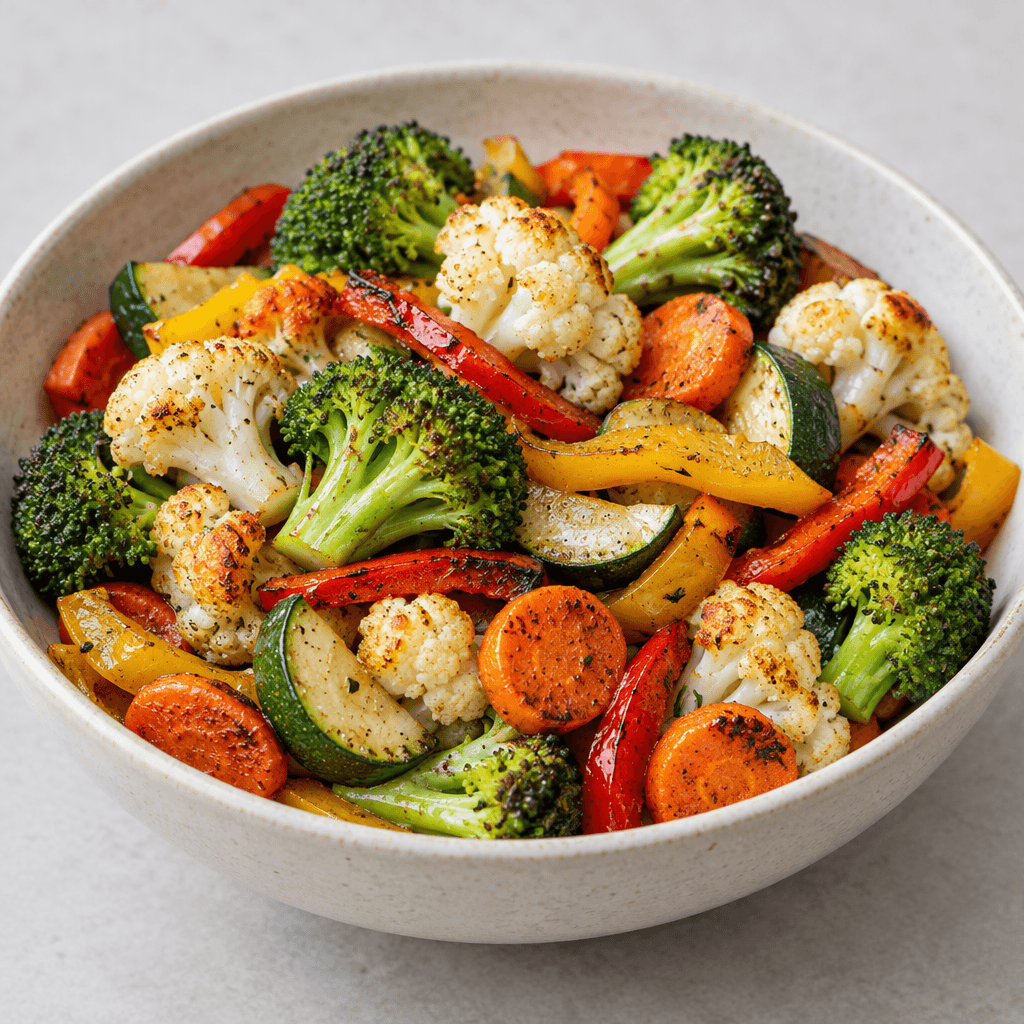
Mixed Vegetables (Airfryer) Calories
Low calorie, high fiber, rich in vitamins and minerals
In season: Spring · Summer · Autumn · Winter
CALORIES
GI
POTASSIUM
FIBER
Quick answer
1 cup (medium) of Mixed Vegetables (Airfryer) (120 g) has 66 calories. That works out to 55 calories per 100 g. It contains 12.2 g of carbs, 2.5 g of protein, 0.8 g of fat and 3.8 g of fiber. Its 492 µg of Vitamin A covers 55% of the Daily Value. Its glycemic index is 35 (low), so it raises blood sugar slowly.
What is Mixed Vegetables (Airfryer)?
Mixed vegetables in the air fryer are a simple side dish made by cooking a selection of vegetables—such as broccoli, cauliflower, carrot, zucchini and bell peppers—in circulating hot air. It is a flexible modern preparation rather than a dish tied to one particular region. A little oil helps the pieces brown at the edges while keeping their varied colours and textures.
Serve them alongside a main course, add them to a grain bowl, or enjoy them as an easy vegetable side. They are low in calories and provide fibre; a 100 g portion has 3.2 g of fibre. For an easy pairing, add a squeeze of lemon or a spoonful of yogurt sauce. Cut the vegetables to similar sizes so they cook evenly, and use only as much oil as you need.
Mixed Vegetables (Airfryer) Nutrition Facts
Selected: 100 g
55
KCAL / 100G
Carbs
10.2g
· 4% DV
Protein
2.1g
· 4% DV
Fat
0.7g
· 1% DV
Fiber
3.2g
· 11% DV
DV is the share of the daily value covered, on a 2,000 kcal reference diet.
Calories come from: Carbs 74% · Protein 15% · Fat 11%
Mixed Vegetables (Airfryer) Vitamins & Minerals
Vitamins
Vitamin A
410µg · 46% DV
Vitamin C
28mg · 31% DV
Vitamin K
32µg · 27% DV
Folate
36µg · 9% DV
Minerals
Potassium ⭐
260mg · 8% DV
Iron
1mg · 6% DV
Magnesium
19mg · 5% DV
Phosphorus
38mg · 5% DV
How Nutritious Is Mixed Vegetables (Airfryer)?
Nutrient density
Very high
How many vitamins, minerals and how much fiber this food carries per calorie. A high score means a lot of nutrition for few calories.
Satiety score
Medium
An EatBetter score computed from fiber, protein and calorie density. A high score means staying full longer on the same calories.
Both scores are calculated per 100 g and do not change with the selected portion. The satiety score is EatBetter's own calculation, not a clinical measure.
Mixed Vegetables (Airfryer) Glycemic Index
GLYCEMIC INDEX
GLYCEMIC LOAD
Accounts for portion size — a more realistic measure than GI alone.
How to Burn Off Mixed Vegetables (Airfryer)
To burn the 55 calories in 100 g:
🚶
Walking (5 km/h)
🏃
Running (8 km/h)
🚴
Cycling
🏊
Swimming
Times are calculated with the MET equation for a 70 kg adult. Actual burn varies with your weight, age and pace.
Is Mixed Vegetables (Airfryer) Processed?
NOVA 2
Minimally Processed
1. Unprocessed
2. Minimally Processed
3. Processed
4. Ultra-Processed
NOVA classifies foods into 4 groups by industrial processing. NOVA 1 (unprocessed) is the healthiest.
Does Mixed Vegetables (Airfryer) Contain Allergens?
No known major allergens
Which Diets Is Mixed Vegetables (Airfryer) Good For?
Vegan
✓ Suitable
Vegetarian
✓ Suitable
Gluten-Free
✓ Suitable
Dairy-Free
— Not suitable
Mediterranean
✓ Suitable
Paleo
✓ Suitable
Whole30
— Not suitable
DASH
— Not suitable
Keto
— Not suitable
Low FODMAP
— Not suitable
Mixed Vegetables (Airfryer) Fat Profile
SATURATED
0.13g
MONOUNSATURATED
0.09g
POLYUNSATURATED
0.11g
Omega 6:3 ratio 1.7:1
Below the ideal 4:1 — a good omega balance.
Compare Mixed Vegetables (Airfryer)
Foods Similar to Mixed Vegetables (Airfryer)
Frequently Asked Questions About Mixed Vegetables (Airfryer)
How do you make mixed vegetables in an air fryer?
Cut broccoli, cauliflower, carrots, zucchini and bell peppers into fairly even pieces, then toss them with a little oil and seasoning. Spread them in the basket without crowding and cook until tender with browned edges.
How long do air-fryer mixed vegetables take, and at what temperature?
Cook air-fryer mixed vegetables at 375°F (190°C) for about 12–18 minutes, shaking the basket halfway through. The exact time depends on piece size and your appliance, so check that the carrots and cauliflower are tender.
Can you cook frozen mixed vegetables in an air fryer without thawing them?
Yes, put frozen vegetables straight into the air fryer without thawing. Leave room for air to circulate and shake the basket during cooking. Frozen vegetables release extra moisture, so cook them a little longer if needed for browned edges.
How do you keep air-fryer mixed vegetables from getting soggy?
Avoid overcrowding the basket: packed vegetables trap steam instead of browning. Dry washed vegetables thoroughly, spread them in a single layer, and cook in batches if necessary. Cut watery zucchini into substantial pieces rather than tiny chunks.
Which vegetables work best together in air-fryer mixed vegetables?
Broccoli, cauliflower, carrots, zucchini and bell peppers make a colorful mix with a range of textures. You can add Brussels sprouts or potatoes, too, but cut firm vegetables smaller or start them cooking before adding quicker-cooking zucchini and peppers.
Do you need to use oil for air-fryer mixed vegetables?
No, oil is optional; the vegetables will cook without it. A small amount of olive oil helps the surfaces brown and makes seasonings stick better. Toss the vegetables with oil in a bowl before placing them in the basket.
What seasonings taste good on air-fryer mixed vegetables?
Garlic powder, black pepper, dried oregano or thyme, and a little olive oil are an easy combination. Add salt after cooking to limit moisture drawing out early, then finish with lemon juice or chili flakes if you like extra brightness or heat.
How should you store and reheat leftover air-fryer mixed vegetables?
Refrigerate cooled leftovers in a covered container. For a better texture, reheat them in the air fryer rather than the microwave, checking frequently so zucchini and peppers do not turn mushy. Use the leftovers in a grain bowl or omelet.
Should you wash vegetables before making air-fryer mixed vegetables?
Yes, rinse the vegetables under running water before cutting them, then dry them thoroughly with a clean towel. Excess water creates steam and interferes with browning. There is no need to soak the vegetables in water.
What goes well with air-fryer mixed vegetables?
Serve air-fryer mixed vegetables alongside grilled chicken, fish or tofu, or make them part of a meat-free meal with chickpeas or rice. A yogurt-herb dip or lemon-tahini dressing works well with the browned vegetables.
Have another question about Mixed Vegetables (Airfryer)?
Ask the AI nutrition coach — calories, portions, alternatives and more, answered in seconds in the app.

Scan calories with your camera
Instant AI nutrition analysis

Nutrition data compiled from USDA FoodData Central and scientific sources.