

Ready & Packaged Foods
All →Vegetables & Legumes
All →Desserts & Confectionery
All →Meat & Protein
All →Grains & Bakery
All →Beverages
All →Milk & Dairy
All →

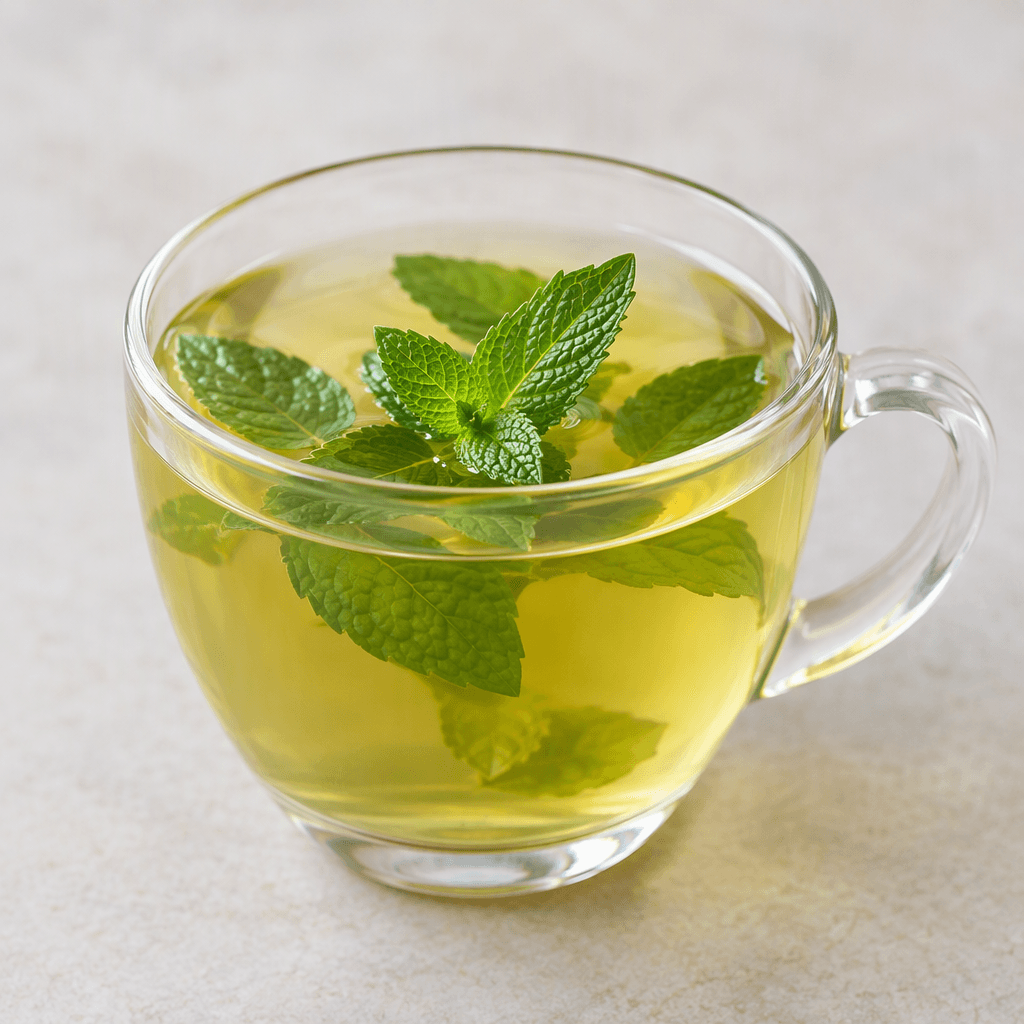
Mint Tea Calories
Refreshing herbal tea, low calorie, antioxidant
In season: Spring · Summer · Autumn · Winter
CALORIES
GI
POTASSIUM
FIBER
Quick answer
1 cup (medium) of Mint Tea (200 g) has 4 calories. That works out to 2 calories per 100 g. It contains 0.8 g of carbs, 0.2 g of protein, 0 g of fat and 0.2 g of fiber. Its glycemic index is 0 (low), so it raises blood sugar slowly.
What is Mint Tea?
Mint Tea is an herbal infusion made by steeping fresh or dried mint leaves in hot water; it contains no tea leaves unless they are added separately. Mint infusions are enjoyed in many places, while versions such as Moroccan mint tea may also include green tea and sugar.
The unsweetened infusion has a clean, cooling aroma and a gently herbal taste, and can be served hot or chilled. It works after a meal or as a caffeine-free alternative to ordinary tea. With roughly 2 calories per 100 g, it is mostly water and contributes very little energy when served plain. Add lemon for brightness, or sweeten it to taste.
Mint Tea Nutrition Facts
Selected: 100 g
2
KCAL / 100G
Carbs
0.4g
· 0% DV
Protein
0.1g
· 0% DV
Fat
0g
· 0% DV
Fiber
0.1g
· 0% DV
DV is the share of the daily value covered, on a 2,000 kcal reference diet.
Calories come from: Carbs 80% · Protein 20% · Fat 0%
Mint Tea Vitamins & Minerals
Vitamins
B1
0.01mg · 1% DV
B2
0.01mg · 1% DV
B6
0.01mg · 1% DV
Vitamin C
1mg · 1% DV
Minerals
Calcium
5mg · 1% DV
Iron
0mg · 0% DV
Magnesium
1mg · 0% DV
Zinc
0mg · 0% DV
How Nutritious Is Mint Tea?
Nutrient density
Low
How many vitamins, minerals and how much fiber this food carries per calorie. A high score means a lot of nutrition for few calories.
Satiety score
Medium
An EatBetter score computed from fiber, protein and calorie density. A high score means staying full longer on the same calories.
Both scores are calculated per 100 g and do not change with the selected portion. The satiety score is EatBetter's own calculation, not a clinical measure.
Mint Tea Glycemic Index
GLYCEMIC INDEX
GLYCEMIC LOAD
Accounts for portion size — a more realistic measure than GI alone.
How to Burn Off Mint Tea
To burn the 2 calories in 100 g:
🚶
Walking (5 km/h)
🏃
Running (8 km/h)
🚴
Cycling
🏊
Swimming
Times are calculated with the MET equation for a 70 kg adult. Actual burn varies with your weight, age and pace.
Is Mint Tea Processed?
NOVA 2
Minimally Processed
1. Unprocessed
2. Minimally Processed
3. Processed
4. Ultra-Processed
NOVA classifies foods into 4 groups by industrial processing. NOVA 1 (unprocessed) is the healthiest.
Does Mint Tea Contain Allergens?
No known major allergens
Which Diets Is Mint Tea Good For?
Vegan
✓ Suitable
Vegetarian
✓ Suitable
Gluten-Free
✓ Suitable
Dairy-Free
— Not suitable
Mediterranean
✓ Suitable
Paleo
✓ Suitable
Whole30
— Not suitable
DASH
— Not suitable
Keto
— Not suitable
Low FODMAP
— Not suitable
Mint Tea Fat Profile
SATURATED
0g
MONOUNSATURATED
0g
POLYUNSATURATED
0g
Compare Mint Tea
Foods Similar to Mint Tea
Frequently Asked Questions About Mint Tea
Does Mint Tea have caffeine?
Pure Mint Tea is naturally caffeine-free because it is an infusion of mint leaves, not tea from the tea plant. Blends that include black or green tea can contain caffeine, so the ingredients matter.
Can Mint Tea help with nausea?
Mint Tea may feel soothing for mild nausea, and its aroma can be refreshing, but it is not a proven treatment for the cause. Peppermint can aggravate reflux in some people.
Can Mint Tea make acid reflux worse?
Yes, Mint Tea can worsen heartburn or reflux for some people. Mint may relax the muscle between the stomach and esophagus, making it easier for stomach contents to rise.
How do you make Mint Tea with fresh mint?
To make Mint Tea, rinse fresh mint leaves, place them in a cup or teapot, and pour hot water over them. Let the leaves infuse, then strain or leave them in as you drink.
Is Mint Tea made with peppermint or spearmint?
Mint Tea can be made with peppermint, spearmint, or other mint varieties; the name alone does not specify which one. Peppermint tends to taste cooler and stronger, while spearmint is often milder and sweeter.
Is Mint Tea good to drink before bed?
Mint Tea is caffeine-free, so it is unlikely to keep most people awake the way caffeinated tea can. If mint triggers your heartburn, though, drinking it near bedtime may make sleep less comfortable.
Can Mint Tea help with bloating after a meal?
Mint Tea may ease the sensation of gas or bloating for some people after eating. It does not work for everyone, and people prone to reflux may find that mint makes their symptoms worse.
Is Mint Tea hydrating?
Yes, Mint Tea contributes fluid and can count toward hydration. A plain, unsweetened cup is a caffeine-free alternative to water; adding sugar or honey changes the drink but not its fluid content.
Is fresh Mint Tea better than tea bags?
Neither is automatically better: fresh mint gives a bright, leafy flavor, while tea bags are convenient and consistent. Both can make a caffeine-free infusion; the taste depends on the mint and how strongly it is brewed.
Is Mint Tea safe during pregnancy?
An occasional, mild cup of Mint Tea is generally considered different from concentrated mint products or supplements, which may not be appropriate in pregnancy. If you have pregnancy complications or take medication, ask your clinician about your situation.
Have another question about Mint Tea?
Ask the AI nutrition coach — calories, portions, alternatives and more, answered in seconds in the app.

Scan calories with your camera
Instant AI nutrition analysis

Nutrition data compiled from USDA FoodData Central and scientific sources.