

Ready & Packaged Foods
All →Vegetables & Legumes
All →Desserts & Confectionery
All →Meat & Protein
All →Grains & Bakery
All →Beverages
All →Milk & Dairy
All →

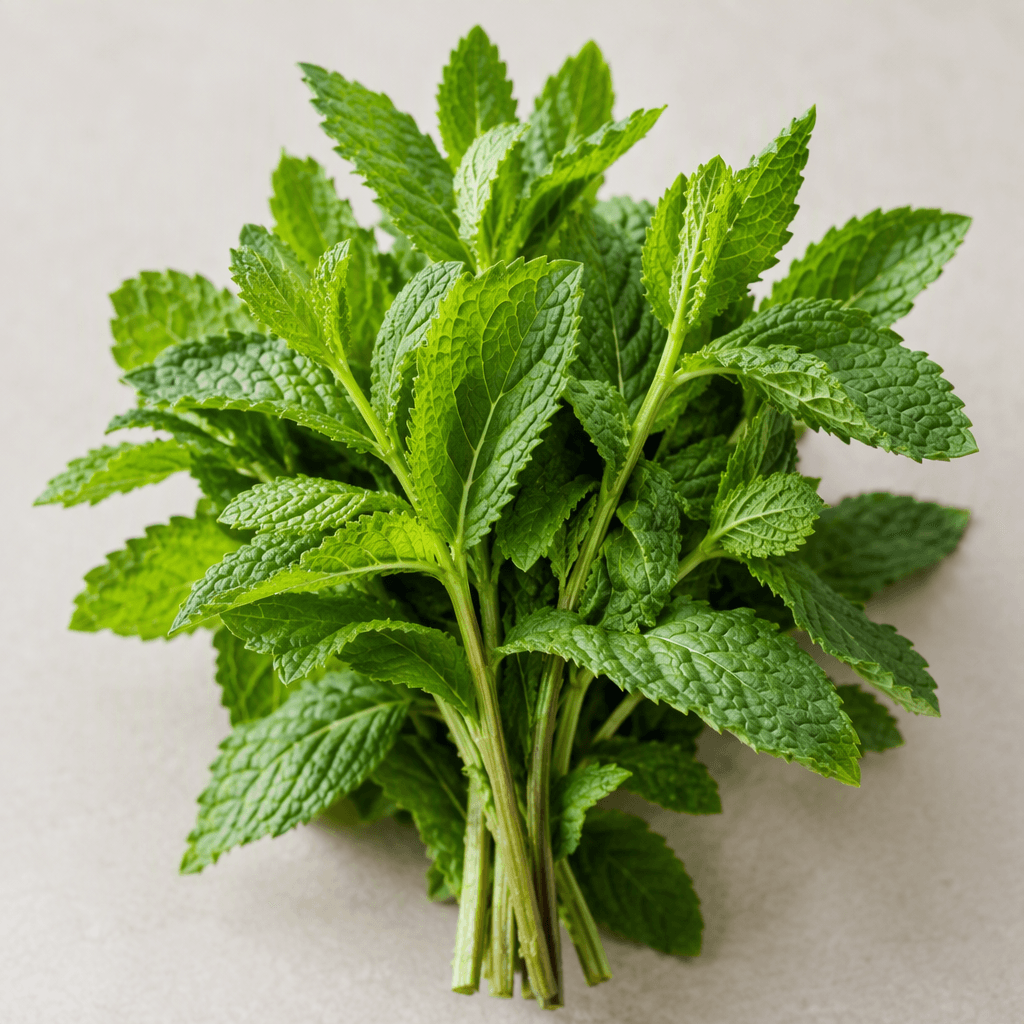
Mint Calories
Refreshing, antioxidant, aids digestion
In season: Spring · Summer · Autumn
CALORIES
GI
POTASSIUM
FIBER
Quick answer
1 tablespoon (chopped) of Mint (5 g) has 2 calories. That works out to 44 calories per 100 g. It contains 0.4 g of carbs, 0.2 g of protein, 0 g of fat and 0.3 g of fiber. Its glycemic index is 15 (low), so it raises blood sugar slowly.
What is Mint?
Mint is an aromatic herb grown for its fresh, fragrant leaves. They are chopped into salads, stirred into yoghurt sauces, or added to soups and grain dishes; dried mint is also widely used. Across the Middle East and Mediterranean, fresh mint often accompanies meals, while in many English-speaking homes it is brewed as tea or added to drinks and summer salads.
Its cool, bright flavour can lift a dish without much seasoning, and the tender leaves are best added near the end of cooking or served raw. Mint contains fibre, though the small amounts typically used in a meal contribute only modestly. For a light sauce, mix chopped mint with plain yoghurt and a squeeze of lemon, or steep a few leaves in hot water for a simple herbal tea.
Mint Nutrition Facts
Selected: 100 g
44
KCAL / 100G
Carbs
8.4g
· 3% DV
Protein
3.3g
· 7% DV
Fat
0.7g
· 1% DV
Fiber
6.8g
· 24% DV
DV is the share of the daily value covered, on a 2,000 kcal reference diet.
Calories come from: Carbs 63% · Protein 25% · Fat 12%
Mint Vitamins & Minerals
Vitamins
Vitamin A
424µg · 47% DV
Folate
114µg · 28% DV
Vitamin K
31.8µg · 27% DV
B2
0.25mg · 19% DV
Minerals
Iron
12mg · 67% DV
Manganese
1mg · 43% DV
Calcium
199mg · 20% DV
Magnesium
63mg · 15% DV
How Nutritious Is Mint?
Nutrient density
Very high
How many vitamins, minerals and how much fiber this food carries per calorie. A high score means a lot of nutrition for few calories.
Satiety score
High
An EatBetter score computed from fiber, protein and calorie density. A high score means staying full longer on the same calories.
Both scores are calculated per 100 g and do not change with the selected portion. The satiety score is EatBetter's own calculation, not a clinical measure.
Mint Glycemic Index
GLYCEMIC INDEX
GLYCEMIC LOAD
Accounts for portion size — a more realistic measure than GI alone.
How to Burn Off Mint
To burn the 44 calories in 100 g:
🚶
Walking (5 km/h)
🏃
Running (8 km/h)
🚴
Cycling
🏊
Swimming
Times are calculated with the MET equation for a 70 kg adult. Actual burn varies with your weight, age and pace.
Is Mint Processed?
NOVA 1
Unprocessed
1. Unprocessed
2. Minimally Processed
3. Processed
4. Ultra-Processed
NOVA classifies foods into 4 groups by industrial processing. NOVA 1 (unprocessed) is the healthiest.
Does Mint Contain Allergens?
No known major allergens
Which Diets Is Mint Good For?
Vegan
✓ Suitable
Vegetarian
✓ Suitable
Gluten-Free
✓ Suitable
Dairy-Free
— Not suitable
Mediterranean
✓ Suitable
Paleo
✓ Suitable
Whole30
— Not suitable
DASH
— Not suitable
Keto
✓ Suitable
Low FODMAP
— Not suitable
Mint Fat Profile
SATURATED
0.18g
MONOUNSATURATED
0.08g
POLYUNSATURATED
0.11g
Omega 6:3 ratio 0.6:1
Below the ideal 4:1 — a good omega balance.
Compare Mint
Foods Similar to Mint
Frequently Asked Questions About Mint
What are the benefits of mint tea?
Mint tea is a caffeine-free drink with a refreshing flavor, and some people find it soothing after meals. Peppermint may ease mild indigestion for some, but mint is not a cure and can aggravate heartburn in people prone to reflux.
How do you make mint tea?
Steep fresh or dried mint leaves in hot water, then strain and drink. Avoid boiling the leaves for a long time, which can make the flavor harsher. Add lemon or honey if you like, once the drink has cooled slightly.
How do you keep fresh mint fresh?
Keep fresh mint in the refrigerator, wrapped loosely in a slightly damp paper towel and placed in a container or bag. Remove damaged leaves first, and avoid trapping excess water, which can make the bunch turn slimy or spoil faster.
Can you freeze fresh mint?
Yes, you can freeze fresh mint, although thawed leaves become soft and are better for cooked dishes than salads. Wash and dry the leaves thoroughly, then freeze them in a sealed container; add them straight to soups, sauces, or stews.
Can you eat mint leaves raw?
Yes, washed mint leaves can be eaten raw. Their cool, aromatic flavor works well in salads, yogurt sauces, fruit, and drinks. Pick off the leaves and discard any tough stems for a more pleasant texture.
Does mint tea contain caffeine?
No, pure mint tea is naturally caffeine-free because it is made from mint leaves rather than tea leaves. A blend containing black or green tea will contain caffeine, so check what is mixed into the drink if you are avoiding it.
Does mint help with bad breath?
Mint can temporarily freshen breath because its strong aroma masks unpleasant smells, but it does not remove the underlying cause. Persistent bad breath may come from oral hygiene or a health issue, so brushing, flossing, and dental care matter.
How do you wash mint before using it?
Rinse mint gently under cool, clean running water before using it, even if the leaves look clean. Shake off the water or dry the leaves with a clean towel; storing wet mint can make it spoil more quickly.
Can mint make acid reflux worse?
Yes, mint can worsen heartburn or reflux symptoms in some people because it may relax the valve between the stomach and esophagus. If mint reliably triggers your symptoms, avoid it, especially in concentrated forms such as peppermint tea.
How can you use up a bunch of fresh mint?
Use extra fresh mint in salads, yogurt sauces, iced drinks, or a quick mint tea. You can also chop and freeze it for later use in cooked dishes; frozen mint loses its crisp texture but keeps useful flavor.
Have another question about Mint?
Ask the AI nutrition coach — calories, portions, alternatives and more, answered in seconds in the app.

Scan calories with your camera
Instant AI nutrition analysis

Nutrition data compiled from USDA FoodData Central and scientific sources.