

Ready & Packaged Foods
All →Vegetables & Legumes
All →Desserts & Confectionery
All →Meat & Protein
All →Grains & Bakery
All →Beverages
All →Milk & Dairy
All →

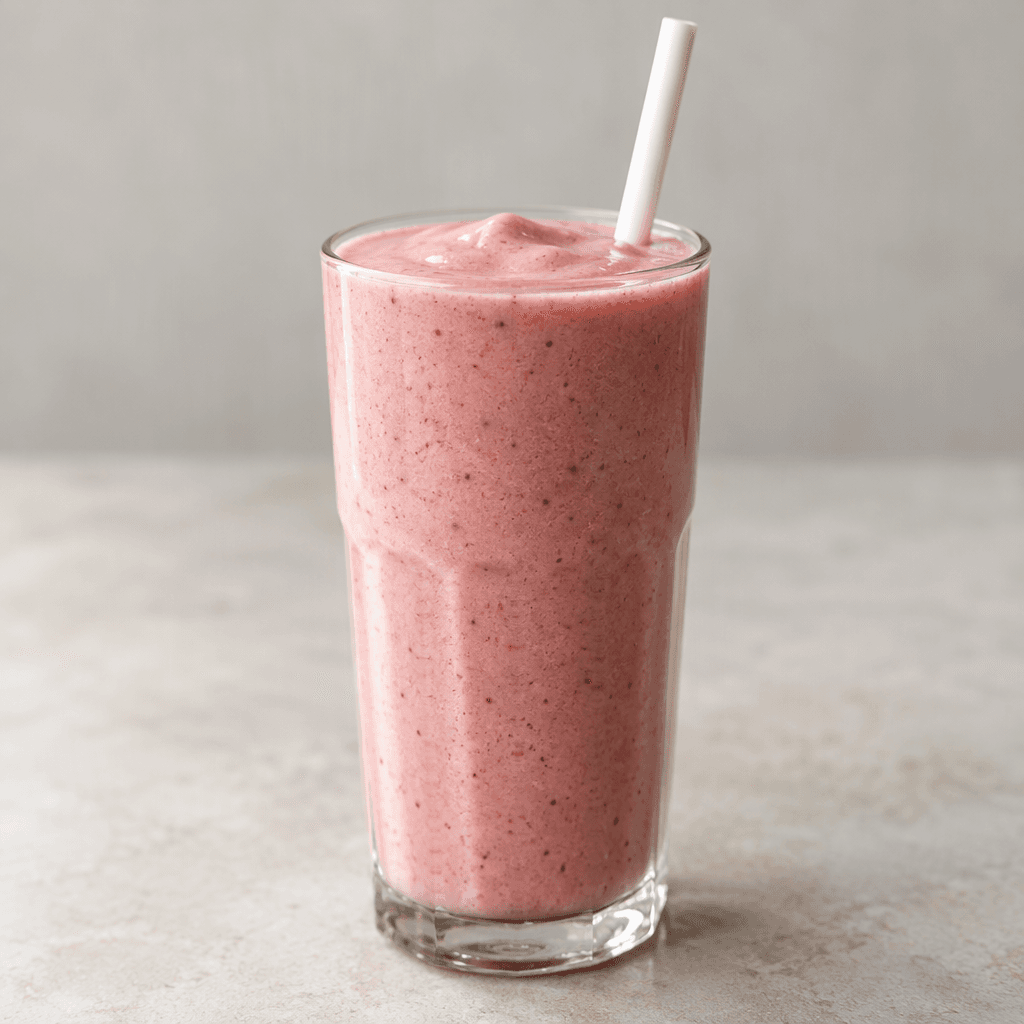
Milkshake Calories
Cold beverage made with milk, ice cream, and sweetener
In season: Spring · Summer
CALORIES
GI
POTASSIUM
FIBER
Quick answer
1 cup (medium) of Milkshake (240 g) has 264 calories. That works out to 110 calories per 100 g. It contains 39.6 g of carbs, 8.2 g of protein, 7.7 g of fat and 0.5 g of fiber. Its 1 µg of B12 covers 40% of the Daily Value. Its glycemic index is 65 (medium), so it raises blood sugar at a moderate pace.
What is Milkshake?
A milkshake is a chilled drink made by blending milk, ice cream and a sweetener. It is closely associated with American diners, where classic versions are often flavoured with chocolate, strawberry or vanilla; fruit and other flavourings are common too.
It is usually served very cold in a tall glass, thick enough to sip through a straw, and enjoyed as a dessert or café treat. Depending on where you live, it may accompany a burger or be served on its own. Rich, sweet and creamy, it offers some protein from the milk but little fibre. For a lighter shake, choose a smaller serving or ask for less ice cream or syrup.
Milkshake Nutrition Facts
Selected: 100 g
110
KCAL / 100G
Carbs
16.5g
· 6% DV
Protein
3.4g
· 7% DV
Fat
3.2g
· 4% DV
Fiber
0.2g
· 1% DV
DV is the share of the daily value covered, on a 2,000 kcal reference diet.
Calories come from: Carbs 61% · Protein 13% · Fat 26%
Milkshake Vitamins & Minerals
Vitamins
B12
0.4µg · 17% DV
B2
0.16mg · 12% DV
B5
0.35mg · 7% DV
Biotin
2µg · 7% DV
Minerals
Phosphorus
90mg · 13% DV
Calcium
120mg · 12% DV
Iodine
16µg · 11% DV
Selenium
2.5µg · 5% DV
How Nutritious Is Milkshake?
Nutrient density
Medium
How many vitamins, minerals and how much fiber this food carries per calorie. A high score means a lot of nutrition for few calories.
Satiety score
Medium
An EatBetter score computed from fiber, protein and calorie density. A high score means staying full longer on the same calories.
Both scores are calculated per 100 g and do not change with the selected portion. The satiety score is EatBetter's own calculation, not a clinical measure.
Milkshake Glycemic Index
GLYCEMIC INDEX
GLYCEMIC LOAD
Accounts for portion size — a more realistic measure than GI alone.
How to Burn Off Milkshake
To burn the 110 calories in 100 g:
🚶
Walking (5 km/h)
🏃
Running (8 km/h)
🚴
Cycling
🏊
Swimming
Times are calculated with the MET equation for a 70 kg adult. Actual burn varies with your weight, age and pace.
Is Milkshake Processed?
NOVA 3
Processed
1. Unprocessed
2. Minimally Processed
3. Processed
4. Ultra-Processed
NOVA classifies foods into 4 groups by industrial processing. NOVA 1 (unprocessed) is the healthiest.
Does Milkshake Contain Allergens?
Contains these allergens:
Which Diets Is Milkshake Good For?
Vegan
— Not suitable
Vegetarian
✓ Suitable
Gluten-Free
— Not suitable
Dairy-Free
— Not suitable
Mediterranean
— Not suitable
Paleo
— Not suitable
Whole30
— Not suitable
DASH
— Not suitable
Keto
— Not suitable
Low FODMAP
— Not suitable
Milkshake Fat Profile
SATURATED
2.1g
MONOUNSATURATED
0.8g
POLYUNSATURATED
0.1g
Omega 6:3 ratio 3:1
Below the ideal 4:1 — a good omega balance.
Compare Milkshake
Foods Similar to Milkshake
Frequently Asked Questions About Milkshake
How do you make a milkshake?
Blend milk with ice cream until smooth, then add flavorings such as fruit, chocolate, or vanilla if you like. Start with less milk and add more gradually to get the thickness you want.
What is in a milkshake?
A classic milkshake contains milk, ice cream, and often a sweetener or flavoring. Common additions include fruit, chocolate, or syrups, while whipped cream and other toppings are optional.
What is the difference between a milkshake and a smoothie?
A milkshake is usually made with milk and ice cream, giving it a creamy, dessert-like texture. A smoothie is typically blended from fruit with ingredients such as yogurt or milk, so fruit is usually its main feature.
How do you make a milkshake without ice cream?
You can make a milkshake without ice cream by blending milk with yogurt and banana, or with frozen fruit. These ingredients add thickness, though the result will taste less like a classic ice-cream milkshake.
Why is my milkshake too thin?
A milkshake turns out thin when it contains too much milk or the ice cream has softened too much. Add more cold ice cream or frozen fruit, and blend briefly so the mixture thickens without warming up.
Can you make a milkshake without a blender?
Yes, you can make a milkshake without a blender if the ingredients are soft. Shake softened ice cream and milk in a tightly closed jar, or whisk them together; mash fruit first so it blends smoothly.
Can you use frozen fruit in a milkshake?
Yes, frozen fruit works well in a milkshake and can make it thicker and colder. Blend it with the milk and ice cream in small additions, since too much fruit can overpower the flavor and make the drink difficult to blend.
How long does a milkshake last in the fridge?
A milkshake is best enjoyed immediately because the ice cream melts and the texture separates as it sits. If you have leftovers, cover and refrigerate them briefly, then stir or blend again before drinking; do not leave the drink at room temperature.
Which milk is best for a milkshake?
Whole milk gives a milkshake a richer, creamier texture, while lower-fat milk makes it lighter. Lactose-free or plant-based milk can also work, though each changes the flavor and consistency slightly.
Is a milkshake a healthy drink?
A typical milkshake is more of a sweet treat than an everyday drink because it combines milk with ice cream and often added sweeteners. For a less sweet version, use fruit for flavor and reduce the ice cream or syrup.
Have another question about Milkshake?
Ask the AI nutrition coach — calories, portions, alternatives and more, answered in seconds in the app.

Scan calories with your camera
Instant AI nutrition analysis

Nutrition data compiled from USDA FoodData Central and scientific sources.