

Ready & Packaged Foods
All →Vegetables & Legumes
All →Desserts & Confectionery
All →Meat & Protein
All →Grains & Bakery
All →Beverages
All →Milk & Dairy
All →

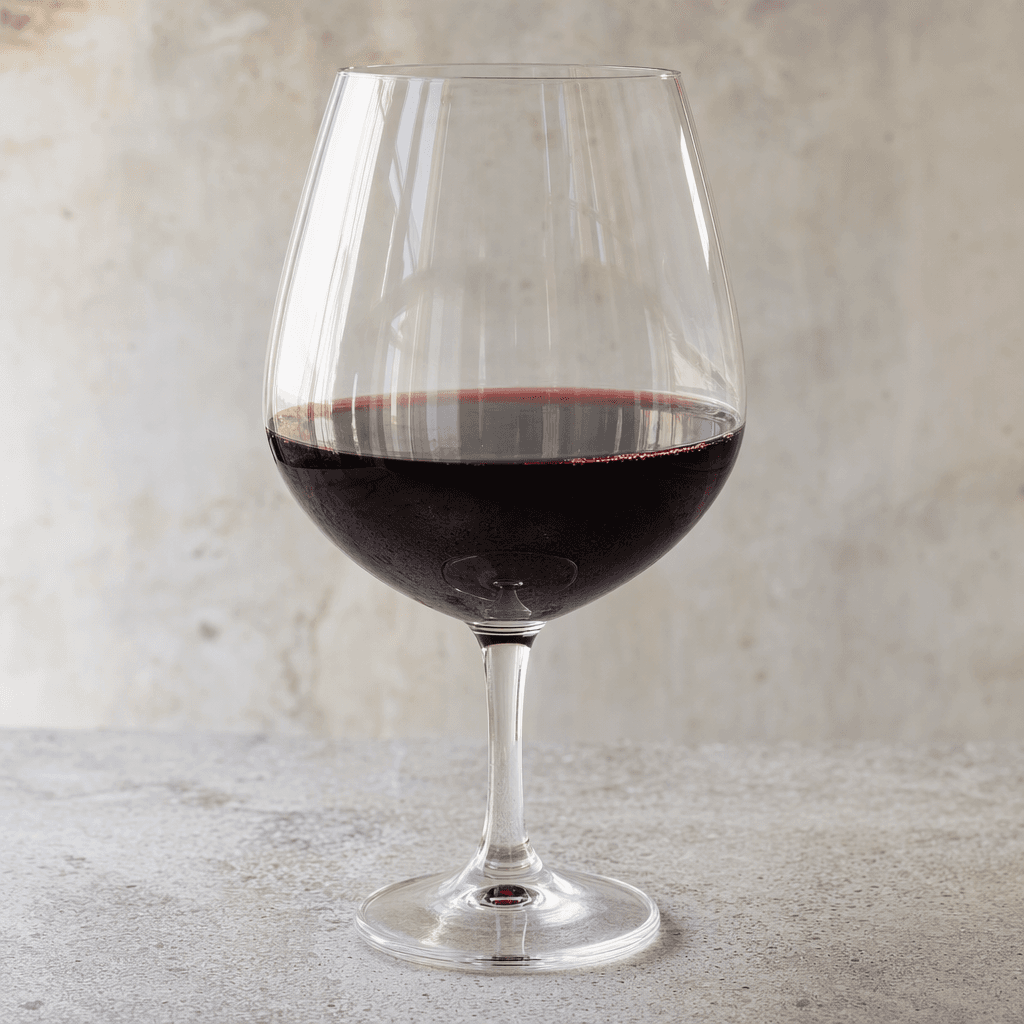
Merlot wine Calories
Red wine; medium-bodied; contains polyphenols
CALORIES · 100 G
GI
POTASSIUM · 100 G
FIBER · 100 G
Quick answer
1 ounce (small) of Merlot wine (30 g) has 26 calories. That works out to 85 calories per 100 g. It contains 0.8 g of carbs, 0 g of protein, 0 g of fat and 0 g of fiber. Its glycemic index is 0 (low), so it raises blood sugar slowly.
Merlot wine Nutrition Facts
Selected: 1 ounce (small) · 30 g
26
KCAL / 30G
Carbs
0.8g
· 0% DV
Protein
0g
· 0% DV
Fat
0g
· 0% DV
Fiber
0g
· 0% DV
DV is the share of the daily value covered, on a 2,000 kcal reference diet.
Calories come from: Carbs 100% · Protein 0% · Fat 0%
Merlot wine nutrition facts table · 1 ounce (small) (30 g)
| Nutrient | Amount | % DV |
|---|---|---|
| Calories | 26 kcal | |
| Total fat | 0 g | 0% |
| Saturated fat | 0 g | 0% |
| Trans fat | 0 g | |
| Sodium | 1.2 mg | 0% |
| Total carbohydrate | 0.8 g | 0% |
| Fiber | 0 g | 0% |
| Protein | 0 g | 0% |
Calories: Calories measure energy. Average daily need is 2,000 kcal. Excess calories are stored as fat, too few cause weight loss.
Carbs: Your body's primary energy source. The brain runs exclusively on carbs. Daily need: 275g.
Protein: Essential for muscle repair and cell growth. Daily need: 50g. Keeps you full and boosts metabolism.
Fat: Needed for hormone production and vitamin absorption. Daily need: 78g. Limit saturated fats, choose unsaturated.
Fiber: Critical for digestive health and satiety. Daily need: 28g. Stabilizes blood sugar, lowers cholesterol.

Log this food in EatBetter
100,000+ people use it
- Get your daily calorie target
- Snap your meal, log it in seconds
- See every vitamin and mineral

📸 Scan the code to get the app free.

How Many Calories in 1 Small oz of Merlot wine?
| Serving | Amount | Calories |
|---|---|---|
| 1 ounce (small) | 30 g | 26 kcal |
| 3 ounce (medium) | 90 g | 77 kcal |
| 100 g | 100 g | 85 kcal |
| 1 serving (medium) | 120 g | 102 kcal |
| 5 ounce (large) | 150 g | 128 kcal |
| 1 cup (medium) | 240 g | 204 kcal |
| 1 bottle (whole) | 750 g | 638 kcal |
Calculated from 85 calories per 100 g.
Frequently Asked Questions About Merlot wine
Is Merlot wine sweet or dry?
Merlot wine is usually dry, not sweet, although ripe fruit flavors can make it taste plush or sweet-fruited. The amount of residual sugar varies by bottle, so a sweet-style Merlot is possible but not the typical style.
What does Merlot wine taste like?
Merlot wine is commonly medium-bodied, with flavors of plum, cherry, or blackberry and relatively soft tannins. Oak aging can add notes such as vanilla or spice, while climate and winemaking shape the final taste.
What food goes well with Merlot wine?
Merlot wine pairs well with roast chicken, burgers, grilled meats, mushroom dishes, and tomato-based meals. Its softer tannins suit savory food without requiring a very rich steak; avoid pairing a particularly fruity bottle with highly spicy dishes.
Should Merlot wine be chilled?
Yes, Merlot wine is best served slightly cool rather than warm or icy cold. Chilling can make a bottle feel fresher, while serving it too cold can mute its fruit and aroma; briefly let an over-chilled glass warm up.
What is the difference between Merlot and Cabernet Sauvignon?
Merlot is generally softer, fruitier, and less tannic than Cabernet Sauvignon, which often tastes firmer and more structured. These are tendencies, not rules: climate, blending, oak, and winemaking can make individual bottles quite different.
Does Merlot wine need to breathe before drinking?
Merlot wine does not always need decanting. A young, straightforward bottle can be poured and enjoyed; if a fuller or tightly wound Merlot seems closed, letting it sit in a decanter or glass may soften its aromas.
How long does Merlot wine last after opening?
Opened Merlot wine generally keeps best for a few days when recorked and refrigerated. Air gradually dulls its fruit and changes its flavor, so bring a glass toward serving temperature before drinking and discard it if it smells off.
Is Merlot wine good for beginners?
Yes, Merlot wine is often approachable for new red-wine drinkers because its fruit-forward flavor and softer tannins can feel less drying than more structured reds. Try a glass with food to see whether you prefer a lighter or fuller style.
Can you cook with Merlot wine?
Yes, Merlot wine works in braises, stews, and savory pan sauces. Choose a dry bottle you would enjoy drinking, rather than a sweet cooking wine; cooking reduces some alcohol, but does not reliably remove all of it.
Does Merlot wine affect sleep?
Yes, Merlot wine contains alcohol, which can make you feel sleepy at first but disrupt sleep later in the night. Drinking close to bedtime may increase that effect, even when the wine seems relaxing.
Merlot wine Vitamins & Minerals
Vitamins
B6
0.02mg · 1% DV
B2
0.01mg · 1% DV
B3
0.06mg · 0% DV
B5
0.02mg · 0% DV
Minerals
Manganese
0.04mg · 2% DV
Potassium ⭐
38mg · 1% DV
Magnesium
3.6mg · 1% DV
Phosphorus
6mg · 1% DV
Sodium
1.2mg · 0% DV
Merlot wine Glycemic Index
GLYCEMIC INDEX
GLYCEMIC LOAD
Accounts for portion size — a more realistic measure than GI alone.
How to Burn Off Merlot wine
To burn the 26 calories in 1 ounce (small) (30 g):
🚶
Walking (5 km/h)
🏃
Running (8 km/h)
🚴
Cycling
🏊
Swimming
Times are calculated with the MET equation for a 70 kg adult. Actual burn varies with your weight, age and pace.
What is Merlot wine?
Merlot wine is a red wine made from the Merlot grape, with historic roots in France’s Bordeaux region. Usually medium-bodied and approachable, it often has flavours reminiscent of plum and dark cherry, with softer tannins than many fuller, more structured reds.
It is commonly served with dinner in its regions of origin and around the world, including in the US, UK and Australia. Try it alongside grilled meats, roasted vegetables or a selection of cheeses; serving it slightly cool can keep the fruit flavours fresh. Its energy comes chiefly from alcohol, and the supplied figure is 85 calories per 100 g. A modest pour with food is a practical way to enjoy its flavour.
How Nutritious Is Merlot wine?
Nutrient density
Low
How many vitamins, minerals and how much fiber this food carries per calorie. A high score means a lot of nutrition for few calories.
Satiety score
Low
An EatBetter score computed from fiber, protein and calorie density. A high score means staying full longer on the same calories.
Both scores are calculated per 100 g and do not change with the selected portion. The satiety score is EatBetter's own calculation, not a clinical measure.
Is Merlot wine Processed?
NOVA 3
Processed
1. Unprocessed
2. Minimally Processed
3. Processed
4. Ultra-Processed
NOVA classifies foods into 4 groups by industrial processing. NOVA 1 (unprocessed) is the healthiest.
Does Merlot wine Contain Allergens?
No known major allergens
Which Diets Is Merlot wine Good For?
Vegan
✓ Suitable
Vegetarian
✓ Suitable
Gluten-Free
✓ Suitable
Dairy-Free
— Not suitable
Mediterranean
✓ Suitable
Paleo
— Not suitable
Whole30
— Not suitable
DASH
— Not suitable
Keto
— Not suitable
Low FODMAP
— Not suitable
Merlot wine Fat Profile
SATURATED
0g
MONOUNSATURATED
0g
POLYUNSATURATED
0g
Compare Merlot wine
Foods Similar to Merlot wine
Have another question about Merlot wine?
Ask the AI nutrition coach — calories, portions, alternatives and more, answered in seconds in the app.

Scan calories with your camera
Instant AI nutrition analysis

Nutrition data compiled from USDA FoodData Central and scientific sources.