

Ready & Packaged Foods
All →Vegetables & Legumes
All →Desserts & Confectionery
All →Meat & Protein
All →Grains & Bakery
All →Beverages
All →Milk & Dairy
All →

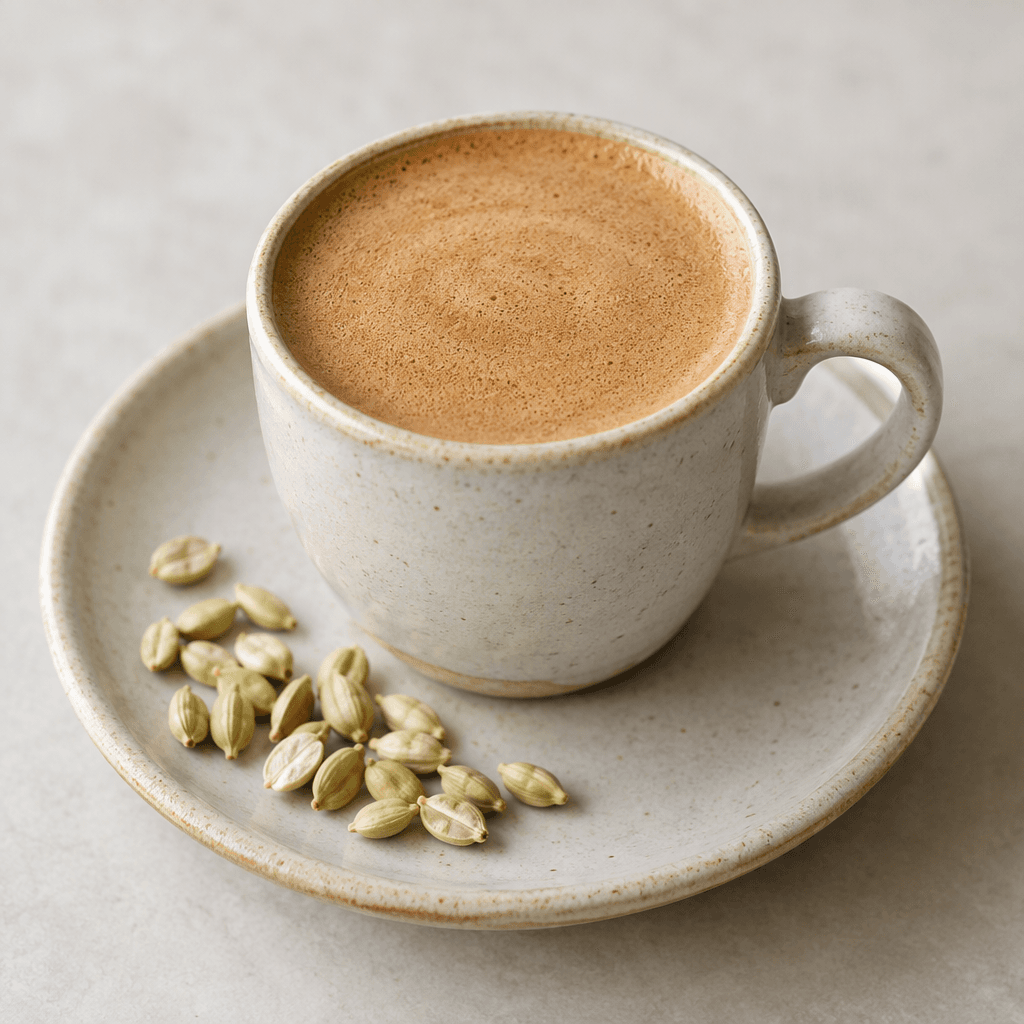
Menengic coffee Calories
Natural, caffeine-free, antioxidant, Mediterranean
In season: Autumn · Winter
CALORIES
GI
POTASSIUM
FIBER
Quick answer
1 cup (medium) of Menengic coffee (25 g) has 105 calories. That works out to 420 calories per 100 g. It contains 9.5 g of carbs, 2.5 g of protein, 6 g of fat and 2 g of fiber. Its 0.1 mg of Copper covers 13% of the Daily Value. Its glycemic index is 35 (low), so it raises blood sugar slowly.
What is Menengic coffee?
Menengic coffee is made from the roasted, ground fruit of the terebinth tree, a wild pistachio relative native to parts of the Mediterranean and western Asia. It contains no coffee beans and is naturally caffeine-free. Brewed into a thick, smooth cup, it has a mellow, toasted, slightly resinous nuttiness rather than the sharp bitterness associated with regular coffee.
In southeastern Turkey it is commonly simmered with water or milk and served after a meal or alongside conversation and sweets. Outside its home region, you can enjoy it as a distinctive alternative to coffee, especially if you want a warm drink without caffeine. Use water for a lighter cup, or add milk for extra body; sweetening is optional.
Menengic coffee Nutrition Facts
Selected: 100 g
420
KCAL / 100G
Carbs
38g
· 14% DV
Protein
10g
· 20% DV
Fat
24g
· 31% DV
Fiber
8g
· 29% DV
DV is the share of the daily value covered, on a 2,000 kcal reference diet.
Calories come from: Carbs 37% · Protein 10% · Fat 53%
Menengic coffee Vitamins & Minerals
Vitamins
B5
0.9mg · 18% DV
B1
0.18mg · 15% DV
Vitamin E
2.2mg · 15% DV
Biotin
4µg · 13% DV
Minerals
Manganese
1mg · 43% DV
Phosphorus
110mg · 16% DV
Magnesium
65mg · 15% DV
Calcium
120mg · 12% DV
How Nutritious Is Menengic coffee?
Nutrient density
High
How many vitamins, minerals and how much fiber this food carries per calorie. A high score means a lot of nutrition for few calories.
Satiety score
Medium
An EatBetter score computed from fiber, protein and calorie density. A high score means staying full longer on the same calories.
Both scores are calculated per 100 g and do not change with the selected portion. The satiety score is EatBetter's own calculation, not a clinical measure.
Menengic coffee Glycemic Index
GLYCEMIC INDEX
GLYCEMIC LOAD
Accounts for portion size — a more realistic measure than GI alone.
How to Burn Off Menengic coffee
To burn the 420 calories in 100 g:
🚶
Walking (5 km/h)
🏃
Running (8 km/h)
🚴
Cycling
🏊
Swimming
Times are calculated with the MET equation for a 70 kg adult. Actual burn varies with your weight, age and pace.
Is Menengic coffee Processed?
NOVA 2
Minimally Processed
1. Unprocessed
2. Minimally Processed
3. Processed
4. Ultra-Processed
NOVA classifies foods into 4 groups by industrial processing. NOVA 1 (unprocessed) is the healthiest.
Does Menengic coffee Contain Allergens?
No known major allergens
Which Diets Is Menengic coffee Good For?
Vegan
✓ Suitable
Vegetarian
✓ Suitable
Gluten-Free
✓ Suitable
Dairy-Free
— Not suitable
Mediterranean
✓ Suitable
Paleo
— Not suitable
Whole30
— Not suitable
DASH
— Not suitable
Keto
— Not suitable
Low FODMAP
— Not suitable
Menengic coffee Fat Profile
SATURATED
3.8g
MONOUNSATURATED
16.2g
POLYUNSATURATED
4.1g
Omega 6:3 ratio 24.6:1
Above the ideal 4:1 (24.6:1).
Compare Menengic coffee
Foods Similar to Menengic coffee
Frequently Asked Questions About Menengic coffee
What is Menengic coffee made from?
Menengic coffee is made from the roasted fruit of the terebinth tree, also called wild pistachio, rather than coffee beans. The fruit is ground or made into a paste, then prepared as a warm drink.
Does Menengic coffee contain caffeine?
No, Menengic coffee is naturally caffeine-free because it is made from terebinth fruit, not coffee beans. If you buy a blend rather than pure Menengic coffee, check whether coffee has been added, since that would change its caffeine content.
How do you make Menengic coffee?
Cook Menengic coffee in a small pot with water or milk, stirring the ground product into the liquid as it warms. Heat it gently until it foams, then pour into cups; follow the directions if you are using a prepared paste.
What does Menengic coffee taste like?
Menengic coffee has a roasted, nutty flavor and is often creamier than brewed coffee, especially when made with milk. It does not have the familiar coffee-bean taste, so its aroma may be surprising the first time you try it.
Is Menengic coffee actually coffee?
Menengic coffee is called coffee because it is prepared and served like a coffee, but it contains no coffee beans. Its main ingredient is roasted terebinth fruit, which gives it a distinctive flavor and makes it naturally caffeine-free.
Can you make Menengic coffee with milk?
Yes, Menengic coffee can be prepared with milk or water. Milk gives it a richer, smoother texture, while water lets the roasted terebinth flavor stand out more. Heat it gently so the milk does not boil over.
Is Menengic coffee a good caffeine-free alternative to coffee?
Yes, Menengic coffee is one option if you want a warm drink without caffeine, though its nutty flavor is quite different from regular coffee. It works well as a coffee-style drink, but it will not provide coffee’s caffeine effects.
Does Menengic coffee help you sleep?
Menengic coffee does not contain caffeine, so it avoids caffeine’s stimulating effect, but it is not a sleep aid. A late drink may still feel heavy if you make it with plenty of milk or prefer smaller evening portions.
Can Menengic coffee help with a cough or cold?
There is no good evidence that Menengic coffee treats a cough or cold. It can be enjoyed as a warm drink, but claims that it cures respiratory symptoms are not established; seek appropriate medical care for concerning or persistent symptoms.
How should you store Menengic coffee after opening?
Keep ground Menengic coffee in a tightly closed container in a cool, dry place, away from moisture and strong odors. If you have a paste, follow its storage instructions after opening, since some products may need refrigeration.
Have another question about Menengic coffee?
Ask the AI nutrition coach — calories, portions, alternatives and more, answered in seconds in the app.

Scan calories with your camera
Instant AI nutrition analysis

Nutrition data compiled from USDA FoodData Central and scientific sources.