

Ready & Packaged Foods
All →Vegetables & Legumes
All →Desserts & Confectionery
All →Meat & Protein
All →Grains & Bakery
All →Beverages
All →Milk & Dairy
All →

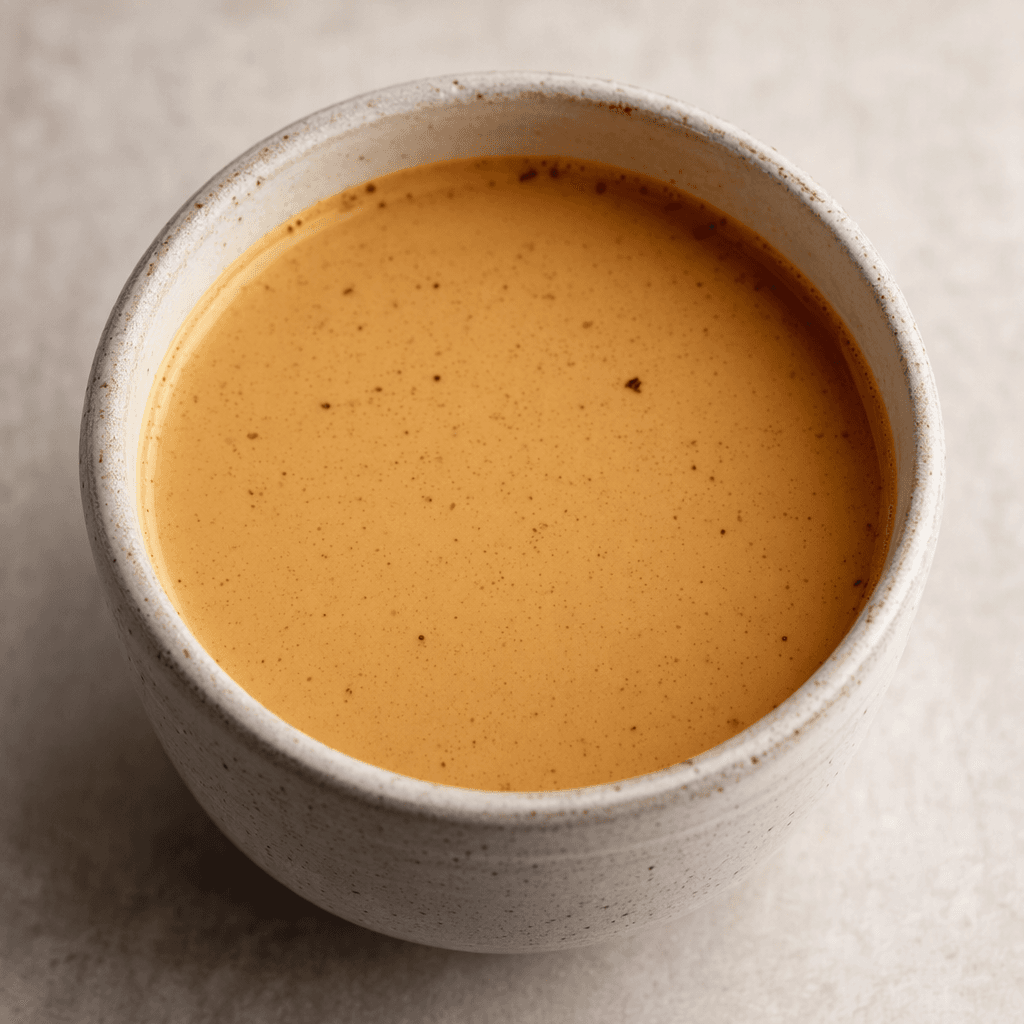
Masala chai Calories
Spiced milk tea; moderate calories, higher if sweetened
In season: Spring · Summer · Autumn · Winter
CALORIES
GI
POTASSIUM
FIBER
Quick answer
1 cup (medium) of Masala chai (240 g) has 139 calories. That works out to 58 calories per 100 g. It contains 19.7 g of carbs, 4.3 g of protein, 5 g of fat and 0.5 g of fiber. Its 0.5 µg of B12 covers 22% of the Daily Value. Its glycemic index is 41 (low), so it raises blood sugar slowly.
What is Masala chai?
Masala chai is a South Asian tea preparation, especially associated with India: black tea is simmered or steeped with milk, water and warming spices such as cardamom, ginger, cinnamon or cloves. Recipes vary by household and region, and some include sugar while others are served less sweet.
It is fragrant and gently spiced, with a fuller, creamier feel than plain tea. In India it is commonly enjoyed hot at home, at breakfast or as a break-time drink, and chai stalls serve it throughout the day. Elsewhere, it makes a warming alternative to coffee or a milky tea alongside a small snack. Its nutritional character comes largely from the milk and any added sugar; use less sweetener, or adjust the milk, for a lighter cup.
Masala chai Nutrition Facts
Selected: 100 g
58
KCAL / 100G
Carbs
8.2g
· 3% DV
Protein
1.8g
· 4% DV
Fat
2.1g
· 3% DV
Fiber
0.2g
· 1% DV
DV is the share of the daily value covered, on a 2,000 kcal reference diet.
Calories come from: Carbs 56% · Protein 12% · Fat 32%
Masala chai Vitamins & Minerals
Vitamins
B12
0.22µg · 9% DV
B2
0.09mg · 7% DV
B5
0.18mg · 4% DV
Biotin
1.1µg · 4% DV
Minerals
Calcium
68mg · 7% DV
Phosphorus
52mg · 7% DV
Iodine
5µg · 3% DV
Selenium
1.6µg · 3% DV
How Nutritious Is Masala chai?
Nutrient density
Low
How many vitamins, minerals and how much fiber this food carries per calorie. A high score means a lot of nutrition for few calories.
Satiety score
Medium
An EatBetter score computed from fiber, protein and calorie density. A high score means staying full longer on the same calories.
Both scores are calculated per 100 g and do not change with the selected portion. The satiety score is EatBetter's own calculation, not a clinical measure.
Masala chai Glycemic Index
GLYCEMIC INDEX
GLYCEMIC LOAD
Accounts for portion size — a more realistic measure than GI alone.
How to Burn Off Masala chai
To burn the 58 calories in 100 g:
🚶
Walking (5 km/h)
🏃
Running (8 km/h)
🚴
Cycling
🏊
Swimming
Times are calculated with the MET equation for a 70 kg adult. Actual burn varies with your weight, age and pace.
Is Masala chai Processed?
NOVA 2
Minimally Processed
1. Unprocessed
2. Minimally Processed
3. Processed
4. Ultra-Processed
NOVA classifies foods into 4 groups by industrial processing. NOVA 1 (unprocessed) is the healthiest.
Does Masala chai Contain Allergens?
Contains these allergens:
Which Diets Is Masala chai Good For?
Vegan
— Not suitable
Vegetarian
✓ Suitable
Gluten-Free
✓ Suitable
Dairy-Free
— Not suitable
Mediterranean
— Not suitable
Paleo
— Not suitable
Whole30
— Not suitable
DASH
— Not suitable
Keto
— Not suitable
Low FODMAP
— Not suitable
Masala chai Fat Profile
SATURATED
1.3g
MONOUNSATURATED
0.55g
POLYUNSATURATED
0.08g
Omega 6:3 ratio 3:1
Below the ideal 4:1 — a good omega balance.
Compare Masala chai
Foods Similar to Masala chai
Frequently Asked Questions About Masala chai
What is masala chai?
Masala chai is Indian spiced tea made by simmering black tea with milk, water, and spices. Cardamom, ginger, cinnamon, cloves, and black pepper are common; recipes vary by household, and sweetener is optional.
How do you make masala chai at home?
To make masala chai, simmer water with crushed spices, add black tea and milk, then strain once the flavors have infused. Add sugar to taste, or leave it unsweetened; simmering the tea with the spices gives it its characteristic strong flavor.
Does masala chai have caffeine?
Yes, masala chai made with black tea contains caffeine. The amount varies with the tea, how much you use, and how long it steeps; using decaffeinated black tea is an option if you want less caffeine.
What spices are in masala chai?
Masala chai commonly contains cardamom, ginger, cinnamon, cloves, and black pepper. There is no single required spice blend, so recipes may also include fennel, star anise, or nutmeg, with the proportions adjusted to taste.
What is the difference between masala chai and a chai latte?
Masala chai is traditionally simmered with tea, milk, water, and spices in one pot. A chai latte is usually made by combining concentrated chai with steamed or frothed milk, and café versions may use a sweetened syrup or powdered mix.
Can you make masala chai without milk?
Yes, you can make masala chai without dairy milk. Simmer the tea and spices in water, or use a plant-based milk such as oat or soy; the drink will taste and feel different from the creamy traditional version.
What kind of tea is best for masala chai?
Strong black tea is best for masala chai because its flavor stands up to milk and warming spices. Assam is a common choice, but you can use another robust black tea; delicate teas may get lost during simmering.
Can masala chai help you stay awake?
Yes, the caffeine in black-tea masala chai can promote alertness. Its effect varies from person to person, and a cup late in the day may interfere with sleep if you are sensitive to caffeine.
How do you sweeten masala chai?
Masala chai can be sweetened with sugar, honey, or another sweetener, or served without any. Add it after brewing so you can control the sweetness; some café mixes and concentrates are already sweetened.
How long does homemade masala chai last in the fridge?
Homemade masala chai containing milk should be refrigerated in a covered container and used promptly. Reheat only the portion you plan to drink, and discard it if its smell or appearance has changed rather than tasting it to check.
Have another question about Masala chai?
Ask the AI nutrition coach — calories, portions, alternatives and more, answered in seconds in the app.

Scan calories with your camera
Instant AI nutrition analysis

Nutrition data compiled from USDA FoodData Central and scientific sources.