

Ready & Packaged Foods
All →Vegetables & Legumes
All →Desserts & Confectionery
All →Meat & Protein
All →Grains & Bakery
All →Beverages
All →Milk & Dairy
All →

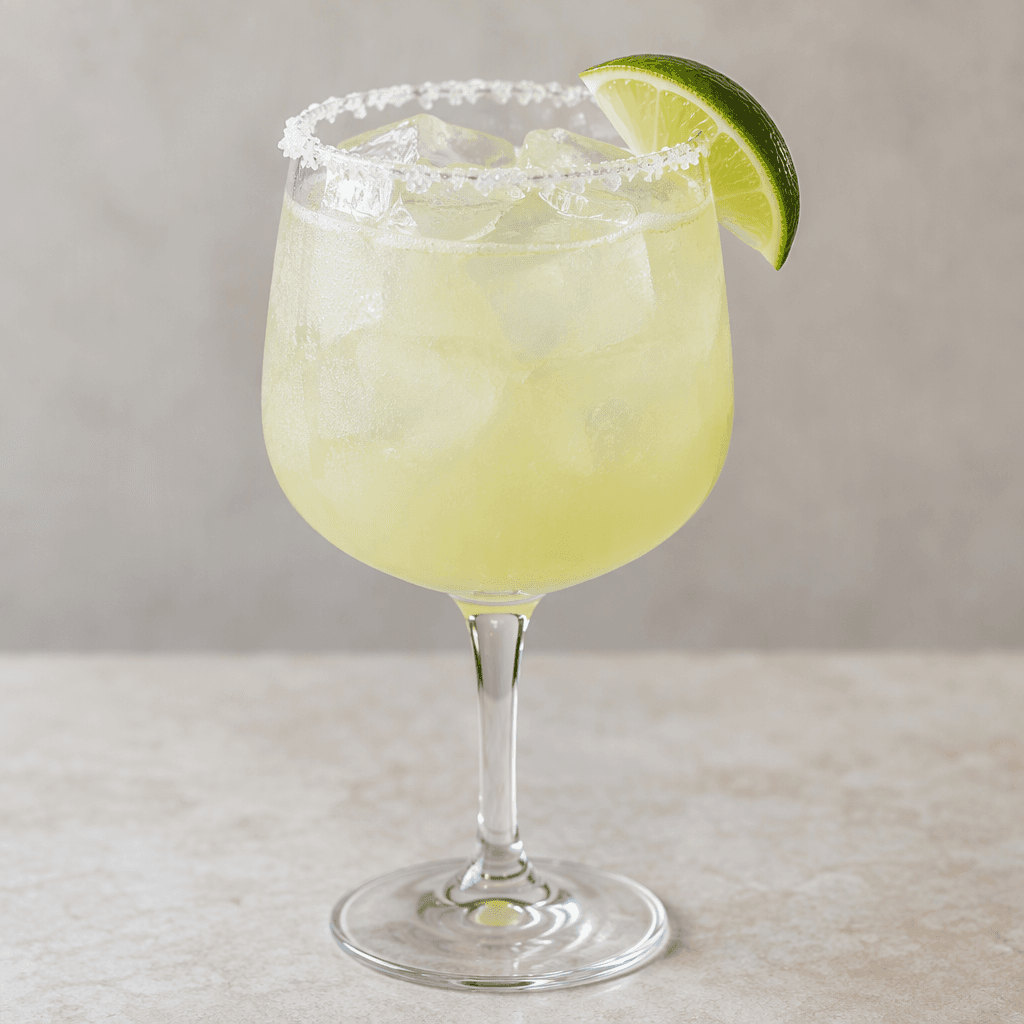
Margarita Calories
Classic cocktail, tequila, lime juice, orange liqueur
In season: Summer
CALORIES
GI
POTASSIUM
FIBER
Quick answer
1 serving (medium) of Margarita (120 g) has 202 calories. That works out to 168 calories per 100 g. It contains 16.2 g of carbs, 0.1 g of protein, 0 g of fat and 0.1 g of fiber. Its 7.2 mg of Vitamin C covers 8% of the Daily Value. Its glycemic index is 65 (medium), so it raises blood sugar at a moderate pace.
What is Margarita?
Margarita is a classic cocktail made with tequila, lime juice and orange liqueur, commonly associated with Mexico. It is served chilled, either over ice or shaken and strained, often in a glass with a salt rim and a lime wedge. Its bright, tart citrus flavour balances the liqueur’s sweetness, making it a familiar choice on cocktail menus around the world. It pairs well with savoury snacks, grilled food and tacos.
It offers little protein or fibre, while the liqueur and any added sweetener contribute carbohydrates. For a less sweet drink, ask for less liqueur or syrup and extra fresh lime; choosing it on the rocks also makes for an easy-going serve.
Margarita Nutrition Facts
Selected: 100 g
168
KCAL / 100G
Carbs
13.5g
· 5% DV
Protein
0.1g
· 0% DV
Fat
0g
· 0% DV
Fiber
0.1g
· 0% DV
DV is the share of the daily value covered, on a 2,000 kcal reference diet.
Calories come from: Carbs 99% · Protein 1% · Fat 0%
Margarita Vitamins & Minerals
Vitamins
Vitamin C
6mg · 7% DV
B1
0.01mg · 1% DV
B2
0.01mg · 1% DV
B6
0.01mg · 1% DV
Minerals
Calcium
8mg · 1% DV
Potassium ⭐
18mg · 1% DV
Iron
0mg · 0% DV
Magnesium
2mg · 0% DV
How Nutritious Is Margarita?
Nutrient density
Low
How many vitamins, minerals and how much fiber this food carries per calorie. A high score means a lot of nutrition for few calories.
Satiety score
Low
An EatBetter score computed from fiber, protein and calorie density. A high score means staying full longer on the same calories.
Both scores are calculated per 100 g and do not change with the selected portion. The satiety score is EatBetter's own calculation, not a clinical measure.
Margarita Glycemic Index
GLYCEMIC INDEX
GLYCEMIC LOAD
Accounts for portion size — a more realistic measure than GI alone.
How to Burn Off Margarita
To burn the 168 calories in 100 g:
🚶
Walking (5 km/h)
🏃
Running (8 km/h)
🚴
Cycling
🏊
Swimming
Times are calculated with the MET equation for a 70 kg adult. Actual burn varies with your weight, age and pace.
Is Margarita Processed?
NOVA 3
Processed
1. Unprocessed
2. Minimally Processed
3. Processed
4. Ultra-Processed
NOVA classifies foods into 4 groups by industrial processing. NOVA 1 (unprocessed) is the healthiest.
Does Margarita Contain Allergens?
No known major allergens
Which Diets Is Margarita Good For?
Vegan
— Not suitable
Vegetarian
✓ Suitable
Gluten-Free
— Not suitable
Dairy-Free
— Not suitable
Mediterranean
— Not suitable
Paleo
— Not suitable
Whole30
— Not suitable
DASH
— Not suitable
Keto
— Not suitable
Low FODMAP
— Not suitable
Margarita Fat Profile
SATURATED
0g
MONOUNSATURATED
0g
POLYUNSATURATED
0g
Compare Margarita
Foods Similar to Margarita
Frequently Asked Questions About Margarita
What is in a Margarita?
A classic Margarita is made with tequila, lime juice and orange liqueur, usually served with a salt rim. It can be poured over ice or blended with ice; bottled sour mix is a common shortcut but changes the flavor.
How do you make a Margarita?
Shake tequila, fresh lime juice and orange liqueur with ice, then strain into a glass with a salted rim. For a balanced drink, taste the mix before serving and adjust the lime or sweetness rather than adding lots of premade sour mix.
What tequila is best for a Margarita?
Blanco tequila is the usual choice for a Margarita because its crisp agave flavor lets the lime and orange liqueur stand out. Reposado also works, adding a softer, lightly oaky flavor from time spent in barrels.
Why does a Margarita have salt on the rim?
Salt on a Margarita glass balances the drink’s tart lime and sweetness, while adding a savory edge. You do not need to salt the whole rim: coat just part of it so each sip can include as much or as little salt as you like.
What is the difference between a frozen Margarita and one on the rocks?
A Margarita on the rocks is shaken and poured over ice, so it stays more concentrated and clear. A frozen Margarita is blended with ice for a slushy texture and colder, more diluted flavor; both use the familiar tequila, lime and orange liqueur base.
What is the difference between a Margarita and a daiquiri?
A Margarita uses tequila, lime juice and orange liqueur, while a daiquiri is made with rum, lime juice and sugar. Both are tart cocktails, but agave and orange define a Margarita, whereas rum gives a daiquiri its characteristic flavor.
Is a Margarita sweet?
A Margarita can be sweet, especially when made with bottled sour mix or generous orange liqueur. For a drier version, use fresh lime juice and reduce or leave out added syrup; the balance will vary with the liqueur and recipe.
What glass should you serve a Margarita in?
A Margarita is traditionally served in a wide-rimmed Margarita glass, which makes a salt rim easy to add. A rocks glass works just as well, particularly for a version served over ice; lightly moisten the outside of the rim before dipping it in salt.
What food goes well with a Margarita?
Tacos, nachos, guacamole and grilled vegetables pair well with a Margarita. Its lime and salt flavors also complement spicy Mexican dishes, while the drink’s acidity cuts through richer foods such as fried appetizers.
Can you make Margaritas ahead of time?
Yes, mix the tequila, lime juice and orange liqueur ahead and keep the batch covered in the refrigerator without ice. For the freshest lime flavor, serve it the same day; add ice only when pouring so the drink does not become diluted.
Have another question about Margarita?
Ask the AI nutrition coach — calories, portions, alternatives and more, answered in seconds in the app.

Scan calories with your camera
Instant AI nutrition analysis

Nutrition data compiled from USDA FoodData Central and scientific sources.