

Ready & Packaged Foods
All →Vegetables & Legumes
All →Desserts & Confectionery
All →Meat & Protein
All →Grains & Bakery
All →Beverages
All →Milk & Dairy
All →

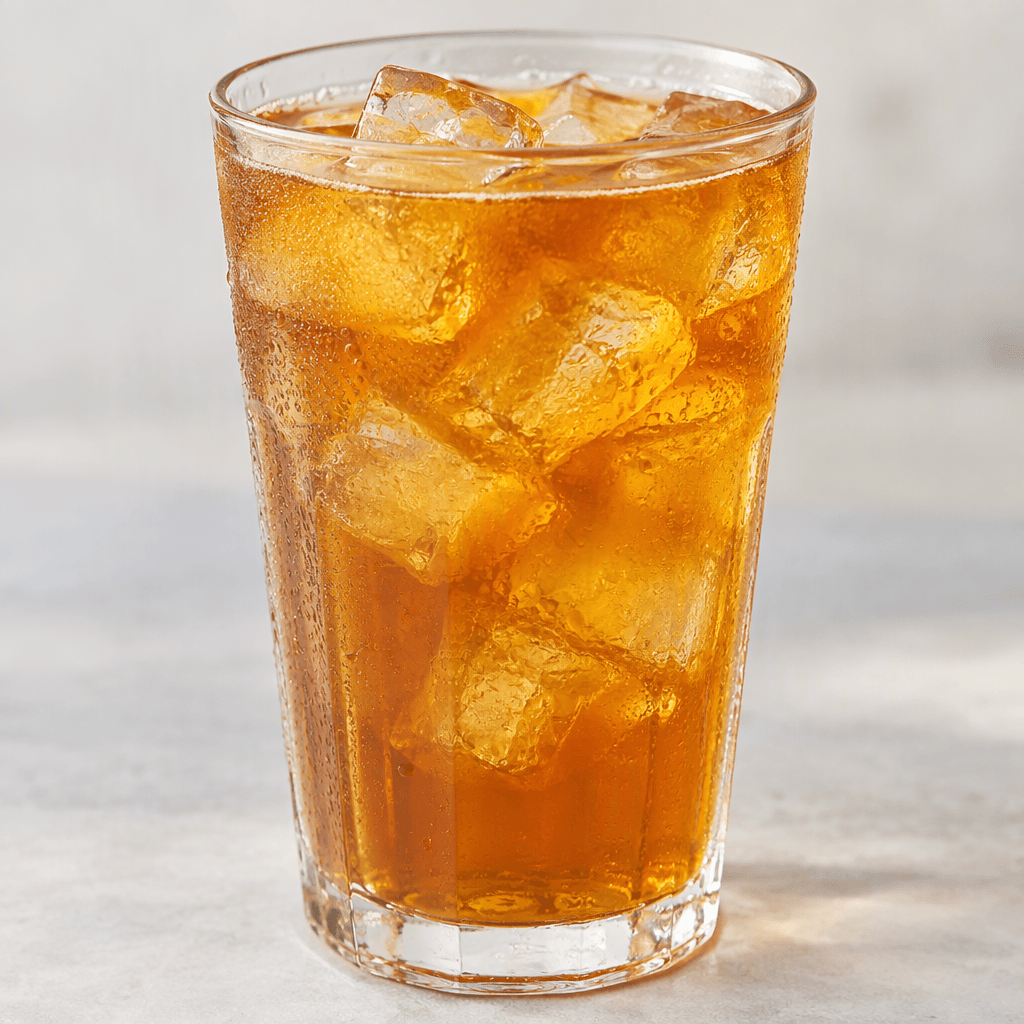
Lipton Ice Tea Tropical Fruit Calories
Sweetened, non-carbonated, tropical fruit flavored iced tea
In season: Spring · Summer
CALORIES · 100 G
GI
POTASSIUM · 100 G
FIBER · 100 G
Quick answer
1 cup (medium) of Lipton Ice Tea Tropical Fruit (250 g) has 68 calories. That works out to 27 calories per 100 g. It contains 16.5 g of carbs, 0 g of protein, 0 g of fat and 0 g of fiber. Its glycemic index is 65 (medium), so it raises blood sugar at a moderate pace.
Lipton Ice Tea Tropical Fruit Nutrition Facts
Selected: 1 cup (medium) · 250 g
68
KCAL / 250G
Carbs
16.5g
· 6% DV
Protein
0g
· 0% DV
Fat
0g
· 0% DV
Fiber
0g
· 0% DV
DV is the share of the daily value covered, on a 2,000 kcal reference diet.
Calories come from: Carbs 100% · Protein 0% · Fat 0%
Lipton Ice Tea Tropical Fruit nutrition facts table · 1 cup (medium) (250 g)
| Nutrient | Amount | % DV |
|---|---|---|
| Calories | 68 kcal | |
| Total fat | 0 g | 0% |
| Saturated fat | 0 g | 0% |
| Trans fat | 0 g | |
| Sodium | 13 mg | 1% |
| Total carbohydrate | 16.5 g | 6% |
| Fiber | 0 g | 0% |
| Protein | 0 g | 0% |
Calories: Calories measure energy. Average daily need is 2,000 kcal. Excess calories are stored as fat, too few cause weight loss.
Carbs: Your body's primary energy source. The brain runs exclusively on carbs. Daily need: 275g.
Protein: Essential for muscle repair and cell growth. Daily need: 50g. Keeps you full and boosts metabolism.
Fat: Needed for hormone production and vitamin absorption. Daily need: 78g. Limit saturated fats, choose unsaturated.
Fiber: Critical for digestive health and satiety. Daily need: 28g. Stabilizes blood sugar, lowers cholesterol.

Log this food in EatBetter
100,000+ people use it
- Get your daily calorie target
- Snap your meal, log it in seconds
- See every vitamin and mineral

📸 Scan the code to get the app free.

How Many Calories in 1 Cup of Lipton Ice Tea Tropical Fruit?
| Serving | Amount | Calories |
|---|---|---|
| 1 cup (medium) | 250 g | 68 kcal |
| 100 g | 100 g | 27 kcal |
| 1 cup (small) | 200 g | 54 kcal |
| 1 can (medium) | 330 g | 89 kcal |
| 1 bottle (small) | 330 g | 89 kcal |
| 1 cup (large) | 400 g | 108 kcal |
| 1 bottle (large) | 500 g | 135 kcal |
| 1 bottle (jumbo) | 1500 g | 405 kcal |
Calculated from 27 calories per 100 g.
Frequently Asked Questions About Lipton Ice Tea Tropical Fruit
Does Lipton Ice Tea Tropical Fruit contain caffeine?
Yes, it can contain caffeine because it is made with tea extract. The amount may vary by market and product formulation, so it may be worth avoiding late in the day if caffeine affects your sleep.
Is Lipton Ice Tea Tropical Fruit healthy?
It is not an ideal everyday drink: Lipton Ice Tea Tropical Fruit is a sweetened, ultra-processed beverage. Having it occasionally can fit into a varied diet, but water or unsweetened tea is a better regular choice.
How much sugar is in Lipton Ice Tea Tropical Fruit?
Lipton Ice Tea Tropical Fruit is sweetened, so it contains sugar. The amount can differ between markets and package formulations; frequent servings can add to your overall intake of sweet drinks.
Does Lipton Ice Tea Tropical Fruit contain real fruit juice?
The tropical fruit flavour does not necessarily mean the drink contains fruit juice. It is a flavoured, sweetened iced tea, and whether a particular version includes juice depends on its local formulation.
What ingredients are in Lipton Ice Tea Tropical Fruit?
Lipton Ice Tea Tropical Fruit is a packaged iced tea made with tea extract, sweetener ingredients and tropical fruit flavouring, along with components that regulate acidity. The precise ingredient list varies by market.
Is Lipton Ice Tea Tropical Fruit carbonated?
No. Lipton Ice Tea Tropical Fruit is a non-carbonated, sweetened iced tea, so it does not have the fizz of a soft drink.
Does Lipton Ice Tea Tropical Fruit hydrate you?
Yes, it provides fluid, but it is not the best everyday substitute for water because it is sweetened. Choose water as your main drink, especially when you are thirsty or exercising.
How should you store Lipton Ice Tea Tropical Fruit after opening?
Close the container and refrigerate Lipton Ice Tea Tropical Fruit after opening. Follow the package’s storage directions and drink it promptly, since an opened beverage can lose quality over time.
Can children drink Lipton Ice Tea Tropical Fruit?
Children can have it occasionally, but it is not a good everyday drink because it is sweetened and may contain caffeine. Water and unsweetened drinks are better regular choices for children.
Can you drink Lipton Ice Tea Tropical Fruit while pregnant?
You can drink it occasionally, but it may contain caffeine and added sugar. Since caffeine intake during pregnancy needs to be limited, include it in your daily total and ask your healthcare professional if you need individual guidance.
Lipton Ice Tea Tropical Fruit Vitamins & Minerals
Vitamins
Vitamin A
0µg · 0% DV
B1
0mg · 0% DV
B2
0mg · 0% DV
B3
0mg · 0% DV
Minerals
Magnesium
2.5mg · 1% DV
Sodium
13mg · 1% DV
Calcium
2.5mg · 0% DV
Potassium ⭐
5mg · 0% DV
Lipton Ice Tea Tropical Fruit Glycemic Index
GLYCEMIC INDEX
GLYCEMIC LOAD
Accounts for portion size — a more realistic measure than GI alone.
How to Burn Off Lipton Ice Tea Tropical Fruit
To burn the 68 calories in 1 cup (medium) (250 g):
🚶
Walking (5 km/h)
🏃
Running (8 km/h)
🚴
Cycling
🏊
Swimming
Times are calculated with the MET equation for a 70 kg adult. Actual burn varies with your weight, age and pace.
What is Lipton Ice Tea Tropical Fruit?
Lipton Ice Tea Tropical Fruit is a ready-to-drink, sweetened, non-carbonated iced tea with tropical fruit flavour. It combines a tea base with a fruity sweetness, offering a chilled alternative to hot tea and fizzy soft drinks.
It is usually served cold, especially on warm days, and works as a casual drink with lunch, a snack or a picnic. One hundred grams provide 27 calories, with most of the energy coming from carbohydrates. If you prefer a less sweet drink, try a smaller serving alongside water, or dilute it with plain iced tea.
How Nutritious Is Lipton Ice Tea Tropical Fruit?
Nutrient density
Low
How many vitamins, minerals and how much fiber this food carries per calorie. A high score means a lot of nutrition for few calories.
Satiety score
Medium
An EatBetter score computed from fiber, protein and calorie density. A high score means staying full longer on the same calories.
Both scores are calculated per 100 g and do not change with the selected portion. The satiety score is EatBetter's own calculation, not a clinical measure.
Is Lipton Ice Tea Tropical Fruit Processed?
NOVA 4
Ultra-Processed
1. Unprocessed
2. Minimally Processed
3. Processed
4. Ultra-Processed
NOVA classifies foods into 4 groups by industrial processing. NOVA 1 (unprocessed) is the healthiest.
Does Lipton Ice Tea Tropical Fruit Contain Allergens?
No known major allergens
Which Diets Is Lipton Ice Tea Tropical Fruit Good For?
Vegan
✓ Suitable
Vegetarian
✓ Suitable
Gluten-Free
✓ Suitable
Dairy-Free
— Not suitable
Mediterranean
✓ Suitable
Paleo
— Not suitable
Whole30
— Not suitable
DASH
— Not suitable
Keto
— Not suitable
Low FODMAP
— Not suitable
Lipton Ice Tea Tropical Fruit Fat Profile
SATURATED
0g
MONOUNSATURATED
0g
POLYUNSATURATED
0g
Compare Lipton Ice Tea Tropical Fruit
Foods Similar to Lipton Ice Tea Tropical Fruit
Have another question about Lipton Ice Tea Tropical Fruit?
Ask the AI nutrition coach — calories, portions, alternatives and more, answered in seconds in the app.

Scan calories with your camera
Instant AI nutrition analysis

Nutrition data compiled from USDA FoodData Central and scientific sources.