

Ready & Packaged Foods
All →Vegetables & Legumes
All →Desserts & Confectionery
All →Meat & Protein
All →Grains & Bakery
All →Beverages
All →Milk & Dairy
All →

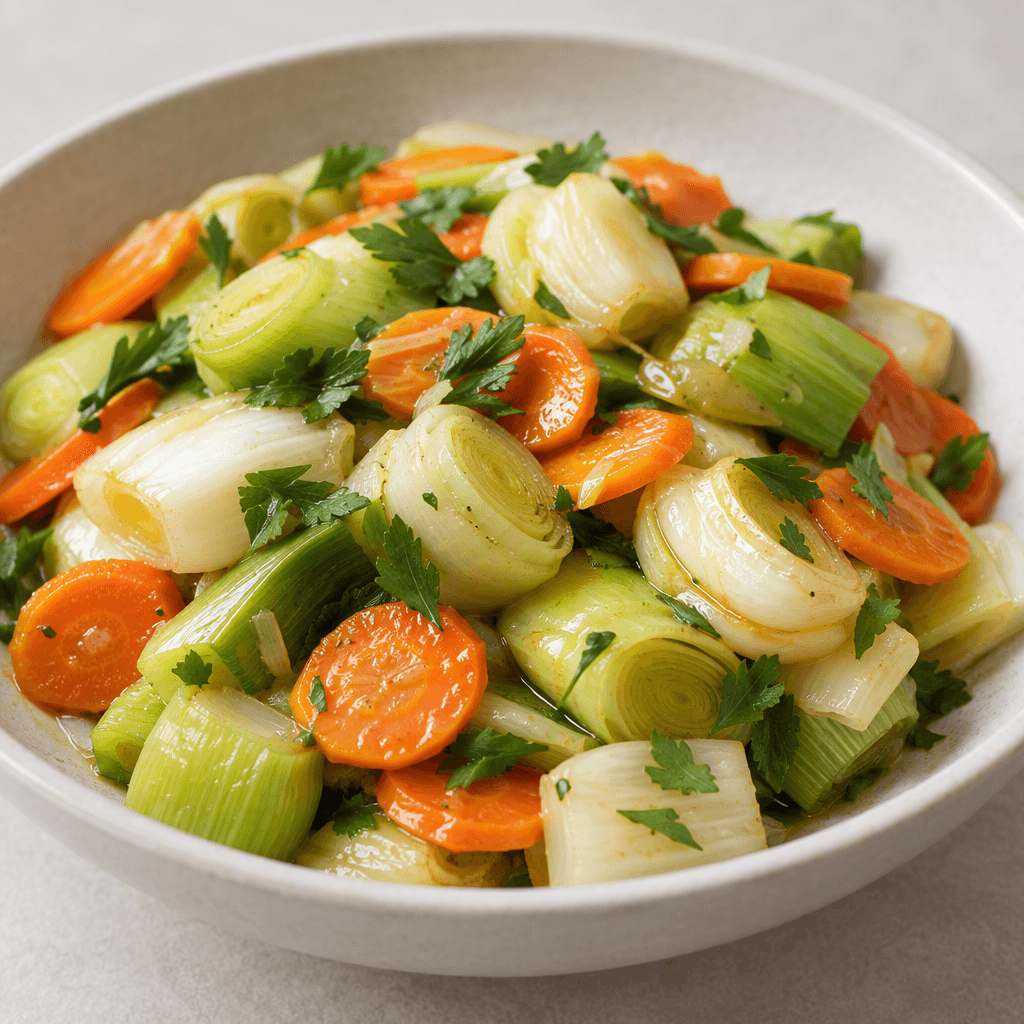
Leek Dish Calories
Leek stew, source of fiber and vitamin C
In season: Autumn · Winter
CALORIES
GI
POTASSIUM
FIBER
Quick answer
1 serving (medium) of Leek Dish (200 g) has 110 calories. That works out to 55 calories per 100 g. It contains 17.6 g of carbs, 2.4 g of protein, 3.4 g of fat and 5.2 g of fiber. Its 76 µg of Vitamin K covers 63% of the Daily Value. Its glycemic index is 35 (low), so it raises blood sugar slowly.
What is Leek Dish?
Pırasa yemeği, often listed in English as Leek Dish, is a Turkish home-style preparation of leeks simmered with carrots and olive oil. Many versions include a little rice, with lemon added during cooking or at the table.
The leeks turn tender and silky, while the carrots lend a mild sweetness. In Turkey, this zeytinyağlı dish is commonly served cool or at room temperature, as a light meal or part of a spread; bread, yogurt or rice make easy accompaniments. It provides fibre and vitamin C, and suits a vegetable-focused meal. For a lighter result, use olive oil sparingly and let the leeks soften gently rather than adding extra fat.
Leek Dish Nutrition Facts
Selected: 100 g
55
KCAL / 100G
Carbs
8.8g
· 3% DV
Protein
1.2g
· 2% DV
Fat
1.7g
· 2% DV
Fiber
2.6g
· 9% DV
DV is the share of the daily value covered, on a 2,000 kcal reference diet.
Calories come from: Carbs 64% · Protein 9% · Fat 27%
Leek Dish Vitamins & Minerals
Vitamins
Vitamin K
38µg · 32% DV
Vitamin A
110µg · 12% DV
Vitamin C
10mg · 11% DV
B6
0.13mg · 8% DV
Minerals
Sodium
180mg · 8% DV
Iron
1mg · 6% DV
Calcium
47mg · 5% DV
Magnesium
20mg · 5% DV
How Nutritious Is Leek Dish?
Nutrient density
High
How many vitamins, minerals and how much fiber this food carries per calorie. A high score means a lot of nutrition for few calories.
Satiety score
Medium
An EatBetter score computed from fiber, protein and calorie density. A high score means staying full longer on the same calories.
Both scores are calculated per 100 g and do not change with the selected portion. The satiety score is EatBetter's own calculation, not a clinical measure.
Leek Dish Glycemic Index
GLYCEMIC INDEX
GLYCEMIC LOAD
Accounts for portion size — a more realistic measure than GI alone.
How to Burn Off Leek Dish
To burn the 55 calories in 100 g:
🚶
Walking (5 km/h)
🏃
Running (8 km/h)
🚴
Cycling
🏊
Swimming
Times are calculated with the MET equation for a 70 kg adult. Actual burn varies with your weight, age and pace.
Is Leek Dish Processed?
NOVA 2
Minimally Processed
1. Unprocessed
2. Minimally Processed
3. Processed
4. Ultra-Processed
NOVA classifies foods into 4 groups by industrial processing. NOVA 1 (unprocessed) is the healthiest.
Does Leek Dish Contain Allergens?
No known major allergens
Which Diets Is Leek Dish Good For?
Vegan
✓ Suitable
Vegetarian
✓ Suitable
Gluten-Free
✓ Suitable
Dairy-Free
— Not suitable
Mediterranean
✓ Suitable
Paleo
— Not suitable
Whole30
— Not suitable
DASH
— Not suitable
Keto
— Not suitable
Low FODMAP
— Not suitable
Leek Dish Fat Profile
SATURATED
0.23g
MONOUNSATURATED
1g
POLYUNSATURATED
0.22g
Omega 6:3 ratio 6:1
Above the ideal 4:1 (6:1).
Compare Leek Dish
Foods Similar to Leek Dish
Frequently Asked Questions About Leek Dish
What is Turkish leek dish traditionally made with?
Turkish leek dish is usually made with sliced leeks, carrots, olive oil, and sometimes rice, onion, and lemon. The vegetables are gently simmered rather than browned heavily, then served warm or at room temperature as a light home-cooked dish.
How do you clean leeks for leek dish?
Cut off the root and any tough, damaged outer leaves, then slice the leeks lengthwise or into rounds. Rinse the layers thoroughly under running water, separating them to remove trapped soil; drain well before adding them to leek dish.
Can you make leek dish without rice?
Yes, leek dish can be made without rice. Simmer the leeks and carrots with olive oil and a little water until tender, checking the liquid as they cook; rice is a common addition, not essential to the dish.
Can you use the dark green parts of leeks in leek dish?
Yes, the dark green parts can go into leek dish, but they are tougher than the white and pale green sections. Slice them thinly and add them earlier so they have time to soften; discard only leaves that are damaged or especially fibrous.
Why is my leek dish watery?
Leek dish can turn watery because leeks release liquid as they cook, especially if the pot is crowded or the lid stays tightly closed. Simmer it uncovered near the end, or add a little rice so it absorbs some of the cooking liquid.
Does leek dish freeze well?
Leek dish can be frozen, although its texture may soften after thawing, particularly if it contains rice. Cool it promptly, freeze it in meal-sized containers, and thaw it in the refrigerator before reheating until hot throughout.
How should you reheat leftover leek dish?
Reheat leftover leek dish gently in a covered saucepan over low heat, stirring occasionally and adding a splash of water if it has dried out. You can also use a microwave-safe dish; heat only the portion you plan to eat.
Can leek dish taste bitter, and how can you prevent it?
Yes, leek dish can taste bitter if the vegetables scorch or if the leeks are old and tough. Use fresh leeks, keep the heat moderate, and add a little water once the vegetables have softened rather than letting them brown in the pot.
What should you serve with leek dish?
Serve leek dish with crusty bread, plain yogurt, or a simple grain side such as rice or bulgur. A fresh salad also works well, especially when the dish is served chilled or at room temperature.
Can you prepare leek dish ahead of time?
Yes, leek dish can be prepared ahead and refrigerated once it has cooled. Its flavor often settles as it rests, making it convenient for a packed lunch or a make-ahead meal; serve it cold, at room temperature, or reheated.
Have another question about Leek Dish?
Ask the AI nutrition coach — calories, portions, alternatives and more, answered in seconds in the app.

Scan calories with your camera
Instant AI nutrition analysis

Nutrition data compiled from USDA FoodData Central and scientific sources.