

Ready & Packaged Foods
All →Vegetables & Legumes
All →Desserts & Confectionery
All →Meat & Protein
All →Grains & Bakery
All →Beverages
All →Milk & Dairy
All →

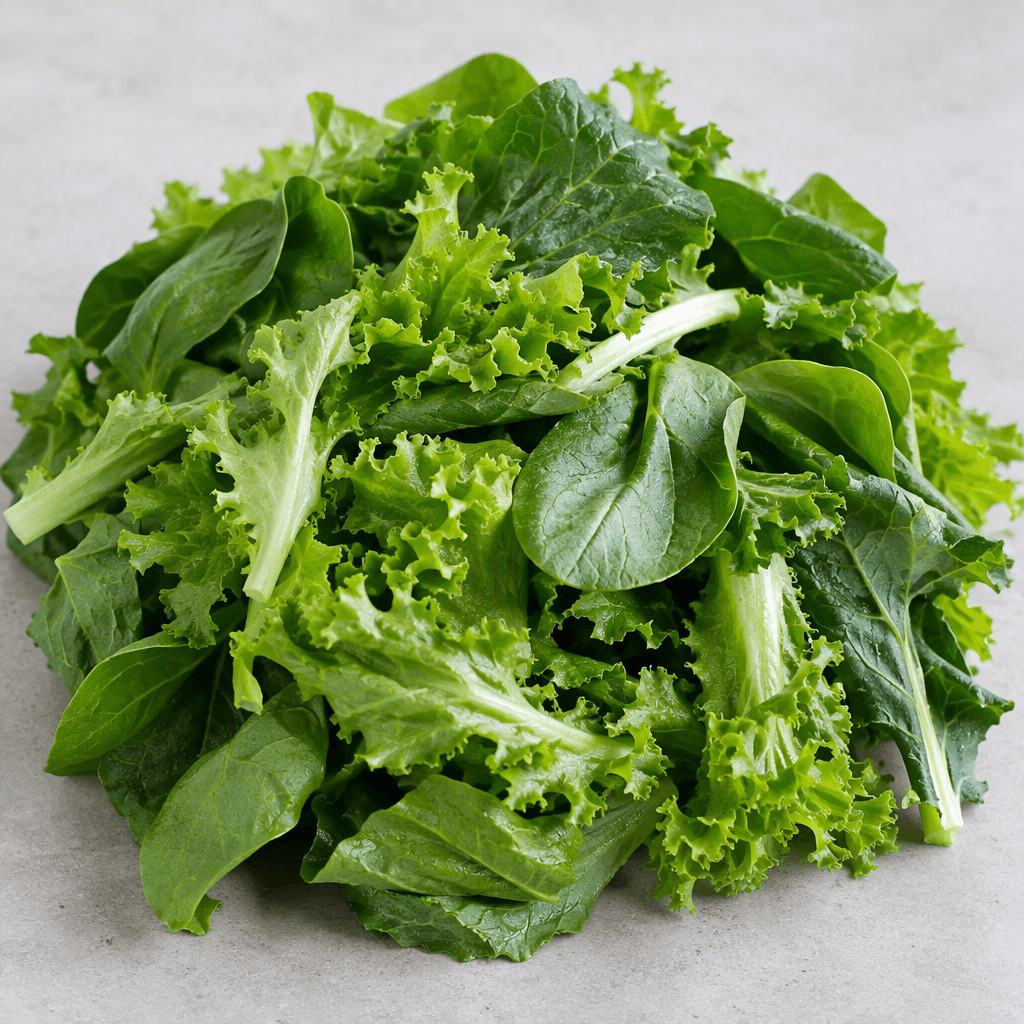
Leafy Greens Calories
Rich in vitamins and minerals, low calorie
In season: Spring · Summer · Autumn · Winter
CALORIES
GI
POTASSIUM
FIBER
Quick answer
1 cup (medium) of Leafy Greens (30 g) has 7 calories. That works out to 23 calories per 100 g. It contains 1.1 g of carbs, 0.7 g of protein, 0.1 g of fat and 0.6 g of fiber. Its 96 µg of Vitamin K covers 80% of the Daily Value. Its glycemic index is 15 (low), so it raises blood sugar slowly.
What is Leafy Greens?
Leafy Greens is a broad name for edible leaves such as spinach, lettuce, kale, chard and arugula. They are grown and eaten around the world, both raw and cooked, with varieties changing by season and region. In salads, sandwiches and wraps, tender leaves add freshness and a crisp or peppery bite; sturdier greens are often sautéed, stirred into soups, or served as a side. They are generally low in calories and provide fibre along with vitamins and minerals; 100 g has 23 calories. Add a handful to a meal for colour and texture, or cook them briefly with a little oil when you want a warm, lighter side.
Leafy Greens Nutrition Facts
Selected: 100 g
23
KCAL / 100G
Carbs
3.6g
· 1% DV
Protein
2.2g
· 4% DV
Fat
0.3g
· 0% DV
Fiber
2.1g
· 8% DV
DV is the share of the daily value covered, on a 2,000 kcal reference diet.
Calories come from: Carbs 56% · Protein 34% · Fat 10%

Log this food in EatBetter
100,000+ people use it
- Get your daily calorie target
- Snap your meal, log it in seconds
- See every vitamin and mineral

📸 Scan the code to get the app free.

Leafy Greens Vitamins & Minerals
Vitamins
Vitamin K
320µg · 267% DV
Vitamin A
470µg · 52% DV
Vitamin C
35mg · 39% DV
Folate
140µg · 35% DV
Minerals
Manganese
1mg · 43% DV
Iron
2mg · 11% DV
Calcium
110mg · 11% DV
Potassium ⭐
340mg · 10% DV
How Nutritious Is Leafy Greens?
Nutrient density
Very high
How many vitamins, minerals and how much fiber this food carries per calorie. A high score means a lot of nutrition for few calories.
Satiety score
Medium
An EatBetter score computed from fiber, protein and calorie density. A high score means staying full longer on the same calories.
Both scores are calculated per 100 g and do not change with the selected portion. The satiety score is EatBetter's own calculation, not a clinical measure.
Leafy Greens Glycemic Index
GLYCEMIC INDEX
GLYCEMIC LOAD
Accounts for portion size — a more realistic measure than GI alone.
How to Burn Off Leafy Greens
To burn the 23 calories in 100 g:
🚶
Walking (5 km/h)
🏃
Running (8 km/h)
🚴
Cycling
🏊
Swimming
Times are calculated with the MET equation for a 70 kg adult. Actual burn varies with your weight, age and pace.
Is Leafy Greens Processed?
NOVA 1
Unprocessed
1. Unprocessed
2. Minimally Processed
3. Processed
4. Ultra-Processed
NOVA classifies foods into 4 groups by industrial processing. NOVA 1 (unprocessed) is the healthiest.
Does Leafy Greens Contain Allergens?
No known major allergens
Which Diets Is Leafy Greens Good For?
Vegan
✓ Suitable
Vegetarian
✓ Suitable
Gluten-Free
✓ Suitable
Dairy-Free
— Not suitable
Mediterranean
✓ Suitable
Paleo
✓ Suitable
Whole30
— Not suitable
DASH
— Not suitable
Keto
✓ Suitable
Low FODMAP
— Not suitable
Leafy Greens Fat Profile
SATURATED
0.05g
MONOUNSATURATED
0.02g
POLYUNSATURATED
0.15g
Omega 6:3 ratio 0.2:1
Below the ideal 4:1 — a good omega balance.
Compare Leafy Greens
Foods Similar to Leafy Greens
Frequently Asked Questions About Leafy Greens
What counts as leafy greens?
Leafy greens include spinach, kale, lettuce, collard greens, arugula, and Swiss chard. They are vegetables whose leaves are eaten, whether raw in salads or cooked in dishes such as soups, stir-fries, and sautés.
Which leafy greens are healthiest?
There is no single best leafy green; different kinds provide different nutrients and textures. Rotate spinach, kale, arugula, lettuce, and Swiss chard through meals so you get variety rather than relying on just one type.
How do you wash leafy greens properly?
Separate the leaves and rinse leafy greens under cool, drinkable running water, rubbing away visible dirt. Soak especially gritty leaves briefly if needed, then rinse again and dry thoroughly. Do not use soap or household cleaners.
How long do leafy greens stay fresh in the fridge?
Leafy greens generally keep best when refrigerated dry, with damaged leaves removed and a paper towel to absorb excess moisture. Store them in a breathable bag or container in the crisper drawer, and use wilted or slimy leaves as a sign to discard them.
Can you freeze leafy greens?
Yes, leafy greens can be frozen, but thawed leaves usually lose their crisp texture and work better in cooked dishes than salads. Briefly blanch sturdier greens such as spinach or kale, cool and drain them, then freeze in meal-size portions.
Are leafy greens better raw or cooked?
Leafy greens can be nutritious either raw or cooked, so use the preparation that suits the dish. Cooking shrinks their volume and can make some greens easier to eat, while prolonged boiling may reduce water-soluble vitamins.
Which leafy greens are best for smoothies?
Mild leafy greens such as baby spinach and romaine blend easily into smoothies without a strong bitter flavor. Kale and mature arugula taste more pronounced, so start with a smaller handful and pair them with fruit.
Can you eat the stems of leafy greens?
Yes, the stems of many leafy greens are edible. Chop thick Swiss chard or collard stems finely and cook them before adding the leaves, since they take longer to soften; remove any woody or damaged parts.
Why do leafy greens turn slimy in the fridge?
Leafy greens turn slimy when moisture and warm storage encourage deterioration. Remove spoiled leaves, keep the remaining greens dry and refrigerated, and discard any leaves that are slimy or smell unpleasant rather than trying to wash them back to freshness.
Can leafy greens interfere with blood thinners?
Yes, leafy greens rich in vitamin K can affect how warfarin works if your intake changes sharply. You usually do not need to avoid them, but keep your intake consistent and ask your clinician before making a major diet change.
Have another question about Leafy Greens?
Ask the AI nutrition coach — calories, portions, alternatives and more, answered in seconds in the app.

Scan calories with your camera
Instant AI nutrition analysis

Nutrition data compiled from USDA FoodData Central and scientific sources.