

Ready & Packaged Foods
All →Vegetables & Legumes
All →Desserts & Confectionery
All →Meat & Protein
All →Grains & Bakery
All →Beverages
All →Milk & Dairy
All →

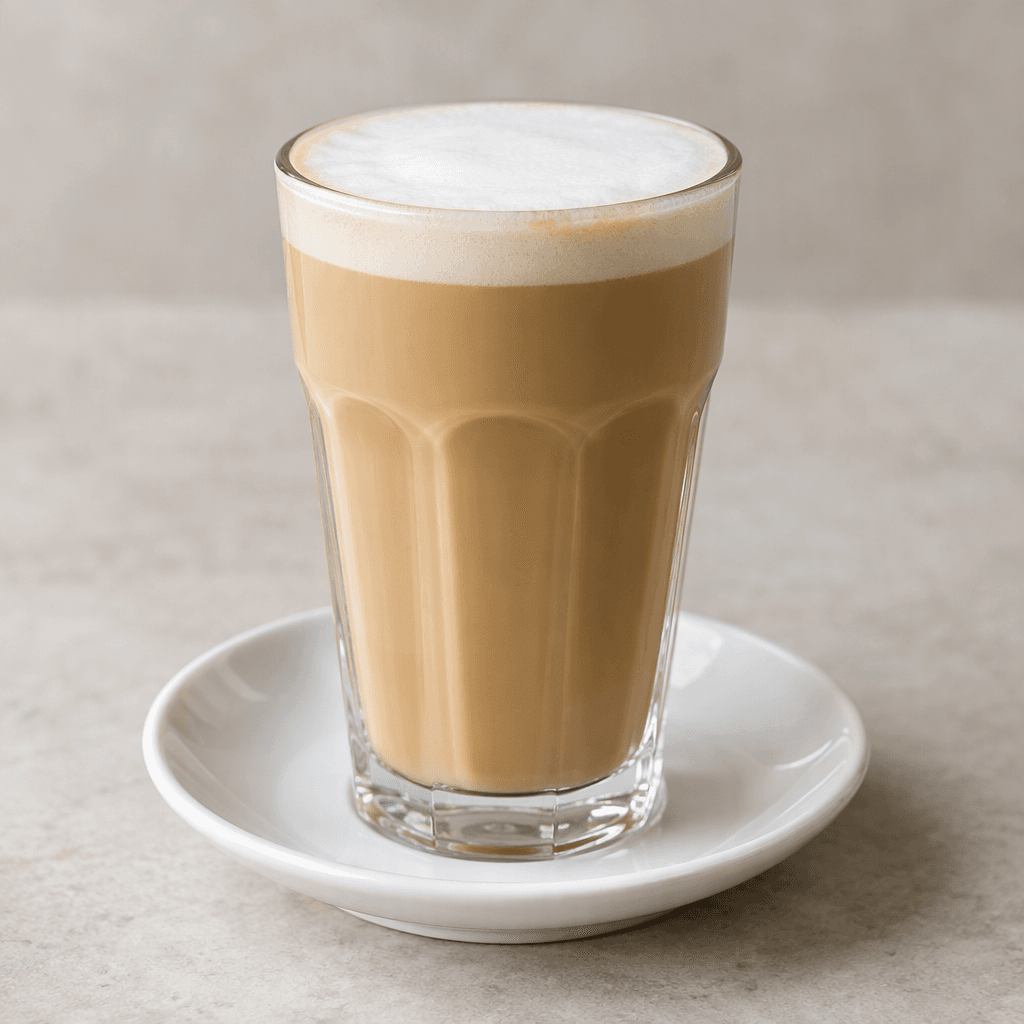
Latte Calories
Milk coffee, caffeine, source of calcium
In season: Spring · Summer · Autumn · Winter
CALORIES
GI
POTASSIUM
FIBER
Quick answer
1 cup (medium) of Latte (240 g) has 130 calories. That works out to 54 calories per 100 g. It contains 12.5 g of carbs, 6.7 g of protein, 4.8 g of fat and 0 g of fiber. Its 1 µg of B12 covers 40% of the Daily Value. Its glycemic index is 30 (low), so it raises blood sugar slowly.
What is Latte?
A latte is an Italian-style coffee made by combining espresso with steamed milk, usually finished with a thin layer of milk foam. The milk softens espresso’s bitterness and gives the drink a smooth, creamy texture. Café versions are commonly made with one or more shots of espresso, though proportions vary.
It is popular in cafés around the world, enjoyed at breakfast or as a daytime coffee, often alongside a pastry or biscuit. Compared with black coffee, a latte provides some protein and calcium from the milk, as well as caffeine from the espresso. It is a filling, milk-based choice rather than a particularly low-calorie coffee; ordering a smaller cup and skipping flavoured syrup keeps it simpler.
Latte Nutrition Facts
Selected: 100 g
54
KCAL / 100G
Carbs
5.2g
· 2% DV
Protein
2.8g
· 6% DV
Fat
2g
· 3% DV
Fiber
0g
· 0% DV
DV is the share of the daily value covered, on a 2,000 kcal reference diet.
Calories come from: Carbs 42% · Protein 22% · Fat 36%
Latte Vitamins & Minerals
Vitamins
B12
0.4µg · 17% DV
B2
0.18mg · 14% DV
B5
0.4mg · 8% DV
Biotin
2µg · 7% DV
Minerals
Phosphorus
78mg · 11% DV
Calcium
98mg · 10% DV
Iodine
7µg · 5% DV
Selenium
2µg · 4% DV
How Nutritious Is Latte?
Nutrient density
Medium
How many vitamins, minerals and how much fiber this food carries per calorie. A high score means a lot of nutrition for few calories.
Satiety score
Medium
An EatBetter score computed from fiber, protein and calorie density. A high score means staying full longer on the same calories.
Both scores are calculated per 100 g and do not change with the selected portion. The satiety score is EatBetter's own calculation, not a clinical measure.
Latte Glycemic Index
GLYCEMIC INDEX
GLYCEMIC LOAD
Accounts for portion size — a more realistic measure than GI alone.
How to Burn Off Latte
To burn the 54 calories in 100 g:
🚶
Walking (5 km/h)
🏃
Running (8 km/h)
🚴
Cycling
🏊
Swimming
Times are calculated with the MET equation for a 70 kg adult. Actual burn varies with your weight, age and pace.
Is Latte Processed?
NOVA 2
Minimally Processed
1. Unprocessed
2. Minimally Processed
3. Processed
4. Ultra-Processed
NOVA classifies foods into 4 groups by industrial processing. NOVA 1 (unprocessed) is the healthiest.
Does Latte Contain Allergens?
Contains these allergens:
Which Diets Is Latte Good For?
Vegan
— Not suitable
Vegetarian
✓ Suitable
Gluten-Free
— Not suitable
Dairy-Free
— Not suitable
Mediterranean
✓ Suitable
Paleo
— Not suitable
Whole30
— Not suitable
DASH
— Not suitable
Keto
— Not suitable
Low FODMAP
— Not suitable
Latte Fat Profile
SATURATED
1.2g
MONOUNSATURATED
0.5g
POLYUNSATURATED
0.07g
Omega 6:3 ratio 2:1
Below the ideal 4:1 — a good omega balance.
Compare Latte
Foods Similar to Latte
Frequently Asked Questions About Latte
What is a latte?
A latte is an espresso drink made with steamed milk and a thin layer of milk foam. The milk softens the espresso’s flavor, so a latte tastes creamier and milder than straight espresso.
Does a latte have caffeine?
Yes, a latte contains caffeine because it is made with espresso. The amount varies with the number of espresso shots and the beans used; a larger cup does not necessarily mean more coffee.
What is the difference between a latte and a cappuccino?
A latte has more steamed milk and usually a thinner foam layer than a cappuccino. A cappuccino has a more pronounced balance of espresso, steamed milk, and airy foam.
How do you make a latte at home?
Make espresso, heat and froth milk, then pour the milk over the espresso and finish with a little foam. Without an espresso machine, strong brewed coffee works, though the flavor will differ.
Does a latte have sugar in it?
A plain latte usually has no added sugar; its sweetness comes mainly from the milk. Flavored syrups, sweeteners, or a sweetened milk alternative can make the drink sweeter.
Is a latte stronger than regular coffee?
A latte can taste milder than regular black coffee because its milk softens the espresso. Its caffeine content depends on the espresso shots, so the drink’s size alone does not tell you which has more caffeine.
What is the difference between a latte and a macchiato?
A latte is mostly espresso and steamed milk, while a traditional espresso macchiato is espresso marked with only a small amount of milk or foam. Café versions called latte macchiato may be layered and larger.
Can you make an iced latte with hot espresso?
Yes, pour freshly made espresso over ice and add cold milk to make an iced latte. The ice cools the drink quickly, but it will dilute the latte as it melts.
Why does a latte separate into layers?
A latte can separate because the espresso and milk have different densities, especially when poured gently or served over ice. Stirring combines them; in a hot latte, the layers often blend as the drink sits.
Which milk is best for a latte?
The best milk depends on the texture and taste you want. Whole dairy milk makes a creamy latte, while oat or soy drinks can also froth well; results vary by brand and formulation.
Have another question about Latte?
Ask the AI nutrition coach — calories, portions, alternatives and more, answered in seconds in the app.

Scan calories with your camera
Instant AI nutrition analysis

Nutrition data compiled from USDA FoodData Central and scientific sources.