

Ready & Packaged Foods
All →Vegetables & Legumes
All →Desserts & Confectionery
All →Meat & Protein
All →Grains & Bakery
All →Beverages
All →Milk & Dairy
All →

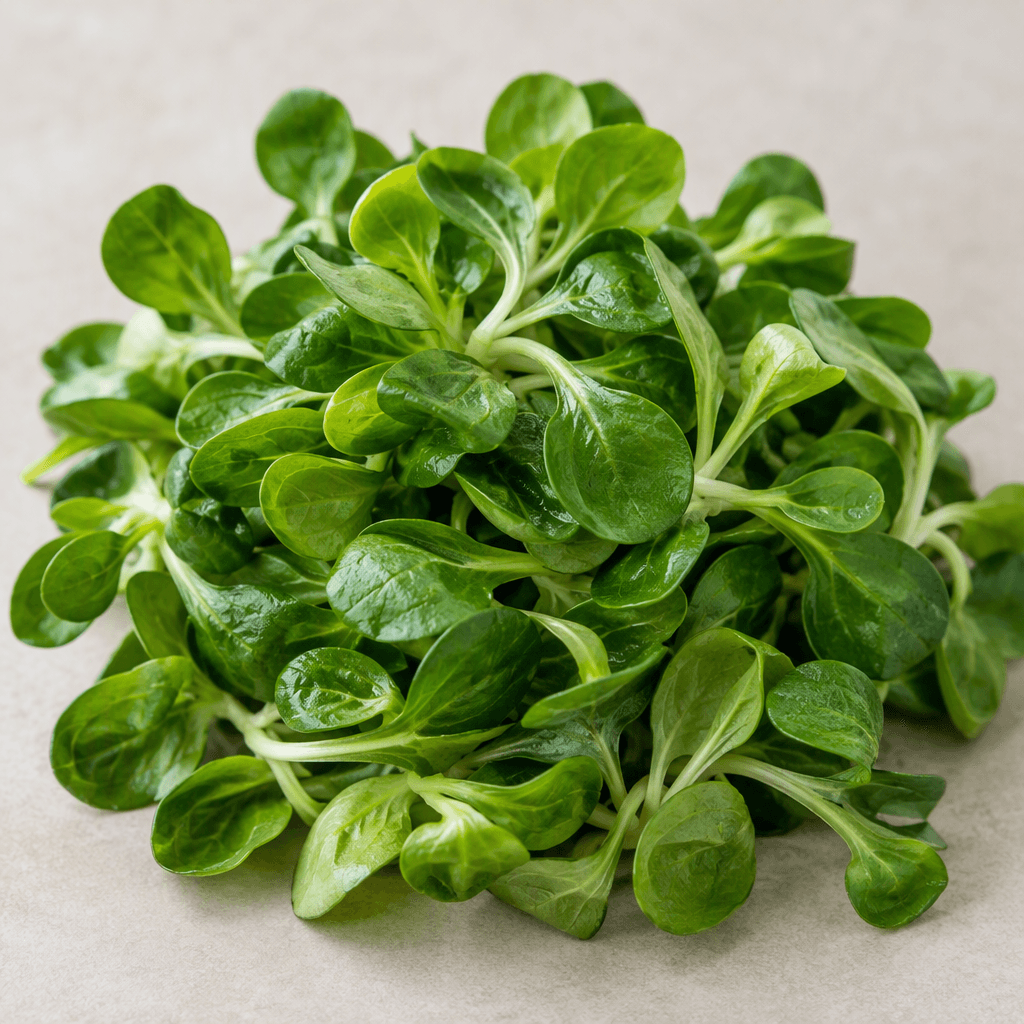
Lamb's Lettuce Calories
Very low calorie, source of folate and vitamin C, popular in salads
In season: Spring · Autumn · Winter
CALORIES
GI
POTASSIUM
FIBER
Quick answer
1 cup (medium) of Lamb's Lettuce (50 g) has 11 calories. That works out to 21 calories per 100 g. It contains 1.8 g of carbs, 1 g of protein, 0.2 g of fat and 0.9 g of fiber. Its 125 µg of Vitamin K covers 104% of the Daily Value. Its glycemic index is 15 (low), so it raises blood sugar slowly.
What is Lamb's Lettuce?
Lamb’s lettuce, also known as mâche, grows in small rosettes of rounded, spoon-shaped leaves. Native to Europe, it is especially familiar in French cooking, where its tender leaves are often served raw. Its flavour is mild, lightly sweet and less peppery than many salad greens, with a delicate texture that bruises easily.
Toss it into a simple salad with a sharp vinaigrette, or pair it with roasted vegetables, eggs or nuts. It is very low in calories and provides folate and vitamin C, making it an easy way to add fresh greens to a meal. Wash and dry the leaves gently, and dress them just before serving so they stay light and tender.
Lamb's Lettuce Nutrition Facts
Selected: 100 g
21
KCAL / 100G
Carbs
3.6g
· 1% DV
Protein
2g
· 4% DV
Fat
0.4g
· 1% DV
Fiber
1.7g
· 6% DV
DV is the share of the daily value covered, on a 2,000 kcal reference diet.
Calories come from: Carbs 55% · Protein 31% · Fat 14%
Lamb's Lettuce Vitamins & Minerals
Vitamins
Vitamin K
250µg · 208% DV
Vitamin A
650µg · 72% DV
Vitamin C
38mg · 42% DV
Folate
145µg · 36% DV
Minerals
Iron
2mg · 11% DV
Potassium ⭐
330mg · 10% DV
Phosphorus
44mg · 6% DV
Calcium
38mg · 4% DV
How Nutritious Is Lamb's Lettuce?
Nutrient density
Very high
How many vitamins, minerals and how much fiber this food carries per calorie. A high score means a lot of nutrition for few calories.
Satiety score
Medium
An EatBetter score computed from fiber, protein and calorie density. A high score means staying full longer on the same calories.
Both scores are calculated per 100 g and do not change with the selected portion. The satiety score is EatBetter's own calculation, not a clinical measure.
Lamb's Lettuce Glycemic Index
GLYCEMIC INDEX
GLYCEMIC LOAD
Accounts for portion size — a more realistic measure than GI alone.
How to Burn Off Lamb's Lettuce
To burn the 21 calories in 100 g:
🚶
Walking (5 km/h)
🏃
Running (8 km/h)
🚴
Cycling
🏊
Swimming
Times are calculated with the MET equation for a 70 kg adult. Actual burn varies with your weight, age and pace.
Is Lamb's Lettuce Processed?
NOVA 1
Unprocessed
1. Unprocessed
2. Minimally Processed
3. Processed
4. Ultra-Processed
NOVA classifies foods into 4 groups by industrial processing. NOVA 1 (unprocessed) is the healthiest.
Does Lamb's Lettuce Contain Allergens?
No known major allergens
Which Diets Is Lamb's Lettuce Good For?
Vegan
✓ Suitable
Vegetarian
✓ Suitable
Gluten-Free
✓ Suitable
Dairy-Free
— Not suitable
Mediterranean
✓ Suitable
Paleo
✓ Suitable
Whole30
— Not suitable
DASH
— Not suitable
Keto
— Not suitable
Low FODMAP
— Not suitable
Lamb's Lettuce Fat Profile
SATURATED
0.07g
MONOUNSATURATED
0.02g
POLYUNSATURATED
0.09g
Omega 6:3 ratio 0.3:1
Below the ideal 4:1 — a good omega balance.
Compare Lamb's Lettuce
Foods Similar to Lamb's Lettuce
Frequently Asked Questions About Lamb's Lettuce
What is lamb’s lettuce?
Lamb’s lettuce is a mild salad green that grows in small rosettes of rounded, spoon-shaped leaves. It is also called mâche or corn salad, and its tender leaves are usually eaten raw rather than treated like a cooking green.
How do you eat lamb’s lettuce?
Eat lamb’s lettuce raw in salads, or add it to sandwiches and bowls just before serving. Its delicate leaves pair well with citrus, apple, nuts, and a light vinaigrette; toss gently so they do not bruise.
How do you wash lamb’s lettuce properly?
Swish lamb’s lettuce gently in a bowl of cold water so grit falls to the bottom, then lift the leaves out rather than pouring the water over them. Repeat if needed and dry thoroughly in a salad spinner or with a clean towel.
How long does lamb’s lettuce last in the fridge?
Unwashed lamb’s lettuce keeps best in the refrigerator, loosely wrapped in a dry paper towel inside a container or bag. Its fragile leaves wilt quickly once wet or bruised, so wash only what you plan to use and eat it promptly.
What does lamb’s lettuce taste like?
Lamb’s lettuce has a mild, slightly nutty flavor and a tender texture, without the pronounced pepperiness of arugula. Choose light dressings and delicate toppings so stronger ingredients do not overwhelm its subtle taste.
Can you cook lamb’s lettuce?
Yes, lamb’s lettuce can be cooked, but it wilts very quickly and is most often served raw. Stir a handful into hot soup or a pan at the very end of cooking, just long enough for the leaves to soften.
Is lamb’s lettuce the same as spinach?
No, lamb’s lettuce and spinach are different plants. Lamb’s lettuce has small, rounded rosettes and a particularly tender, mild leaf, while spinach leaves are generally larger and hold their shape better in cooked dishes.
What can you use instead of lamb’s lettuce?
Baby spinach is the closest mild substitute for lamb’s lettuce in salads; watercress works if you want a sharper flavor. Both are sturdier, so use a light hand with dressing if you want to preserve the delicate feel of the original.
Do you need to remove the roots from lamb’s lettuce?
Trim only the dirty root tip from lamb’s lettuce if it is still attached; the small base holds each rosette together. Cutting away the whole base can scatter the leaves, making them harder to wash and serve neatly.
Why is lamb’s lettuce called corn salad?
Lamb’s lettuce is called corn salad because it was traditionally found growing as a weed in European grain fields, where “corn” meant cereal crops. The name does not mean it is made from corn or taste like sweetcorn.
Have another question about Lamb's Lettuce?
Ask the AI nutrition coach — calories, portions, alternatives and more, answered in seconds in the app.

Scan calories with your camera
Instant AI nutrition analysis

Nutrition data compiled from USDA FoodData Central and scientific sources.