

Ready & Packaged Foods
All →Vegetables & Legumes
All →Desserts & Confectionery
All →Meat & Protein
All →Grains & Bakery
All →Beverages
All →Milk & Dairy
All →

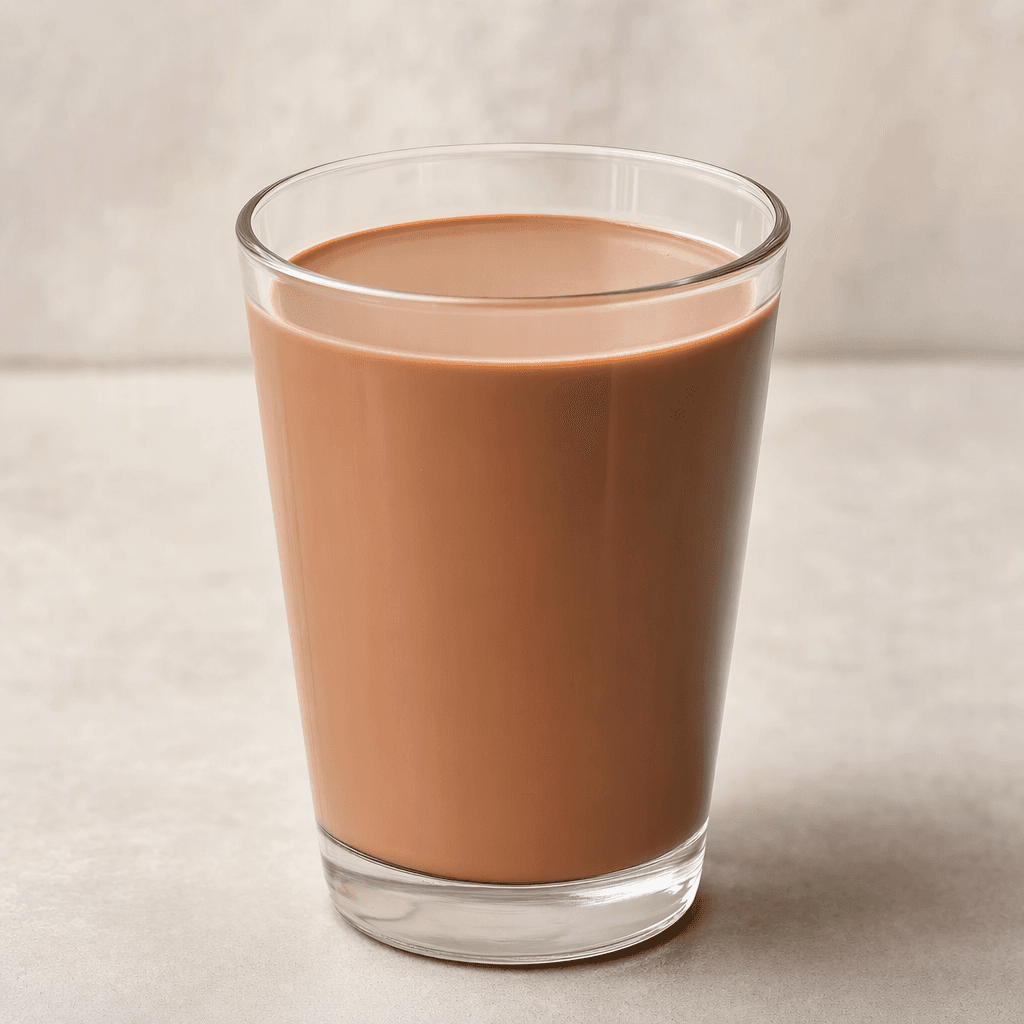
Lactose-free chocolate protein milk drink Calories
High-protein, lactose-free chocolate milk drink
CALORIES
GI
POTASSIUM
FIBER
Quick answer
1 bottle (medium) of Lactose-free chocolate protein milk drink (330 g) has 218 calories. That works out to 66 calories per 100 g. It contains 23.8 g of carbs, 17.2 g of protein, 1 g of fat and 1.3 g of fiber. Its 1.5 µg of B12 covers 62% of the Daily Value. Its glycemic index is 34 (low), so it raises blood sugar slowly.
What is Lactose-free chocolate protein milk drink?
Lactose-free chocolate protein milk drink is a cocoa-flavoured milk beverage with added protein. Smooth and gently sweet, it has the familiar taste of chocolate milk and is often sold ready to drink in a bottle.
It is usually enjoyed chilled as a quick breakfast addition, snack or post-workout drink; a piece of fruit or a simple sandwich makes an easy pairing. Its protein content makes it more substantial than ordinary chocolate milk, while the cocoa sweetness still gives it the feel of a treat. For a lighter option, have a smaller glass alongside food rather than treating it as a meal replacement.
Lactose-free chocolate protein milk drink Nutrition Facts
Selected: 100 g
66
KCAL / 100G
Carbs
7.2g
· 3% DV
Protein
5.2g
· 10% DV
Fat
0.3g
· 0% DV
Fiber
0.4g
· 1% DV
DV is the share of the daily value covered, on a 2,000 kcal reference diet.
Calories come from: Carbs 55% · Protein 40% · Fat 5%
Lactose-free chocolate protein milk drink Vitamins & Minerals
Vitamins
B12
0.45µg · 19% DV
B2
0.18mg · 14% DV
B5
0.32mg · 6% DV
Biotin
1.5µg · 5% DV
Minerals
Phosphorus
105mg · 15% DV
Calcium
120mg · 12% DV
Zinc
1mg · 9% DV
Iodine
10µg · 7% DV
How Nutritious Is Lactose-free chocolate protein milk drink?
Nutrient density
High
How many vitamins, minerals and how much fiber this food carries per calorie. A high score means a lot of nutrition for few calories.
Satiety score
Medium
An EatBetter score computed from fiber, protein and calorie density. A high score means staying full longer on the same calories.
Both scores are calculated per 100 g and do not change with the selected portion. The satiety score is EatBetter's own calculation, not a clinical measure.
Lactose-free chocolate protein milk drink Glycemic Index
GLYCEMIC INDEX
GLYCEMIC LOAD
Accounts for portion size — a more realistic measure than GI alone.
How to Burn Off Lactose-free chocolate protein milk drink
To burn the 66 calories in 100 g:
🚶
Walking (5 km/h)
🏃
Running (8 km/h)
🚴
Cycling
🏊
Swimming
Times are calculated with the MET equation for a 70 kg adult. Actual burn varies with your weight, age and pace.
Is Lactose-free chocolate protein milk drink Processed?
NOVA 3
Processed
1. Unprocessed
2. Minimally Processed
3. Processed
4. Ultra-Processed
NOVA classifies foods into 4 groups by industrial processing. NOVA 1 (unprocessed) is the healthiest.
Does Lactose-free chocolate protein milk drink Contain Allergens?
Contains these allergens:
Which Diets Is Lactose-free chocolate protein milk drink Good For?
Vegan
— Not suitable
Vegetarian
✓ Suitable
Gluten-Free
✓ Suitable
Dairy-Free
— Not suitable
Mediterranean
— Not suitable
Paleo
— Not suitable
Whole30
— Not suitable
DASH
— Not suitable
Keto
— Not suitable
Low FODMAP
— Not suitable
Lactose-free chocolate protein milk drink Fat Profile
SATURATED
0.8g
MONOUNSATURATED
0.3g
POLYUNSATURATED
0.08g
Omega 6:3 ratio 1.7:1
Below the ideal 4:1 — a good omega balance.
Compare Lactose-free chocolate protein milk drink
Foods Similar to Lactose-free chocolate protein milk drink
Frequently Asked Questions About Lactose-free chocolate protein milk drink
Does a lactose-free chocolate protein milk drink still contain dairy?
Yes, a lactose-free chocolate protein milk drink is still made from milk and contains dairy proteins. Lactose is broken down or removed, but the drink is not suitable for someone with a milk allergy.
Is a lactose-free chocolate protein milk drink good after a workout?
Yes, a lactose-free chocolate protein milk drink can be a convenient post-workout option because it supplies protein as part of recovery nutrition. It does not replace water after exercise, especially when you have sweated heavily.
Can a lactose-free chocolate protein milk drink help with weight loss?
It may help you feel satisfied, but a lactose-free chocolate protein milk drink does not cause weight loss by itself. It is more useful as a replacement for a less filling snack than as an extra drink alongside your usual meals.
Does lactose-free chocolate protein milk drink contain caffeine?
Usually, a lactose-free chocolate protein milk drink has no added coffee and contains only a small amount of naturally occurring caffeine from cocoa. Check the ingredients if you avoid caffeine, since recipes can differ between products.
Can you drink a lactose-free chocolate protein milk drink before bed?
Yes, you can drink a lactose-free chocolate protein milk drink before bed if it sits comfortably with you. Cocoa may contain small amounts of caffeine, so people who are sensitive to it may prefer a non-chocolate option at night.
Is a lactose-free chocolate protein milk drink safe for people with lactose intolerance?
Usually, yes: lactose-free chocolate protein milk drink is made for people avoiding lactose, and lactose-free does not mean milk-free. If you still get symptoms, check the product ingredients and consider whether another ingredient, such as cocoa or a sweetener, is the cause.
How long does a lactose-free chocolate protein milk drink last after opening?
Keep a lactose-free chocolate protein milk drink refrigerated after opening and follow the storage period printed on its package. Do not leave the bottle at room temperature for an extended time, and discard it if its smell, taste, or appearance changes.
How do you make a lactose-free chocolate protein milk drink at home?
Blend lactose-free milk with cocoa and an unflavoured protein powder to make a lactose-free chocolate protein milk drink at home. Adjust the sweetness to taste; blending helps prevent the powder from forming lumps.
Can children have a lactose-free chocolate protein milk drink?
Yes, children who can have milk products can generally drink a lactose-free chocolate protein milk drink. Check for added sugar, and treat it as an occasional alternative rather than a replacement for water or plain milk.
Can people with diabetes drink a lactose-free chocolate protein milk drink?
Some people with diabetes can include a lactose-free chocolate protein milk drink, but lactose-free does not mean carbohydrate-free. Milk sugars and added sugar can affect blood glucose; if you use insulin or glucose-lowering medication, ask your care team how to fit it in.
Have another question about Lactose-free chocolate protein milk drink?
Ask the AI nutrition coach — calories, portions, alternatives and more, answered in seconds in the app.

Scan calories with your camera
Instant AI nutrition analysis

Nutrition data compiled from USDA FoodData Central and scientific sources.