

Ready & Packaged Foods
All →Vegetables & Legumes
All →Desserts & Confectionery
All →Meat & Protein
All →Grains & Bakery
All →Beverages
All →Milk & Dairy
All →

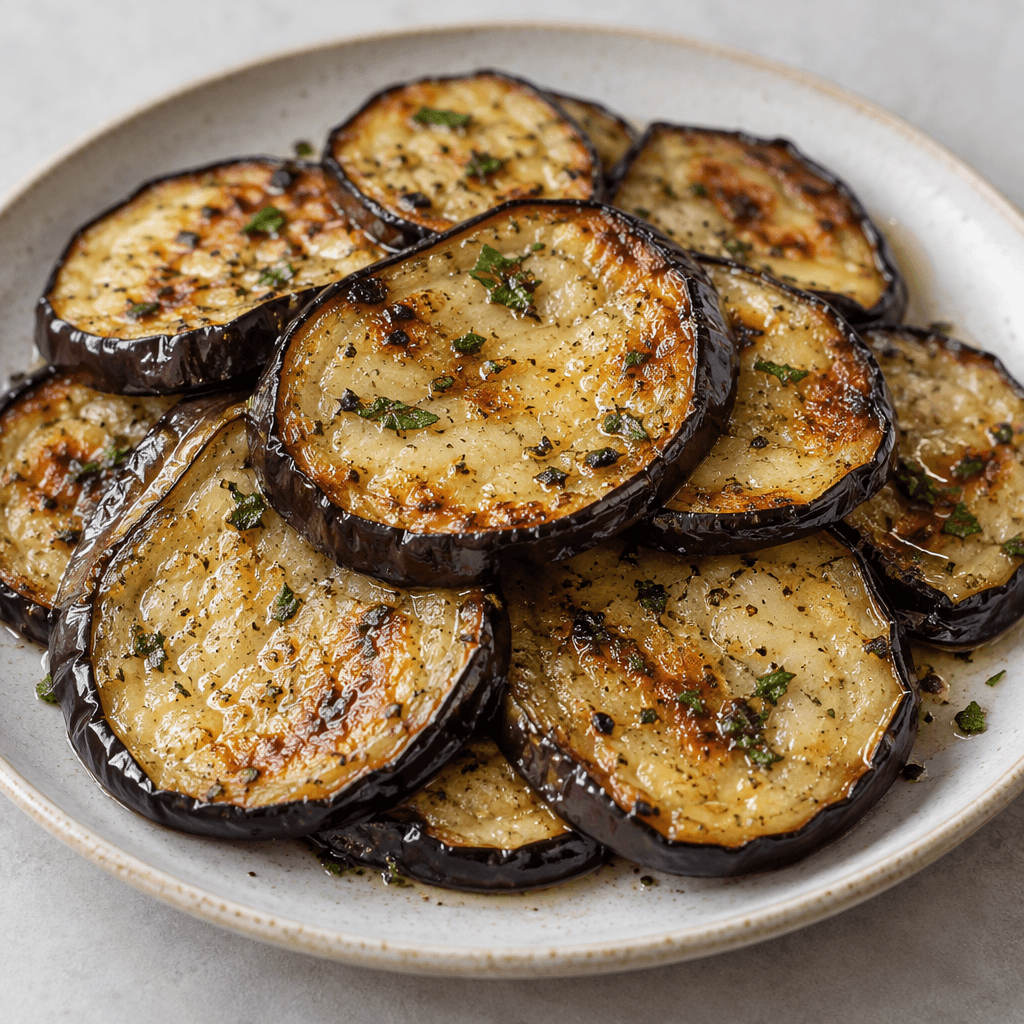
Fried eggplant Calories
Slices of eggplant fried in oil, rich flavor, higher fat content
In season: Summer
CALORIES
GI
POTASSIUM
FIBER
Quick answer
1 piece (medium) of Fried eggplant (80 g) has 160 calories. That works out to 200 calories per 100 g. It contains 12.8 g of carbs, 1.2 g of protein, 12 g of fat and 3.2 g of fiber. Its 0.2 mg of Manganese covers 7% of the Daily Value. Its glycemic index is 40 (low), so it raises blood sugar slowly.
What is Fried eggplant?
Fried eggplant is made by slicing eggplant and cooking it in oil until the outside is golden and the flesh turns tender. It is a familiar preparation across Mediterranean and Middle Eastern cooking, with variations in seasoning and serving style.
Enjoy it warm or at room temperature as a side, part of a meze spread, or tucked into bread; tomato sauce, herbs, and a cool yogurt dip all pair well. Eggplant contributes fibre, while the oil makes the finished dish relatively rich and higher in fat than plain eggplant. For a lighter plate, drain the slices on paper after frying, serve them with a fresh salad, or roast the slices instead.
Fried eggplant Nutrition Facts
Selected: 100 g
200
KCAL / 100G
Carbs
16g
· 6% DV
Protein
1.5g
· 3% DV
Fat
15g
· 19% DV
Fiber
4g
· 14% DV
DV is the share of the daily value covered, on a 2,000 kcal reference diet.
Calories come from: Carbs 31% · Protein 3% · Fat 66%
Fried eggplant Vitamins & Minerals
Vitamins
Vitamin E
1.2mg · 8% DV
B5
0.25mg · 5% DV
B6
0.08mg · 5% DV
Folate
20µg · 5% DV
Minerals
Potassium ⭐
220mg · 6% DV
Magnesium
12mg · 3% DV
Phosphorus
20mg · 3% DV
Calcium
15mg · 2% DV
How Nutritious Is Fried eggplant?
Nutrient density
Medium
How many vitamins, minerals and how much fiber this food carries per calorie. A high score means a lot of nutrition for few calories.
Satiety score
Medium
An EatBetter score computed from fiber, protein and calorie density. A high score means staying full longer on the same calories.
Both scores are calculated per 100 g and do not change with the selected portion. The satiety score is EatBetter's own calculation, not a clinical measure.
Fried eggplant Glycemic Index
GLYCEMIC INDEX
GLYCEMIC LOAD
Accounts for portion size — a more realistic measure than GI alone.
How to Burn Off Fried eggplant
To burn the 200 calories in 100 g:
🚶
Walking (5 km/h)
🏃
Running (8 km/h)
🚴
Cycling
🏊
Swimming
Times are calculated with the MET equation for a 70 kg adult. Actual burn varies with your weight, age and pace.
Is Fried eggplant Processed?
NOVA 3
Processed
1. Unprocessed
2. Minimally Processed
3. Processed
4. Ultra-Processed
NOVA classifies foods into 4 groups by industrial processing. NOVA 1 (unprocessed) is the healthiest.
Does Fried eggplant Contain Allergens?
No known major allergens
Which Diets Is Fried eggplant Good For?
Vegan
✓ Suitable
Vegetarian
✓ Suitable
Gluten-Free
— Not suitable
Dairy-Free
— Not suitable
Mediterranean
✓ Suitable
Paleo
— Not suitable
Whole30
— Not suitable
DASH
— Not suitable
Keto
— Not suitable
Low FODMAP
— Not suitable
Fried eggplant Fat Profile
SATURATED
2.5g
MONOUNSATURATED
7g
POLYUNSATURATED
3g
Omega 6:3 ratio 25:1
Above the ideal 4:1 (25:1).
Compare Fried eggplant
Foods Similar to Fried eggplant
Frequently Asked Questions About Fried eggplant
How do you make fried eggplant crispy?
To make fried eggplant crisp, dry the slices thoroughly and fry them in hot oil without crowding the pan. Let the cooked slices drain in a single layer; stacking them while hot traps steam and softens the edges.
What kind of eggplant is best for fried eggplant?
Firm, glossy eggplant with smooth skin works best for fried eggplant. Choose fruit that feels heavy for its size and has no soft spots; very mature eggplant can have more seeds and a softer, sometimes bitter interior.
Can you make fried eggplant without breading?
Yes, fried eggplant can be made without breading. Simply slice and dry the eggplant before frying; the surface will turn golden but will be softer than a coated version. A light flour coating is optional, not essential.
Why does fried eggplant soak up so much oil?
Fried eggplant can absorb plenty of oil because its porous flesh acts like a sponge, especially when the oil is not hot enough. Drying the slices, frying in batches, and draining them promptly helps limit excess oil.
Should you peel eggplant before making fried eggplant?
No, you do not have to peel eggplant for fried eggplant. The skin helps the slices hold together as they cook. If the skin seems tough, peel alternating strips rather than removing it all.
Can you make fried eggplant in an air fryer?
Yes, you can make fried eggplant in an air fryer, though it will not have exactly the same texture as slices cooked in a pan of oil. Brush or lightly coat the slices with oil and arrange them in a single layer.
How do you keep fried eggplant from turning soggy?
Keep fried eggplant from turning soggy by draining it in a single layer and serving it soon after cooking. Avoid covering hot slices, since trapped steam softens their surface; add sauces just before serving.
Can fried eggplant be frozen?
Yes, fried eggplant can be frozen once completely cool, but thawed slices are usually softer than freshly cooked ones. Freeze them in a single layer first, then transfer them to a sealed container so they do not stick together.
How do you reheat fried eggplant?
Reheat fried eggplant in a skillet or oven to bring back some of its crispness. Spread the slices out rather than piling them up; microwaving is convenient but tends to make the texture softer.
What sauces go well with fried eggplant?
Fried eggplant pairs well with tomato sauce, garlic yogurt, or a simple herb dressing. Serve the sauce alongside or add it just before eating, since leaving sauced slices to sit can make their fried coating soft.
Have another question about Fried eggplant?
Ask the AI nutrition coach — calories, portions, alternatives and more, answered in seconds in the app.

Scan calories with your camera
Instant AI nutrition analysis

Nutrition data compiled from USDA FoodData Central and scientific sources.