

Ready & Packaged Foods
All →Vegetables & Legumes
All →Desserts & Confectionery
All →Meat & Protein
All →Grains & Bakery
All →Beverages
All →Milk & Dairy
All →

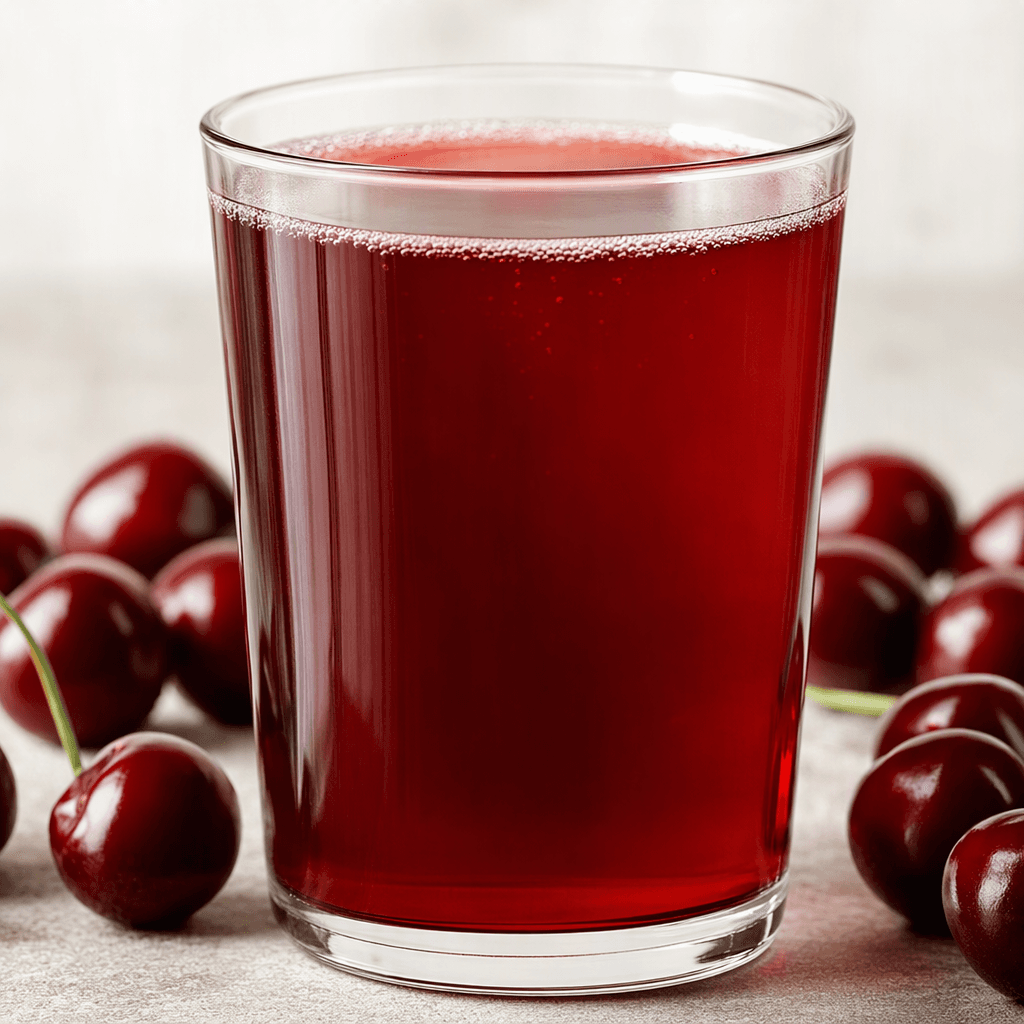
Cherry juice Calories
Antioxidant-rich fruit juice
In season: Summer
CALORIES
GI
POTASSIUM
FIBER
Quick answer
1 cup (medium) of Cherry juice (240 g) has 113 calories. That works out to 47 calories per 100 g. It contains 28.3 g of carbs, 1.7 g of protein, 0.5 g of fat and 0.7 g of fiber. Its 16.8 mg of Vitamin C covers 19% of the Daily Value. Its glycemic index is 43 (low), so it raises blood sugar slowly.
What is Cherry juice?
Cherry juice is made by pressing ripe cherries, and its colour and flavour depend on the fruit used. Juice from sweet cherries is usually mellow and fruity, while sour-cherry juice has a sharper tang; checking the ingredients can help you tell which style you have. It is often enjoyed chilled, either on its own or poured over ice, and can also be mixed with sparkling water for a lighter, less intense drink.
It is mostly a source of carbohydrate, with little protein or fibre; 100 g provides 11.8 g of carbohydrate. Serve it at breakfast or alongside a meal, or use a small splash to add fruity flavour to a glass of plain water. If you prefer a less sweet taste, dilute it before serving.
Cherry juice Nutrition Facts
Selected: 100 g
47
KCAL / 100G
Carbs
11.8g
· 4% DV
Protein
0.7g
· 1% DV
Fat
0.2g
· 0% DV
Fiber
0.3g
· 1% DV
DV is the share of the daily value covered, on a 2,000 kcal reference diet.
Calories come from: Carbs 91% · Protein 5% · Fat 4%
Cherry juice Vitamins & Minerals
Vitamins
Vitamin C
7mg · 8% DV
B1
0.02mg · 2% DV
B2
0.03mg · 2% DV
B5
0.08mg · 2% DV
Minerals
Potassium ⭐
150mg · 4% DV
Magnesium
10mg · 2% DV
Phosphorus
17mg · 2% DV
Calcium
13mg · 1% DV
How Nutritious Is Cherry juice?
Nutrient density
Low
How many vitamins, minerals and how much fiber this food carries per calorie. A high score means a lot of nutrition for few calories.
Satiety score
Medium
An EatBetter score computed from fiber, protein and calorie density. A high score means staying full longer on the same calories.
Both scores are calculated per 100 g and do not change with the selected portion. The satiety score is EatBetter's own calculation, not a clinical measure.
Cherry juice Glycemic Index
GLYCEMIC INDEX
GLYCEMIC LOAD
Accounts for portion size — a more realistic measure than GI alone.
How to Burn Off Cherry juice
To burn the 47 calories in 100 g:
🚶
Walking (5 km/h)
🏃
Running (8 km/h)
🚴
Cycling
🏊
Swimming
Times are calculated with the MET equation for a 70 kg adult. Actual burn varies with your weight, age and pace.
Is Cherry juice Processed?
NOVA 3
Processed
1. Unprocessed
2. Minimally Processed
3. Processed
4. Ultra-Processed
NOVA classifies foods into 4 groups by industrial processing. NOVA 1 (unprocessed) is the healthiest.
Does Cherry juice Contain Allergens?
No known major allergens
Which Diets Is Cherry juice Good For?
Vegan
✓ Suitable
Vegetarian
✓ Suitable
Gluten-Free
✓ Suitable
Dairy-Free
— Not suitable
Mediterranean
✓ Suitable
Paleo
— Not suitable
Whole30
— Not suitable
DASH
— Not suitable
Keto
— Not suitable
Low FODMAP
— Not suitable
Cherry juice Fat Profile
SATURATED
0.02g
MONOUNSATURATED
0.03g
POLYUNSATURATED
0.04g
Omega 6:3 ratio 3:1
Below the ideal 4:1 — a good omega balance.
Compare Cherry juice
Foods Similar to Cherry juice
Frequently Asked Questions About Cherry juice
Does cherry juice help you sleep?
Cherry juice is not a proven sleep aid. Most sleep research has looked at tart cherry juice, not sweet cherry juice, and the evidence is limited. Drinking cherry juice should not replace regular sleep habits or treatment for ongoing sleep problems.
Is cherry juice the same as tart cherry juice?
No. Cherry juice usually refers to juice from sweet cherries, while tart cherry juice is made from sour cherries. They differ in taste and may not have the same effects in studies, so check which type a recipe or product means.
Is cherry juice good for gout?
Cherry juice has not been shown to treat gout or replace gout medication. Some research has examined cherries and tart cherry products, but the findings do not establish that sweet cherry juice prevents attacks. Ask your clinician before changing gout treatment.
How do you make cherry juice at home?
To make cherry juice at home, wash and pit the cherries, blend them, then strain the mixture if you want a smooth drink. Add water to thin it if needed; extra sugar is optional because ripe cherries are already sweet.
Can cherry juice help with exercise recovery?
Cherry juice is not an established recovery treatment. Research on muscle soreness and exercise recovery mainly involves tart cherry products, so those results cannot automatically be applied to sweet cherry juice. Prioritize fluids, food, and rest after exercise.
Does cherry juice need to be refrigerated after opening?
Yes, refrigerate cherry juice after opening and keep the container tightly closed. Store homemade juice in a clean, covered container and use it promptly; for bottled juice, follow the storage instructions on its packaging.
Does cherry juice have added sugar?
Some cherry juice has added sugar and some does not. Pure juice still contains naturally occurring fruit sugars, so check the ingredients for added sweeteners and the nutrition information to compare products.
Can you freeze cherry juice?
Yes, cherry juice can be frozen in a freezer-safe container. Leave room at the top for expansion, then thaw it in the refrigerator and stir well because separation or a change in texture can occur.
Can cherry juice cause side effects?
Cherry juice is usually tolerated in ordinary servings, but larger amounts may cause stomach discomfort or loose stools for some people. Its natural sugars can also affect blood glucose, so people managing diabetes may need to account for it.
Is cherry juice suitable for babies?
Cherry juice is not recommended for babies under 12 months; breast milk or infant formula should remain their main drink. For older children, offer small amounts rather than making juice a routine substitute for water or whole fruit.
Have another question about Cherry juice?
Ask the AI nutrition coach — calories, portions, alternatives and more, answered in seconds in the app.

Scan calories with your camera
Instant AI nutrition analysis

Nutrition data compiled from USDA FoodData Central and scientific sources.