

Ready & Packaged Foods
All →Vegetables & Legumes
All →Desserts & Confectionery
All →Meat & Protein
All →Grains & Bakery
All →Beverages
All →Milk & Dairy
All →

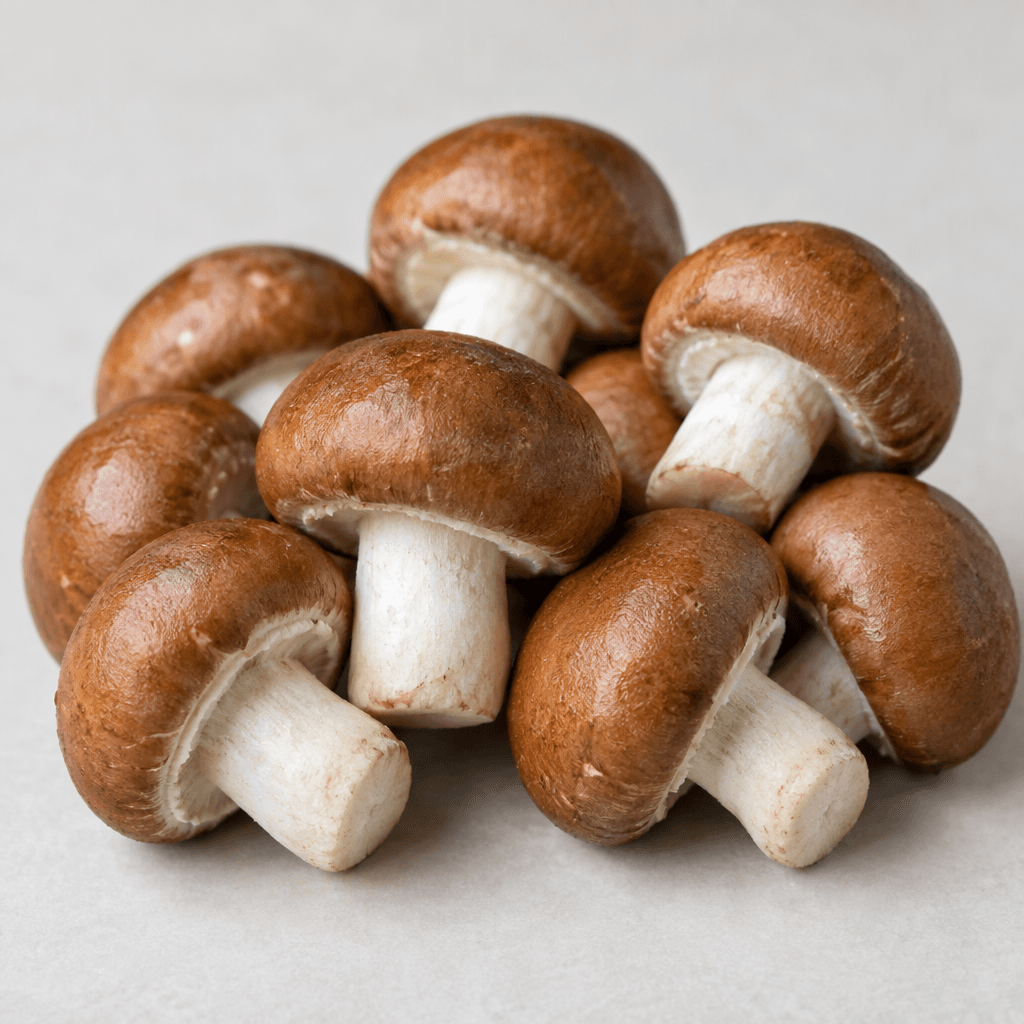
Chestnut Mushroom Calories
Low calorie, high fiber, rich in B vitamins, contains antioxidants
In season: Spring · Autumn
CALORIES
GI
POTASSIUM
FIBER
Quick answer
1 cup (chopped) of Chestnut Mushroom (70 g) has 15 calories. That works out to 22 calories per 100 g. It contains 2.3 g of carbs, 1.8 g of protein, 0.2 g of fat and 0.7 g of fiber. Its 11.2 µg of Biotin covers 37% of the Daily Value. Its glycemic index is 15 (low), so it raises blood sugar slowly.
What is Chestnut Mushroom?
Chestnut mushroom is a brown-capped cultivated mushroom, with a pale underside and a firm, short stem. Its flavour is gently earthy and nutty, becoming fuller when cooked, while the dense texture holds up well in a pan or oven.
It works in everyday meals across many cuisines: sauté it for toast or eggs, fold it into pasta, soups and grain dishes, or roast it alongside other vegetables. It is low in calories and provides fibre and B vitamins; a 100 g portion has 22 calories. For a lighter meal, cook it with a little oil and plenty of vegetables, or use it to add savoury depth to a dish without relying on a rich sauce.
Chestnut Mushroom Nutrition Facts
Selected: 100 g
22
KCAL / 100G
Carbs
3.3g
· 1% DV
Protein
2.5g
· 5% DV
Fat
0.3g
· 0% DV
Fiber
1g
· 4% DV
DV is the share of the daily value covered, on a 2,000 kcal reference diet.
Calories come from: Carbs 51% · Protein 39% · Fat 10%
Chestnut Mushroom Vitamins & Minerals
Vitamins
Biotin
16µg · 53% DV
B2
0.4mg · 31% DV
B5
1.5mg · 30% DV
B3
3.6mg · 23% DV
Minerals
Phosphorus
120mg · 17% DV
Selenium
9µg · 16% DV
Zinc
1mg · 9% DV
Potassium ⭐
320mg · 9% DV
How Nutritious Is Chestnut Mushroom?
Nutrient density
High
How many vitamins, minerals and how much fiber this food carries per calorie. A high score means a lot of nutrition for few calories.
Satiety score
Medium
An EatBetter score computed from fiber, protein and calorie density. A high score means staying full longer on the same calories.
Both scores are calculated per 100 g and do not change with the selected portion. The satiety score is EatBetter's own calculation, not a clinical measure.
Chestnut Mushroom Glycemic Index
GLYCEMIC INDEX
GLYCEMIC LOAD
Accounts for portion size — a more realistic measure than GI alone.
How to Burn Off Chestnut Mushroom
To burn the 22 calories in 100 g:
🚶
Walking (5 km/h)
🏃
Running (8 km/h)
🚴
Cycling
🏊
Swimming
Times are calculated with the MET equation for a 70 kg adult. Actual burn varies with your weight, age and pace.
Is Chestnut Mushroom Processed?
NOVA 1
Unprocessed
1. Unprocessed
2. Minimally Processed
3. Processed
4. Ultra-Processed
NOVA classifies foods into 4 groups by industrial processing. NOVA 1 (unprocessed) is the healthiest.
Does Chestnut Mushroom Contain Allergens?
No known major allergens
Which Diets Is Chestnut Mushroom Good For?
Vegan
✓ Suitable
Vegetarian
✓ Suitable
Gluten-Free
✓ Suitable
Dairy-Free
— Not suitable
Mediterranean
✓ Suitable
Paleo
✓ Suitable
Whole30
— Not suitable
DASH
— Not suitable
Keto
✓ Suitable
Low FODMAP
— Not suitable
Chestnut Mushroom Fat Profile
SATURATED
0.05g
MONOUNSATURATED
0.02g
POLYUNSATURATED
0.07g
Omega 6:3 ratio 5:1
Above the ideal 4:1 (5:1).
Compare Chestnut Mushroom
Foods Similar to Chestnut Mushroom
Frequently Asked Questions About Chestnut Mushroom
How do you cook chestnut mushrooms?
Sauté chestnut mushrooms over medium-high heat in a little oil until browned. Give them room in the pan so moisture can evaporate instead of steaming them. They also work well roasted or added to soups, pasta, and sauces.
What do chestnut mushrooms taste like?
Chestnut mushrooms have a mild, earthy flavor that is usually more pronounced than that of white button mushrooms. Their relatively firm texture holds up well in sautés, roasts, and sauces.
How should you store chestnut mushrooms?
Keep chestnut mushrooms unwashed in a breathable paper bag in the refrigerator. Avoid sealing them while damp in plastic, where trapped moisture can make them slimy. Clean them just before cooking.
Do you need to wash chestnut mushrooms?
Only if they have visible dirt: quickly rinse chestnut mushrooms under running water or wipe them with a damp cloth, then dry them. Don’t soak them, as they can absorb water and brown less readily.
What can you use instead of chestnut mushrooms?
Cremini or brown button mushrooms are the closest substitutes for chestnut mushrooms, with a similar texture and earthy flavor. White button mushrooms also work, though their flavor is generally milder.
Can you eat chestnut mushrooms raw?
Yes, fresh chestnut mushrooms can be eaten raw, thinly sliced in salads. Cooking brings out a deeper flavor and softens their texture; if serving them raw, clean them well and use them promptly.
Can you eat the stems of chestnut mushrooms?
Yes, chestnut mushroom stems are edible and can be cooked with the caps. Trim off any dry or tough ends, and slice thicker stems so they cook at about the same rate as the rest.
Can you freeze chestnut mushrooms?
Yes, but chestnut mushrooms freeze better after cooking. Sauté them, let them cool, and freeze them in an airtight container; their texture may become softer after thawing, so they’re best used in cooked dishes.
Are chestnut mushrooms the same as button mushrooms?
Chestnut mushrooms are commonly a brown variety of the same cultivated mushroom species as white button mushrooms. They tend to have a deeper flavor and firmer texture, but can usually be swapped for button mushrooms in recipes.
How can you tell if chestnut mushrooms have gone bad?
Discard chestnut mushrooms if they feel slimy, smell sour or unpleasant, or have become very soft and dark. A little surface discoloration alone does not necessarily mean they are spoiled, so check their smell and texture too.
Have another question about Chestnut Mushroom?
Ask the AI nutrition coach — calories, portions, alternatives and more, answered in seconds in the app.

Scan calories with your camera
Instant AI nutrition analysis

Nutrition data compiled from USDA FoodData Central and scientific sources.