

Ready & Packaged Foods
All →Vegetables & Legumes
All →Desserts & Confectionery
All →Meat & Protein
All →Grains & Bakery
All →Beverages
All →Milk & Dairy
All →

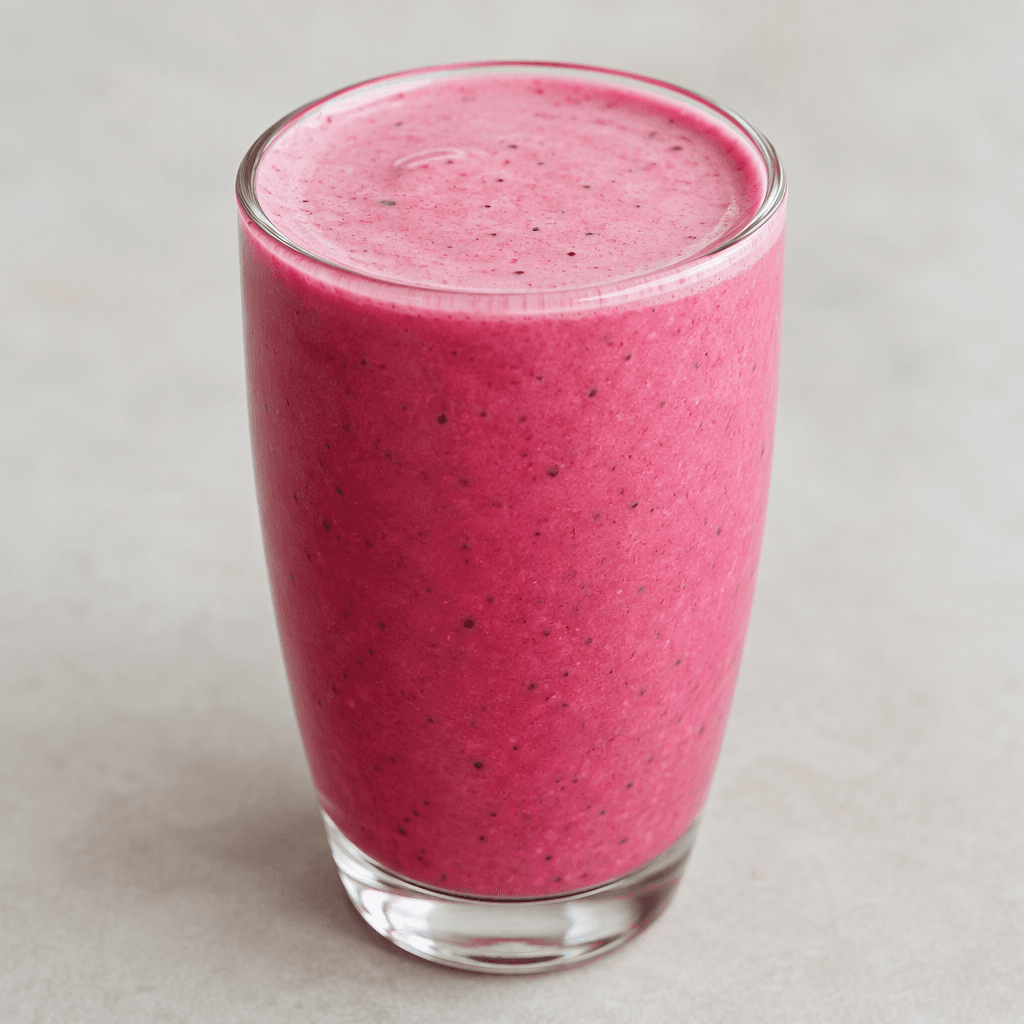
Kefir (Beetroot, Lemon, Ginger) Calories
Probiotic drink, enriched with beetroot and lemon, refreshing with ginger
In season: Spring · Summer · Autumn · Winter
CALORIES
GI
POTASSIUM
FIBER
Quick answer
1 cup (medium) of Kefir (Beetroot, Lemon, Ginger) (200 g) has 76 calories. That works out to 38 calories per 100 g. It contains 13 g of carbs, 3.4 g of protein, 1.4 g of fat and 1.4 g of fiber. Its 0.2 mg of B2 covers 18% of the Daily Value. Its glycemic index is 25 (low), so it raises blood sugar slowly.
What is Kefir (Beetroot, Lemon, Ginger)?
Beetroot, lemon and ginger kefir combines fermented milk kefir with beetroot and bright citrus and ginger notes. Kefir is traditionally associated with the Caucasus and is now enjoyed in many countries, including as a chilled drink at breakfast or between meals. Beetroot gives this version its vivid pink colour and an earthy sweetness, while lemon adds tang and ginger a gentle warmth. Its texture is smooth and creamy, with kefir’s characteristic tartness.
It can be poured into a glass on its own, served alongside a light meal or blended into a smoothie. Kefir provides some protein, while this flavoured version also brings the fresh, earthy taste of its additions. For a less sweet-tasting drink, choose a version without added sugar; it pairs well with fruit or a simple breakfast.
Kefir (Beetroot, Lemon, Ginger) Nutrition Facts
Selected: 100 g
38
KCAL / 100G
Carbs
6.5g
· 2% DV
Protein
1.7g
· 3% DV
Fat
0.7g
· 1% DV
Fiber
0.7g
· 3% DV
DV is the share of the daily value covered, on a 2,000 kcal reference diet.
Calories come from: Carbs 66% · Protein 17% · Fat 17%
Kefir (Beetroot, Lemon, Ginger) Vitamins & Minerals
Vitamins
B2
0.12mg · 9% DV
Biotin
2.2µg · 7% DV
Vitamin C
6.5mg · 7% DV
B12
0.12µg · 5% DV
Minerals
Phosphorus
38mg · 5% DV
Calcium
44mg · 4% DV
Magnesium
11mg · 3% DV
Potassium ⭐
110mg · 3% DV
How Nutritious Is Kefir (Beetroot, Lemon, Ginger)?
Nutrient density
Medium
How many vitamins, minerals and how much fiber this food carries per calorie. A high score means a lot of nutrition for few calories.
Satiety score
Medium
An EatBetter score computed from fiber, protein and calorie density. A high score means staying full longer on the same calories.
Both scores are calculated per 100 g and do not change with the selected portion. The satiety score is EatBetter's own calculation, not a clinical measure.
Kefir (Beetroot, Lemon, Ginger) Glycemic Index
GLYCEMIC INDEX
GLYCEMIC LOAD
Accounts for portion size — a more realistic measure than GI alone.
How to Burn Off Kefir (Beetroot, Lemon, Ginger)
To burn the 38 calories in 100 g:
🚶
Walking (5 km/h)
🏃
Running (8 km/h)
🚴
Cycling
🏊
Swimming
Times are calculated with the MET equation for a 70 kg adult. Actual burn varies with your weight, age and pace.
Is Kefir (Beetroot, Lemon, Ginger) Processed?
NOVA 2
Minimally Processed
1. Unprocessed
2. Minimally Processed
3. Processed
4. Ultra-Processed
NOVA classifies foods into 4 groups by industrial processing. NOVA 1 (unprocessed) is the healthiest.
Does Kefir (Beetroot, Lemon, Ginger) Contain Allergens?
Contains these allergens:
Which Diets Is Kefir (Beetroot, Lemon, Ginger) Good For?
Vegan
— Not suitable
Vegetarian
✓ Suitable
Gluten-Free
— Not suitable
Dairy-Free
— Not suitable
Mediterranean
✓ Suitable
Paleo
— Not suitable
Whole30
— Not suitable
DASH
— Not suitable
Keto
— Not suitable
Low FODMAP
— Not suitable
Kefir (Beetroot, Lemon, Ginger) Fat Profile
SATURATED
0.4g
MONOUNSATURATED
0.18g
POLYUNSATURATED
0.08g
Omega 6:3 ratio 3:1
Below the ideal 4:1 — a good omega balance.
Compare Kefir (Beetroot, Lemon, Ginger)
Foods Similar to Kefir (Beetroot, Lemon, Ginger)
Frequently Asked Questions About Kefir (Beetroot, Lemon, Ginger)
What is Kefir (Beetroot, Lemon, Ginger)?
Kefir (Beetroot, Lemon, Ginger) is a kefir-based drink flavored with beetroot, lemon, and ginger. Its pink color comes from the beetroot, while the cultured kefir gives it a tangy base and ginger adds a warming note.
How do you make Kefir (Beetroot, Lemon, Ginger) at home?
Blend plain kefir with cooked or finely grated beetroot, lemon juice, and a little fresh ginger to make Kefir (Beetroot, Lemon, Ginger). Add the flavorings after the milk has fermented; lemon can interfere with the texture if added before fermentation.
What does Kefir (Beetroot, Lemon, Ginger) taste like?
Kefir (Beetroot, Lemon, Ginger) tastes tangy, earthy, and lightly spicy. Beetroot gives it a mild sweetness and vivid pink color, lemon brightens the flavor, and ginger leaves a warming finish.
Does Kefir (Beetroot, Lemon, Ginger) contain live probiotics?
Kefir (Beetroot, Lemon, Ginger) can contain live cultures when it is made with fresh, unheated kefir that has not been pasteurized after fermentation. Added beetroot, lemon, and ginger do not guarantee a particular number or type of live cultures.
Can you freeze Kefir (Beetroot, Lemon, Ginger)?
You can freeze Kefir (Beetroot, Lemon, Ginger), but thawing may make it separate or turn grainy. Freeze it in a sealed container with room for expansion, thaw it in the refrigerator, then shake or blend it before drinking.
Why does Kefir (Beetroot, Lemon, Ginger) separate?
Kefir (Beetroot, Lemon, Ginger) may separate as beetroot particles settle and the kefir releases some whey. Stir or briefly blend it before drinking. Separation alone does not mean the drink has spoiled; discard it if it smells or looks spoiled.
Can you drink Kefir (Beetroot, Lemon, Ginger) before bed?
Yes, you can drink Kefir (Beetroot, Lemon, Ginger) before bed if it suits you. It contains no caffeine, but its tanginess or ginger may bother people prone to reflux, so avoid having it close to bedtime if that happens.
Can Kefir (Beetroot, Lemon, Ginger) replace a sports drink after exercise?
Kefir (Beetroot, Lemon, Ginger) can be a refreshing post-exercise drink, but it is not a direct substitute for a sports drink during prolonged, intense exercise. Its kefir provides some protein, while its fluid and carbohydrate content may not match your workout needs.
How should you store Kefir (Beetroot, Lemon, Ginger) after opening?
Keep opened Kefir (Beetroot, Lemon, Ginger) covered in the refrigerator and use clean utensils when serving it. Drink it promptly, since the beetroot and lemon mixture can change in flavor and texture during storage.
Can Kefir (Beetroot, Lemon, Ginger) be used in a smoothie?
Yes, Kefir (Beetroot, Lemon, Ginger) works as a tangy smoothie base. Blend it with fruit such as berries or banana, but taste before adding citrus or other acidic ingredients, which can make the dairy texture thinner or curdled.
Have another question about Kefir (Beetroot, Lemon, Ginger)?
Ask the AI nutrition coach — calories, portions, alternatives and more, answered in seconds in the app.

Scan calories with your camera
Instant AI nutrition analysis

Nutrition data compiled from USDA FoodData Central and scientific sources.