

Ready & Packaged Foods
All →Vegetables & Legumes
All →Desserts & Confectionery
All →Meat & Protein
All →Grains & Bakery
All →Beverages
All →Milk & Dairy
All →

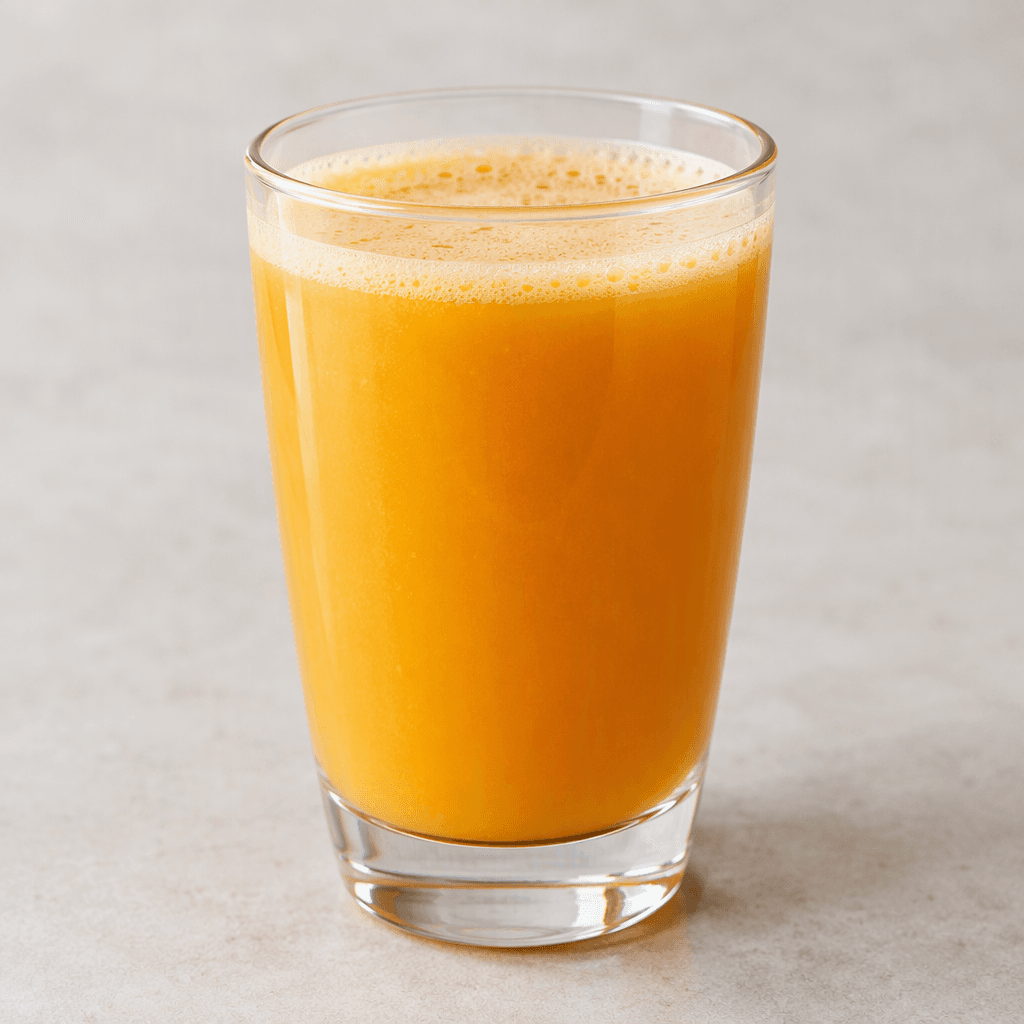
Apricot juice Calories
Vitamin C source, refreshing drink
In season: Summer
CALORIES
GI
POTASSIUM
FIBER
Quick answer
1 cup (medium) of Apricot juice (200 g) has 96 calories. That works out to 48 calories per 100 g. It contains 23 g of carbs, 0.8 g of protein, 0.2 g of fat and 1 g of fiber. Its 20 mg of Vitamin C covers 22% of the Daily Value. Its glycemic index is 50 (medium), so it raises blood sugar at a moderate pace.
What is Apricot juice?
Apricot juice is made from ripe apricots, either pressed or blended into a smooth drink; some versions are diluted with water. Apricots are especially associated with Malatya in Turkey, though the juice is enjoyed in many places and is also sold ready to drink.
Its flavour is gently sweet and fruity, with a golden colour and a texture that can be slightly thick. Serve it chilled at breakfast or brunch, as a refreshing drink on a warm day, or alongside a light snack. It is mostly carbohydrate, with 11.5 g per 100 g. For a lighter glass, dilute it with water; plain yoghurt makes a simple pairing.
Apricot juice Nutrition Facts
Selected: 100 g
48
KCAL / 100G
Carbs
11.5g
· 4% DV
Protein
0.4g
· 1% DV
Fat
0.1g
· 0% DV
Fiber
0.5g
· 2% DV
DV is the share of the daily value covered, on a 2,000 kcal reference diet.
Calories come from: Carbs 95% · Protein 3% · Fat 2%
Apricot juice Vitamins & Minerals
Vitamins
Vitamin C
10mg · 11% DV
Vitamin E
0.9mg · 6% DV
Vitamin A
48µg · 5% DV
B5
0.13mg · 3% DV
Minerals
Potassium ⭐
140mg · 4% DV
Magnesium
7mg · 2% DV
Phosphorus
12mg · 2% DV
Calcium
8mg · 1% DV
How Nutritious Is Apricot juice?
Nutrient density
Medium
How many vitamins, minerals and how much fiber this food carries per calorie. A high score means a lot of nutrition for few calories.
Satiety score
Medium
An EatBetter score computed from fiber, protein and calorie density. A high score means staying full longer on the same calories.
Both scores are calculated per 100 g and do not change with the selected portion. The satiety score is EatBetter's own calculation, not a clinical measure.
Apricot juice Glycemic Index
GLYCEMIC INDEX
GLYCEMIC LOAD
Accounts for portion size — a more realistic measure than GI alone.
How to Burn Off Apricot juice
To burn the 48 calories in 100 g:
🚶
Walking (5 km/h)
🏃
Running (8 km/h)
🚴
Cycling
🏊
Swimming
Times are calculated with the MET equation for a 70 kg adult. Actual burn varies with your weight, age and pace.
Is Apricot juice Processed?
NOVA 2
Minimally Processed
1. Unprocessed
2. Minimally Processed
3. Processed
4. Ultra-Processed
NOVA classifies foods into 4 groups by industrial processing. NOVA 1 (unprocessed) is the healthiest.
Does Apricot juice Contain Allergens?
No known major allergens
Which Diets Is Apricot juice Good For?
Vegan
✓ Suitable
Vegetarian
✓ Suitable
Gluten-Free
✓ Suitable
Dairy-Free
— Not suitable
Mediterranean
✓ Suitable
Paleo
— Not suitable
Whole30
— Not suitable
DASH
— Not suitable
Keto
— Not suitable
Low FODMAP
— Not suitable
Apricot juice Fat Profile
SATURATED
0.01g
MONOUNSATURATED
0.02g
POLYUNSATURATED
0.04g
Omega 6:3 ratio 3:1
Below the ideal 4:1 — a good omega balance.
Compare Apricot juice
Foods Similar to Apricot juice
Frequently Asked Questions About Apricot juice
How do you make apricot juice at home?
Make apricot juice by removing the stones from ripe apricots, then blending the fruit with water until smooth. Strain it for a thinner drink if you like. For a version made with dried apricots, soften them in water first, then blend.
Is apricot juice good for you?
Apricot juice can be a refreshing source of vitamin C, but it has much less fiber than whole apricots, especially when strained. Choose an unsweetened version and enjoy it alongside a varied diet rather than treating it as a substitute for whole fruit.
Does apricot juice help with constipation?
Apricot juice is not a reliable constipation remedy. Much of the fiber in apricots is lost when they are juiced or strained, whereas whole apricots retain it. Drinking water and choosing whole fruit are more useful everyday options.
Can people with diabetes drink apricot juice?
People with diabetes can drink apricot juice, but portion size and added sugar matter because juice may raise blood glucose more quickly than whole apricots. A doctor or dietitian can help tailor an amount to an individual glucose-management plan.
What is the difference between apricot juice and apricot nectar?
Apricot nectar is typically made by thinning apricot purée with water, and it may contain added sugar; apricot juice is presented as juice from the fruit. The names and ingredient lists on products show which drink you are buying and whether sugar was added.
How long does homemade apricot juice last in the fridge?
Keep homemade apricot juice covered in the refrigerator and drink it promptly. Do not leave it sitting at room temperature for extended periods. Discard it if it develops an unusual sour smell, fizz, or change in appearance.
Can you freeze apricot juice?
Yes, apricot juice can be frozen. Leave room in the container for expansion, then thaw it in the refrigerator. The pulp may separate after thawing, so stir or shake the juice before drinking, and do not refreeze it once thawed.
Is apricot juice made from dried apricots?
Yes, apricot juice can be made from dried apricots. Soak them until soft, then blend them with their soaking water; strain the mixture if you want a thinner texture. Dried apricots make the drink taste more concentrated and sweet.
Does apricot juice cause weight gain?
Apricot juice does not cause weight gain by itself, but drinking large amounts can add energy without filling you as much as whole apricots. For a more filling snack, eat the fruit whole instead of routinely drinking juice.
Should you drink apricot juice every day?
You can drink apricot juice daily, but it should not replace water or whole fruit. Juice contains less fiber than an apricot and can provide substantial natural sugar in a small drink, so keep the serving moderate and choose one without added sugar.
Have another question about Apricot juice?
Ask the AI nutrition coach — calories, portions, alternatives and more, answered in seconds in the app.

Scan calories with your camera
Instant AI nutrition analysis

Nutrition data compiled from USDA FoodData Central and scientific sources.