

Ready & Packaged Foods
All →Vegetables & Legumes
All →Desserts & Confectionery
All →Meat & Protein
All →Grains & Bakery
All →Beverages
All →Milk & Dairy
All →

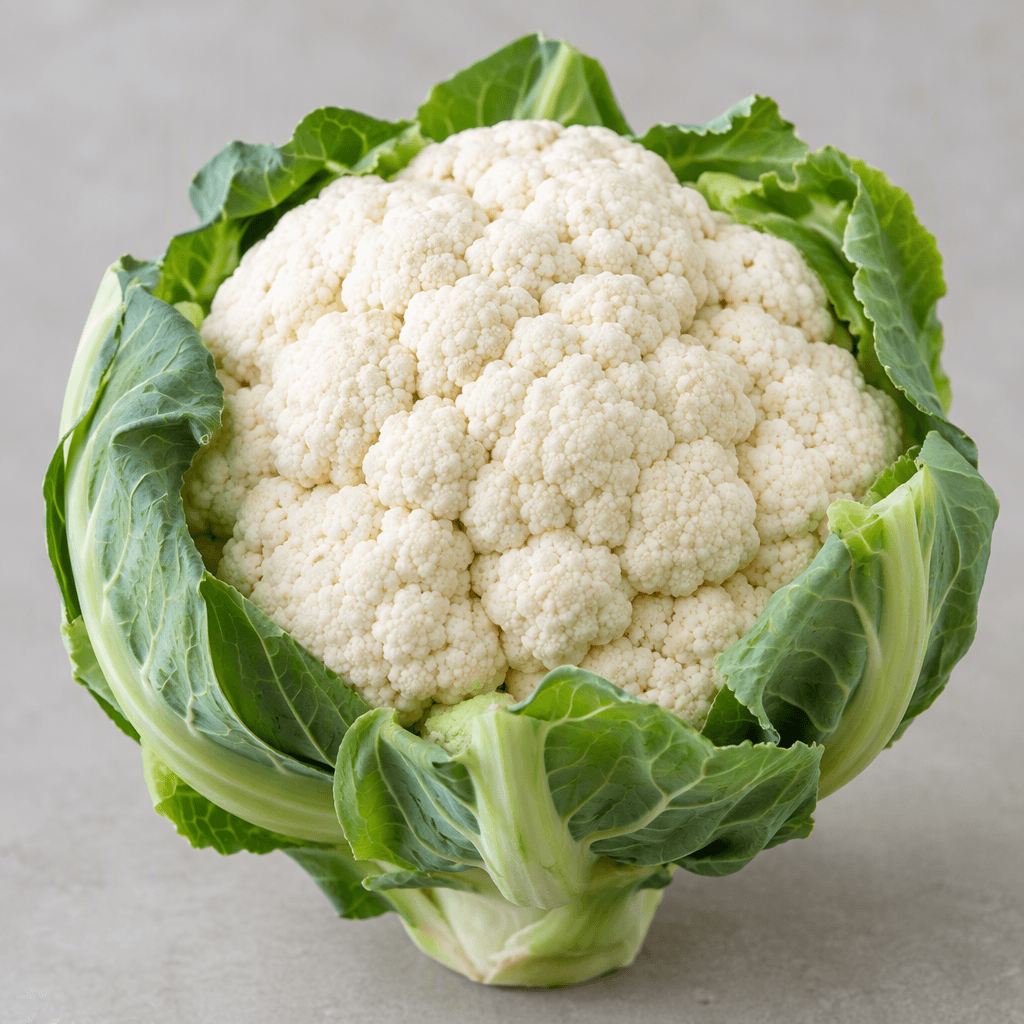
Cauliflower Calories
Vitamin C, fiber, low calorie
In season: Autumn · Winter · Spring
CALORIES
GI
POTASSIUM
FIBER
Quick answer
1 piece (medium) of Cauliflower (300 g) has 75 calories. That works out to 25 calories per 100 g. It contains 14.7 g of carbs, 5.7 g of protein, 0.9 g of fat and 6 g of fiber. Its 144 mg of Vitamin C covers 160% of the Daily Value. Its glycemic index is 15 (low), so it raises blood sugar slowly.
What is Cauliflower?
Cauliflower is a member of the cabbage family, grown as a compact head of tightly packed white florets. Its mild flavour makes it easy to use in many kinds of cooking. In its Mediterranean home and around the world, it is served roasted, steamed or boiled, added to soups and curries, or broken into florets as a side dish. It softens when cooked and can turn mushy if left in the pot too long.
It is low in calories and provides fibre and vitamin C; a 100 g portion has 25 calories. Roast it with a little oil and spices for a simple, lighter side, or pair it with a protein-rich main and a bright dressing. It also works well mashed or blended into soup when you want a softer texture.
Cauliflower Nutrition Facts
Selected: 100 g
25
KCAL / 100G
Carbs
4.9g
· 2% DV
Protein
1.9g
· 4% DV
Fat
0.3g
· 0% DV
Fiber
2g
· 7% DV
DV is the share of the daily value covered, on a 2,000 kcal reference diet.
Calories come from: Carbs 66% · Protein 25% · Fat 9%
Cauliflower Vitamins & Minerals
Vitamins
Vitamin C
48mg · 53% DV
B5
0.7mg · 14% DV
Folate
57µg · 14% DV
Vitamin K
15.5µg · 13% DV
Minerals
Potassium ⭐
299mg · 9% DV
Phosphorus
44mg · 6% DV
Magnesium
15mg · 4% DV
Calcium
22mg · 2% DV
How Nutritious Is Cauliflower?
Nutrient density
Very high
How many vitamins, minerals and how much fiber this food carries per calorie. A high score means a lot of nutrition for few calories.
Satiety score
Medium
An EatBetter score computed from fiber, protein and calorie density. A high score means staying full longer on the same calories.
Both scores are calculated per 100 g and do not change with the selected portion. The satiety score is EatBetter's own calculation, not a clinical measure.
Cauliflower Glycemic Index
GLYCEMIC INDEX
GLYCEMIC LOAD
Accounts for portion size — a more realistic measure than GI alone.
How to Burn Off Cauliflower
To burn the 25 calories in 100 g:
🚶
Walking (5 km/h)
🏃
Running (8 km/h)
🚴
Cycling
🏊
Swimming
Times are calculated with the MET equation for a 70 kg adult. Actual burn varies with your weight, age and pace.
Is Cauliflower Processed?
NOVA 1
Unprocessed
1. Unprocessed
2. Minimally Processed
3. Processed
4. Ultra-Processed
NOVA classifies foods into 4 groups by industrial processing. NOVA 1 (unprocessed) is the healthiest.
Does Cauliflower Contain Allergens?
No known major allergens
Which Diets Is Cauliflower Good For?
Vegan
✓ Suitable
Vegetarian
✓ Suitable
Gluten-Free
✓ Suitable
Dairy-Free
— Not suitable
Mediterranean
✓ Suitable
Paleo
✓ Suitable
Whole30
— Not suitable
DASH
— Not suitable
Keto
✓ Suitable
Low FODMAP
— Not suitable
Cauliflower Fat Profile
SATURATED
0.07g
MONOUNSATURATED
0.03g
POLYUNSATURATED
0.06g
Omega 6:3 ratio 1.5:1
Below the ideal 4:1 — a good omega balance.
Compare Cauliflower
Foods Similar to Cauliflower
Frequently Asked Questions About Cauliflower
How do you make cauliflower rice?
To make cauliflower rice, pulse washed cauliflower florets in a food processor until they look like grains of rice, taking care not to turn them to mush. Cook the pieces briefly in a skillet; squeezing out excess moisture helps keep the result fluffy.
How do you roast cauliflower so it gets crispy?
Cut cauliflower into similar-sized florets, dry them well, and spread them in a single layer with space between pieces. Roast with a little oil at high heat, turning once; crowding the pan traps steam and makes the cauliflower soft rather than browned.
Can you freeze cauliflower without blanching it?
You can freeze cauliflower without blanching, but its texture and flavor are more likely to deteriorate during storage. For better quality, briefly blanch the florets, cool them quickly, drain thoroughly, and freeze them in an airtight bag.
Why does cauliflower smell when it cooks?
Cauliflower releases sulfur-containing compounds as it cooks, which can create a strong smell, especially when it is overcooked. Use a short cooking time and leave the pot uncovered so steam can escape; roasting also produces a milder, more toasted aroma.
How can you tell if cauliflower has gone bad?
Discard cauliflower if it has widespread dark or slimy patches, feels mushy, or smells unpleasant. A few small tan spots can usually be trimmed away if the rest of the head is firm and fresh-smelling.
Can you eat cauliflower raw?
Yes, cauliflower is safe to eat raw after you wash it well. Break it into bite-sized florets for salads or serve it with a dip; its firm crunch is useful, although raw cauliflower may cause gas or bloating for some people.
Are cauliflower leaves edible?
Yes, the leaves and tender stems of cauliflower are edible. Wash them thoroughly, remove any tough central ribs, then chop and sauté them or add them to soup. Avoid leaves that are slimy or badly wilted.
How do you choose a good cauliflower?
Choose a cauliflower head that feels heavy for its size, with tightly packed florets and fresh, green leaves. Avoid heads with soft spots, widespread discoloration, or a sour smell, which can indicate that they are past their best.
How long does cauliflower last in the refrigerator?
A whole cauliflower generally keeps for about a week in the refrigerator when stored dry in a breathable bag in the crisper drawer. Once cut, keep the florets in a covered container and use them within a few days.
Does cauliflower cause gas or bloating?
It can: cauliflower contains carbohydrates that gut bacteria ferment, which may lead to gas and bloating. A smaller portion and thoroughly cooked florets may be easier to tolerate; if symptoms are persistent or severe, ask a dietitian about suitable portions.
Have another question about Cauliflower?
Ask the AI nutrition coach — calories, portions, alternatives and more, answered in seconds in the app.

Scan calories with your camera
Instant AI nutrition analysis

Nutrition data compiled from USDA FoodData Central and scientific sources.