

Ready & Packaged Foods
All →Vegetables & Legumes
All →Desserts & Confectionery
All →Meat & Protein
All →Grains & Bakery
All →Beverages
All →Milk & Dairy
All →

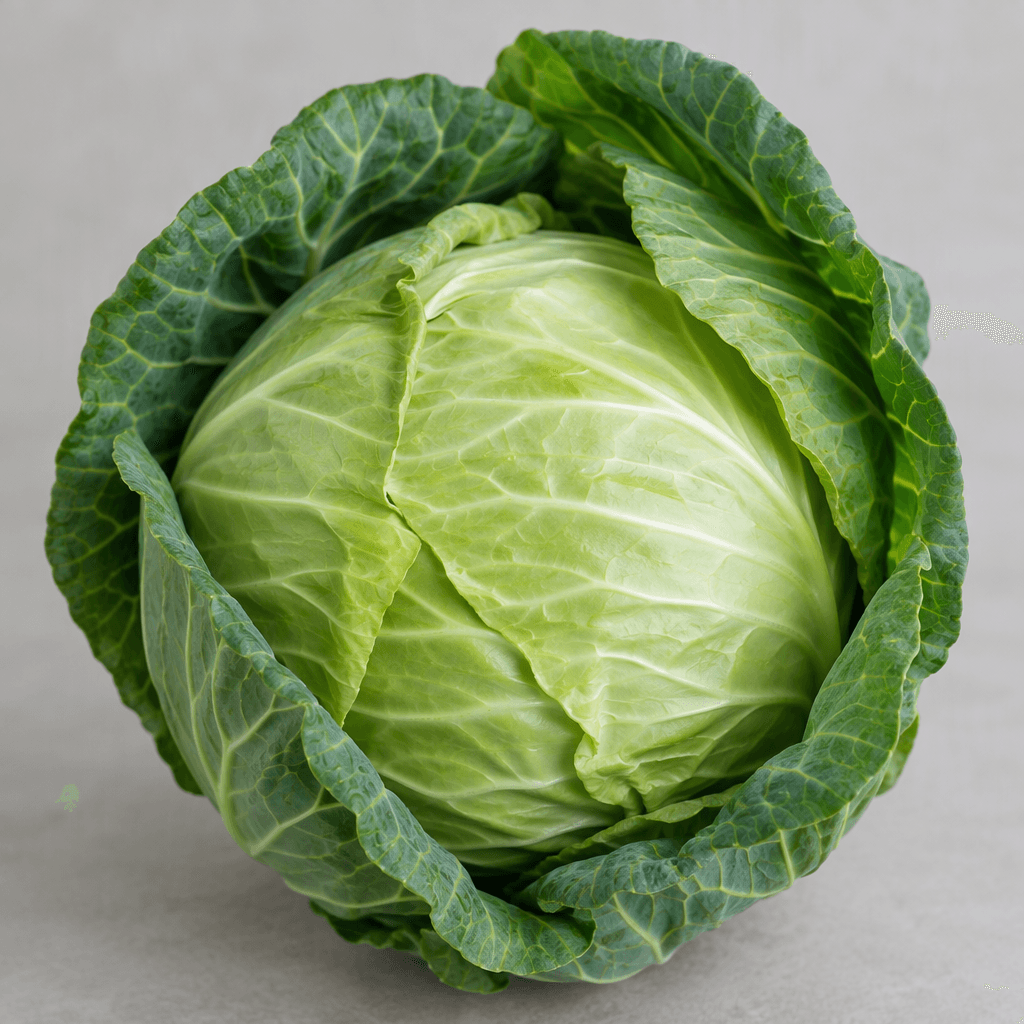
Karam Calories
Leafy vegetable rich in fiber and vitamins, low in calories
In season: Autumn · Winter · Spring
CALORIES
GI
POTASSIUM
FIBER
Quick answer
1 cup (chopped) of Karam (70 g) has 22 calories. That works out to 32 calories per 100 g. It contains 4.2 g of carbs, 1.9 g of protein, 0.2 g of fat and 2.8 g of fiber. Its 571.9 µg of Vitamin K covers 477% of the Daily Value. Its glycemic index is 15 (low), so it raises blood sugar slowly.
What is Karam?
Karam is a compact cabbage with tightly layered leaves, pale green inside and darker on the outside, marked by curved veins. It can be eaten raw or cooked. Raw, it is crisp with a mild vegetal flavour; cooking makes the leaves softer and brings out a gentle sweetness. Around the world, cabbage is commonly shredded into salads and slaws, pickled, or added to soups, stews and stuffed-leaf dishes. Karam is a fibre-rich vegetable that adds bulk to meals without many calories; it has 32 calories per 100 grams. Pair it with a sharp dressing or herbs, or cook it briefly if you want to keep some crunch.
Karam Nutrition Facts
Selected: 100 g
32
KCAL / 100G
Carbs
6g
· 2% DV
Protein
2.7g
· 5% DV
Fat
0.3g
· 0% DV
Fiber
4g
· 14% DV
DV is the share of the daily value covered, on a 2,000 kcal reference diet.
Calories come from: Carbs 64% · Protein 29% · Fat 7%
Karam Vitamins & Minerals
Vitamins
Vitamin K
817µg · 681% DV
Vitamin A
3800µg · 422% DV
Vitamin C
41mg · 46% DV
Folate
80µg · 20% DV
Minerals
Manganese
1mg · 43% DV
Calcium
232mg · 23% DV
Iron
2mg · 11% DV
Potassium ⭐
267mg · 8% DV
How Nutritious Is Karam?
Nutrient density
Very high
How many vitamins, minerals and how much fiber this food carries per calorie. A high score means a lot of nutrition for few calories.
Satiety score
High
An EatBetter score computed from fiber, protein and calorie density. A high score means staying full longer on the same calories.
Both scores are calculated per 100 g and do not change with the selected portion. The satiety score is EatBetter's own calculation, not a clinical measure.
Karam Glycemic Index
GLYCEMIC INDEX
GLYCEMIC LOAD
Accounts for portion size — a more realistic measure than GI alone.
How to Burn Off Karam
To burn the 32 calories in 100 g:
🚶
Walking (5 km/h)
🏃
Running (8 km/h)
🚴
Cycling
🏊
Swimming
Times are calculated with the MET equation for a 70 kg adult. Actual burn varies with your weight, age and pace.
Is Karam Processed?
NOVA 1
Unprocessed
1. Unprocessed
2. Minimally Processed
3. Processed
4. Ultra-Processed
NOVA classifies foods into 4 groups by industrial processing. NOVA 1 (unprocessed) is the healthiest.
Does Karam Contain Allergens?
No known major allergens
Which Diets Is Karam Good For?
Vegan
✓ Suitable
Vegetarian
✓ Suitable
Gluten-Free
✓ Suitable
Dairy-Free
— Not suitable
Mediterranean
✓ Suitable
Paleo
✓ Suitable
Whole30
— Not suitable
DASH
— Not suitable
Keto
✓ Suitable
Low FODMAP
— Not suitable
Karam Fat Profile
SATURATED
0.04g
MONOUNSATURATED
0.01g
POLYUNSATURATED
0.09g
Omega 6:3 ratio 0.3:1
Below the ideal 4:1 — a good omega balance.
Compare Karam
Foods Similar to Karam
Frequently Asked Questions About Karam
How can you tell if Karam cabbage is fresh?
Fresh Karam cabbage feels firm and heavy, with crisp leaves and no extensive browning. Avoid heads with a musty smell, slimy patches, or deeply cracked leaves; a few loose outer leaves are not necessarily a problem.
How should you store Karam cabbage?
Keep whole Karam cabbage unwashed in the refrigerator’s crisper drawer, loosely wrapped so moisture does not build up. Refrigerate cut cabbage in a sealed container and use it before the cut surface dries or develops an off smell.
Can you eat Karam cabbage raw?
Yes, Karam cabbage can be eaten raw. Slice it finely for slaw, salads, or wraps; removing or thinly slicing the thick central ribs makes the leaves easier to chew.
Can you freeze Karam cabbage?
Yes, but thawed Karam cabbage becomes softer, so save it for soups, stews, and stir-fries rather than salads. Blanching the chopped leaves briefly before freezing helps preserve their color and quality.
Why does Karam cabbage smell strong when cooked?
Karam cabbage develops a stronger sulfur-like smell when it is cooked for a long time. Cook it quickly by steaming, stir-frying, or sautéing, and avoid leaving it simmering after it has softened.
Is Karam cabbage the same as lettuce?
No, Karam cabbage and lettuce are different vegetables. Cabbage has tightly layered, sturdy leaves and holds up well to cooking and pickling, while lettuce is generally more delicate and is usually eaten fresh.
How do you wash Karam cabbage properly?
For raw dishes, remove the outer leaves and separate the leaves you plan to use, then rinse them under running water. Soil can hide between tightly packed leaves, so washing only the outside may miss it.
Should you remove the core from Karam cabbage?
Remove the core when you want the leaves to separate easily for rolls or when its thick texture would be unwelcome. For soups, braises, and slaw, the core is edible; slice it thinly because it is firmer than the leaves.
Can Karam cabbage be fermented into sauerkraut?
Yes, Karam cabbage can be fermented into sauerkraut. Shred it, mix it with salt, and keep it submerged in its released liquid in a clean fermentation vessel; the salt and oxygen-free conditions support lactic fermentation.
Does Karam cabbage cause gas or bloating?
It can: Karam cabbage contains fermentable carbohydrates that may cause gas or bloating in some people. A smaller serving or cooked cabbage may be easier to tolerate than a large portion eaten raw.
Have another question about Karam?
Ask the AI nutrition coach — calories, portions, alternatives and more, answered in seconds in the app.

Scan calories with your camera
Instant AI nutrition analysis

Nutrition data compiled from USDA FoodData Central and scientific sources.