

Ready & Packaged Foods
All →Vegetables & Legumes
All →Desserts & Confectionery
All →Meat & Protein
All →Grains & Bakery
All →Beverages
All →Milk & Dairy
All →

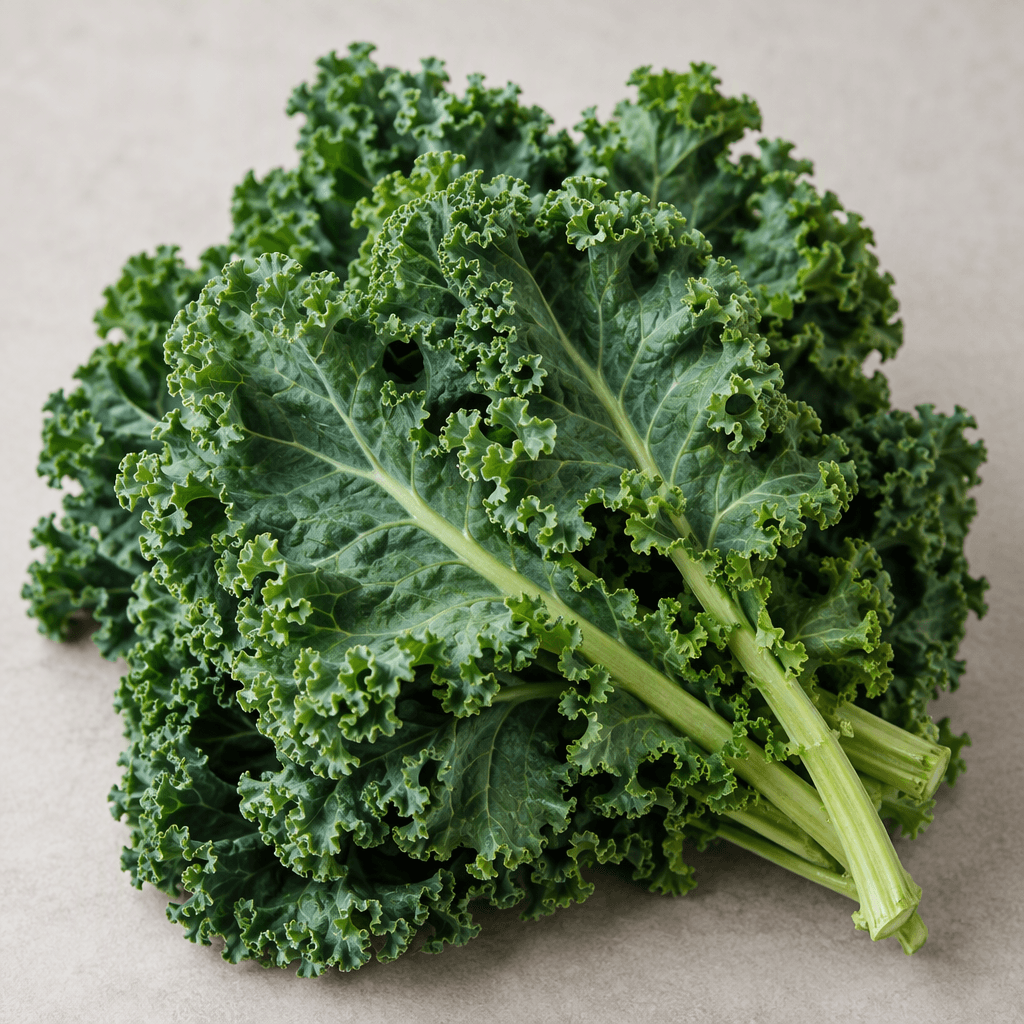
Kale Calories
Very high in vitamin C, K, and fiber. Antioxidant powerhouse.
In season: Autumn · Winter
CALORIES
GI
POTASSIUM
FIBER
Quick answer
1 cup (chopped) of Kale (67 g) has 23 calories. That works out to 35 calories per 100 g. It contains 2.9 g of carbs, 2.2 g of protein, 0.5 g of fat and 2.7 g of fiber. Its 261.3 µg of Vitamin K covers 218% of the Daily Value. Its glycemic index is 2 (low), so it raises blood sugar slowly.
What is Kale?
Kale is a leafy member of the cabbage family, with sturdy stems and dark, ruffled leaves. It has been grown in Europe for centuries and is now widely available fresh in markets and supermarkets. The leaves can be eaten raw or cooked, though the tougher stems are often removed or finely chopped.
Its flavour is earthy and slightly bitter, and cooking softens both the leaves and their bite. In the US and elsewhere, it is commonly added to salads, soups and sautés, or baked into crisp chips; it also works in smoothies. Kale is notably high in fibre while remaining low in calories. Massage raw leaves with a little oil and lemon to tenderise them, or pair cooked kale with beans, grains or eggs.
Kale Nutrition Facts
Selected: 100 g
35
KCAL / 100G
Carbs
4.4g
· 2% DV
Protein
3.3g
· 7% DV
Fat
0.7g
· 1% DV
Fiber
4.1g
· 15% DV
DV is the share of the daily value covered, on a 2,000 kcal reference diet.
Calories come from: Carbs 47% · Protein 36% · Fat 17%
Kale Vitamins & Minerals
Vitamins
Vitamin K
390µg · 325% DV
Vitamin C
120mg · 133% DV
Vitamin A
500µg · 56% DV
Folate
62µg · 16% DV
Minerals
Manganese
1mg · 43% DV
Calcium
150mg · 15% DV
Potassium ⭐
450mg · 13% DV
Iron
2mg · 11% DV
How Nutritious Is Kale?
Nutrient density
Very high
How many vitamins, minerals and how much fiber this food carries per calorie. A high score means a lot of nutrition for few calories.
Satiety score
High
An EatBetter score computed from fiber, protein and calorie density. A high score means staying full longer on the same calories.
Both scores are calculated per 100 g and do not change with the selected portion. The satiety score is EatBetter's own calculation, not a clinical measure.
Kale Glycemic Index
GLYCEMIC INDEX
GLYCEMIC LOAD
Accounts for portion size — a more realistic measure than GI alone.
How to Burn Off Kale
To burn the 35 calories in 100 g:
🚶
Walking (5 km/h)
🏃
Running (8 km/h)
🚴
Cycling
🏊
Swimming
Times are calculated with the MET equation for a 70 kg adult. Actual burn varies with your weight, age and pace.
Is Kale Processed?
NOVA 1
Unprocessed
1. Unprocessed
2. Minimally Processed
3. Processed
4. Ultra-Processed
NOVA classifies foods into 4 groups by industrial processing. NOVA 1 (unprocessed) is the healthiest.
Does Kale Contain Allergens?
No known major allergens
Which Diets Is Kale Good For?
Vegan
✓ Suitable
Vegetarian
✓ Suitable
Gluten-Free
✓ Suitable
Dairy-Free
— Not suitable
Mediterranean
✓ Suitable
Paleo
✓ Suitable
Whole30
— Not suitable
DASH
— Not suitable
Keto
✓ Suitable
Low FODMAP
— Not suitable
Kale Fat Profile
SATURATED
0.09g
MONOUNSATURATED
0.04g
POLYUNSATURATED
0.17g
Omega 6:3 ratio 0.3:1
Below the ideal 4:1 — a good omega balance.
Compare Kale
Foods Similar to Kale
Frequently Asked Questions About Kale
How do you cook kale?
You can sauté, steam, roast, or simmer kale in soup. For a quick side, cook chopped leaves in a pan with olive oil and garlic until tender; add tougher stems first so they have longer to soften.
Can you eat kale raw?
Yes, kale can be eaten raw in salads, slaws, or smoothies. Its leaves are sturdy, so slice them thinly; briefly rubbing chopped kale with dressing softens the texture and helps the flavor blend in.
How do you make kale less bitter?
Balance kale’s bitter edge with acidic or savory ingredients such as lemon, vinegar, garlic, or Parmesan. Briefly sautéing or simmering it also softens the flavor, while overcooking can make the leaves unpleasantly limp.
Do you eat the stems of kale?
Yes, kale stems are edible, but they are tougher than the leaves. Remove any very woody ends, slice the stems thinly, and start cooking them before adding the leaves so everything becomes tender at the same time.
How do you store kale so it stays fresh?
Keep kale dry and unwashed in the refrigerator, loosely wrapped in a paper towel inside a bag or container. Wash it just before use; trapped moisture can make the leaves wilt or spoil sooner.
Can you freeze kale?
Yes, kale freezes well for cooked dishes and smoothies. Wash and chop it, blanch the leaves briefly, cool them promptly, and drain thoroughly before freezing in portions; frozen kale will be softer after thawing.
How do you wash kale properly?
Rinse kale leaves under cool running water, separating the folds to remove grit. Dry them thoroughly with a salad spinner or clean towel, especially if you plan to roast them, since wet leaves will not crisp well.
How do you massage kale for salad?
To massage kale, remove the tough stems, slice the leaves, and rub them gently with a little dressing for a short time until they darken and soften. This makes raw kale easier to chew without cooking it.
How do you make crispy kale chips?
For crispy kale chips, tear dry leaves into bite-size pieces, toss them lightly with oil, and spread them in a single layer on a baking tray. Bake until crisp, checking often because thin edges can burn quickly.
Can kale be added to a smoothie without cooking it?
Yes, raw kale works in smoothies, especially when blended with fruit and a liquid such as milk or water. Remove thick stems and blend thoroughly; baby kale tends to have a milder flavor than mature leaves.
Have another question about Kale?
Ask the AI nutrition coach — calories, portions, alternatives and more, answered in seconds in the app.

Scan calories with your camera
Instant AI nutrition analysis

Nutrition data compiled from USDA FoodData Central and scientific sources.