

Ready & Packaged Foods
All →Vegetables & Legumes
All →Desserts & Confectionery
All →Meat & Protein
All →Grains & Bakery
All →Beverages
All →Milk & Dairy
All →

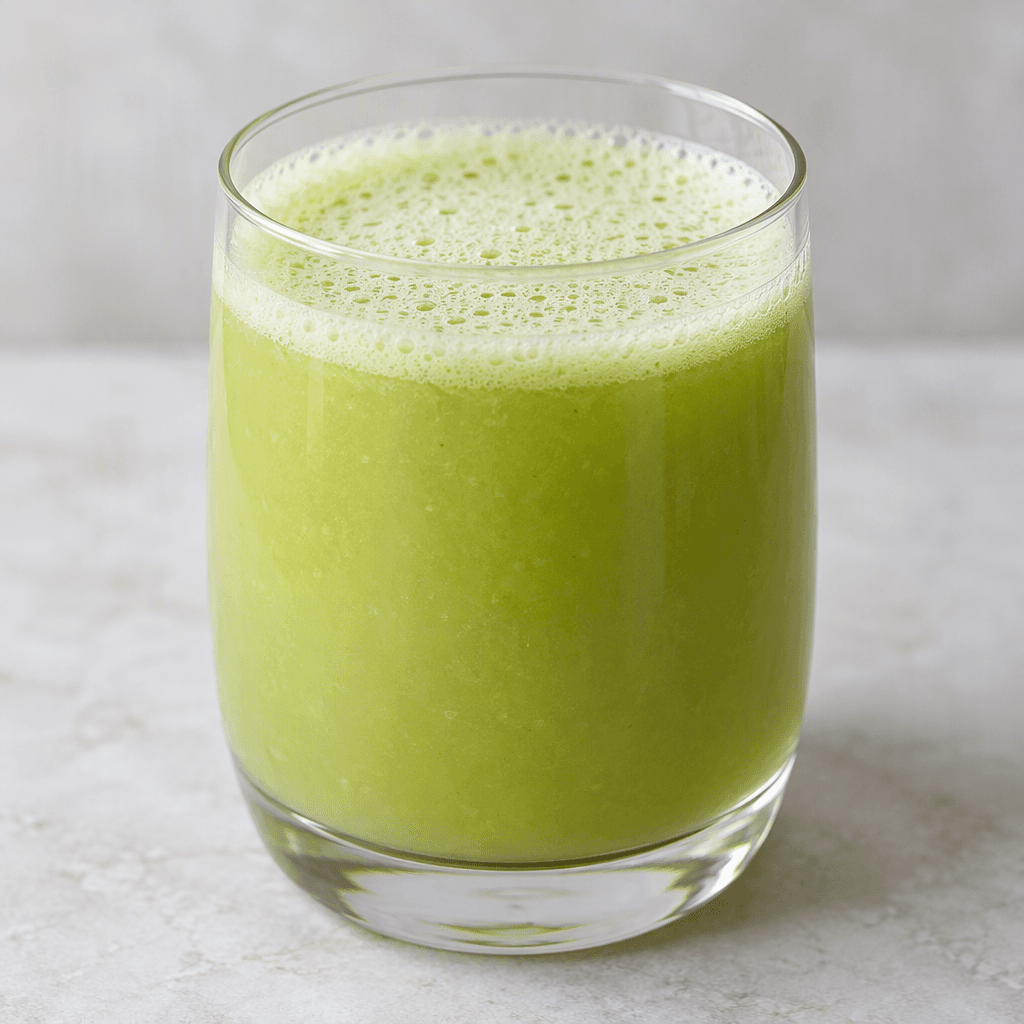
Juiced zucchini Calories
Low-calorie vegetable juice
In season: Summer · Autumn
CALORIES
GI
POTASSIUM
FIBER
Quick answer
1 cup (medium) of Juiced zucchini (240 g) has 41 calories. That works out to 17 calories per 100 g. It contains 7.4 g of carbs, 2.9 g of protein, 0.7 g of fat and 0.5 g of fiber. Its 28.8 mg of Vitamin C covers 32% of the Daily Value. Its glycemic index is 15 (low), so it raises blood sugar slowly.
What is Juiced zucchini?
Juiced zucchini is the liquid extracted from fresh zucchini, a mild-tasting vegetable rather than a familiar traditional drink. It has a light, gently green flavour and is usually served chilled; in places where vegetable juices are popular, it can be sipped on its own or blended with other vegetables. It is not an everyday staple in most English-speaking households, but works as a simple alternative when you want something savoury and light. It is low in calories, while straining removes much of the zucchini’s fibre. If you juice it at home, use the leftover pulp in soup, fritters or a savoury batter rather than discarding it.
Juiced zucchini Nutrition Facts
Selected: 100 g
17
KCAL / 100G
Carbs
3.1g
· 1% DV
Protein
1.2g
· 2% DV
Fat
0.3g
· 0% DV
Fiber
0.2g
· 1% DV
DV is the share of the daily value covered, on a 2,000 kcal reference diet.
Calories come from: Carbs 62% · Protein 24% · Fat 14%
Juiced zucchini Vitamins & Minerals
Vitamins
Vitamin C
12mg · 13% DV
B6
0.09mg · 5% DV
Folate
20µg · 5% DV
B5
0.18mg · 4% DV
Minerals
Potassium ⭐
250mg · 7% DV
Phosphorus
38mg · 5% DV
Magnesium
18mg · 4% DV
Calcium
16mg · 2% DV
How Nutritious Is Juiced zucchini?
Nutrient density
Medium
How many vitamins, minerals and how much fiber this food carries per calorie. A high score means a lot of nutrition for few calories.
Satiety score
Medium
An EatBetter score computed from fiber, protein and calorie density. A high score means staying full longer on the same calories.
Both scores are calculated per 100 g and do not change with the selected portion. The satiety score is EatBetter's own calculation, not a clinical measure.
Juiced zucchini Glycemic Index
GLYCEMIC INDEX
GLYCEMIC LOAD
Accounts for portion size — a more realistic measure than GI alone.
How to Burn Off Juiced zucchini
To burn the 17 calories in 100 g:
🚶
Walking (5 km/h)
🏃
Running (8 km/h)
🚴
Cycling
🏊
Swimming
Times are calculated with the MET equation for a 70 kg adult. Actual burn varies with your weight, age and pace.
Is Juiced zucchini Processed?
NOVA 2
Minimally Processed
1. Unprocessed
2. Minimally Processed
3. Processed
4. Ultra-Processed
NOVA classifies foods into 4 groups by industrial processing. NOVA 1 (unprocessed) is the healthiest.
Does Juiced zucchini Contain Allergens?
No known major allergens
Which Diets Is Juiced zucchini Good For?
Vegan
✓ Suitable
Vegetarian
✓ Suitable
Gluten-Free
✓ Suitable
Dairy-Free
— Not suitable
Mediterranean
✓ Suitable
Paleo
✓ Suitable
Whole30
— Not suitable
DASH
— Not suitable
Keto
— Not suitable
Low FODMAP
— Not suitable
Juiced zucchini Fat Profile
SATURATED
0.08g
MONOUNSATURATED
0.03g
POLYUNSATURATED
0.1g
Omega 6:3 ratio 4:1
Below the ideal 4:1 — a good omega balance.
Compare Juiced zucchini
Foods Similar to Juiced zucchini
Frequently Asked Questions About Juiced zucchini
How do you make juiced zucchini?
Make juiced zucchini by washing the zucchini and running it through a juicer. Without a juicer, blend it with a little water and strain it through a fine cloth; the result may retain more pulp.
What does juiced zucchini taste like?
Juiced zucchini tastes mild and lightly vegetal, so it works well as a base for other flavours. Try it chilled with lemon or mint, or blend it with cucumber or apple for a more pronounced taste.
Can you drink juiced zucchini raw?
Yes, juiced zucchini can be drunk raw when made from fresh, thoroughly washed zucchini. Drink it soon after juicing for the freshest taste, and discard it if it smells or looks off.
How long does juiced zucchini last in the fridge?
Juiced zucchini is best consumed soon after preparation. If you need to store it, keep it in a sealed container in the refrigerator and aim to drink it the same day rather than leaving it at room temperature.
Do you peel zucchini before juicing it?
No, you usually do not need to peel zucchini before juicing it. Wash the skin well under running water, and remove any damaged or spoiled areas before using the zucchini.
Can you juice zucchini without a juicer?
Yes, you can make juiced zucchini in a blender. Blend chopped zucchini with a little water, then strain it through a fine cloth or sieve; leaving it unstrained gives you a thicker, pulpier drink.
What can you mix with juiced zucchini?
Lemon, mint, cucumber, and apple all pair well with juiced zucchini. Its mild flavour takes on additions easily, so start with a small amount of any strong-tasting ingredient and adjust to taste.
What can you do with the pulp from juiced zucchini?
Use the pulp from juiced zucchini in fritters, soup, or a savoury batter. Squeeze out excess liquid first so it does not make the mixture too wet.
Does juiced zucchini help with weight loss?
Juiced zucchini does not cause weight loss on its own. It can be a light drink, but straining removes much of the fibre, so it may be less filling than eating whole zucchini.
Does juiced zucchini detox your body?
No, juiced zucchini has not been shown to detox the body. Your liver and kidneys handle waste processing; enjoy zucchini juice as a vegetable drink, not as a cleanse or treatment.
Have another question about Juiced zucchini?
Ask the AI nutrition coach — calories, portions, alternatives and more, answered in seconds in the app.

Scan calories with your camera
Instant AI nutrition analysis

Nutrition data compiled from USDA FoodData Central and scientific sources.