

Ready & Packaged Foods
All →Vegetables & Legumes
All →Desserts & Confectionery
All →Meat & Protein
All →Grains & Bakery
All →Beverages
All →Milk & Dairy
All →

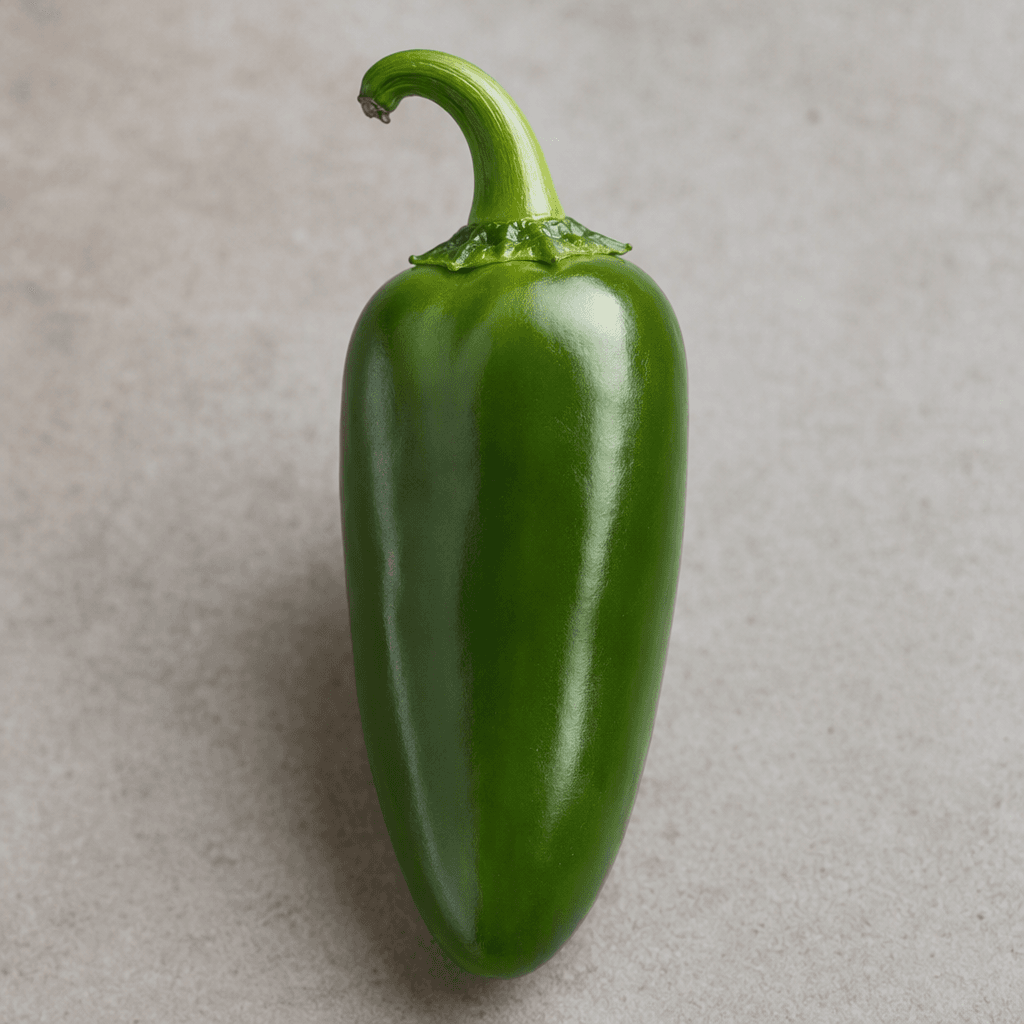
Jalapeno Calories
Low-calorie spicy pepper rich in vitamin C and antioxidants
In season: Summer · Autumn
CALORIES
GI
POTASSIUM
FIBER
Quick answer
1 piece (medium) of Jalapeno (15 g) has 4 calories. That works out to 29 calories per 100 g. It contains 1 g of carbs, 0.1 g of protein, 0.1 g of fat and 0.4 g of fiber. Its 17.7 mg of Vitamin C covers 20% of the Daily Value. Its glycemic index is 15 (low), so it raises blood sugar slowly.
What is Jalapeno?
Jalapeno is a plump, medium-hot chilli pepper with Mexican roots. Fresh peppers are usually picked green, though they can ripen to red; their heat varies, so taste a small piece before adding more. The flesh is crisp and juicy, with a bright, grassy flavour alongside its warmth.
In Mexico it appears fresh in salsas and cooked dishes, and pickled slices are a familiar topping for tacos and sandwiches. Elsewhere, you’ll often find it on nachos, burgers and pizza, or stuffed and baked. Jalapeno is low in calories and provides fibre. For a milder bite, remove the inner ribs and seeds, or pair it with cooling avocado, beans or yoghurt-based dips.
Jalapeno Nutrition Facts
Selected: 100 g
29
KCAL / 100G
Carbs
6.5g
· 2% DV
Protein
0.9g
· 2% DV
Fat
0.4g
· 1% DV
Fiber
2.8g
· 10% DV
DV is the share of the daily value covered, on a 2,000 kcal reference diet.
Calories come from: Carbs 78% · Protein 11% · Fat 11%
Jalapeno Vitamins & Minerals
Vitamins
Vitamin C
118mg · 131% DV
Vitamin E
3.6mg · 24% DV
B6
0.3mg · 18% DV
Biotin
4.5µg · 15% DV
Minerals
Potassium ⭐
248mg · 7% DV
Iron
1mg · 6% DV
Magnesium
15mg · 4% DV
Phosphorus
26mg · 4% DV
How Nutritious Is Jalapeno?
Nutrient density
Very high
How many vitamins, minerals and how much fiber this food carries per calorie. A high score means a lot of nutrition for few calories.
Satiety score
Medium
An EatBetter score computed from fiber, protein and calorie density. A high score means staying full longer on the same calories.
Both scores are calculated per 100 g and do not change with the selected portion. The satiety score is EatBetter's own calculation, not a clinical measure.
Jalapeno Glycemic Index
GLYCEMIC INDEX
GLYCEMIC LOAD
Accounts for portion size — a more realistic measure than GI alone.
How to Burn Off Jalapeno
To burn the 29 calories in 100 g:
🚶
Walking (5 km/h)
🏃
Running (8 km/h)
🚴
Cycling
🏊
Swimming
Times are calculated with the MET equation for a 70 kg adult. Actual burn varies with your weight, age and pace.
Is Jalapeno Processed?
NOVA 1
Unprocessed
1. Unprocessed
2. Minimally Processed
3. Processed
4. Ultra-Processed
NOVA classifies foods into 4 groups by industrial processing. NOVA 1 (unprocessed) is the healthiest.
Does Jalapeno Contain Allergens?
No known major allergens
Which Diets Is Jalapeno Good For?
Vegan
✓ Suitable
Vegetarian
✓ Suitable
Gluten-Free
✓ Suitable
Dairy-Free
— Not suitable
Mediterranean
✓ Suitable
Paleo
✓ Suitable
Whole30
— Not suitable
DASH
— Not suitable
Keto
✓ Suitable
Low FODMAP
— Not suitable
Jalapeno Fat Profile
SATURATED
0.04g
MONOUNSATURATED
0.02g
POLYUNSATURATED
0.11g
Omega 6:3 ratio 3:1
Below the ideal 4:1 — a good omega balance.
Compare Jalapeno
Foods Similar to Jalapeno
Frequently Asked Questions About Jalapeno
How hot is a Jalapeno pepper?
A Jalapeno is moderately hot, though heat varies from pepper to pepper. Its crisp, grassy flavor also makes it popular in fresh salsas and toppings. If you are sensitive to spice, taste a small piece first and remove the inner ribs for a milder bite.
Why are some Jalapenos not spicy?
Some Jalapenos taste surprisingly mild because heat varies with the growing conditions, maturity, and individual pepper. The pale inner ribs hold much of the pepper’s capsaicin, so removing them can reduce heat further, but it cannot make every pepper taste exactly the same.
Are Jalapeno seeds spicy?
The seeds are not the main source of a Jalapeno’s heat; most capsaicin is concentrated in the pale ribs they attach to. Scrape out both the seeds and ribs if you want less heat, taking care not to rub your eyes while preparing the pepper.
Can you eat Jalapenos raw?
Yes, Jalapenos can be eaten raw. Wash one, remove its stem, and slice it into salads, sandwiches, or salsa for a crunchy, fresh pepper flavor. The heat is noticeable uncooked, so start with a small amount if you are unsure how spicy it is.
How do you make Jalapenos less spicy?
To make Jalapenos milder, slice them lengthwise and scrape out the pale ribs and seeds. Pairing the pepper with dairy, such as sour cream or yogurt, also helps temper the heat while eating; drinking water usually does much less.
How should you store fresh Jalapenos?
Keep fresh Jalapenos dry and unwashed in the refrigerator’s crisper drawer, and wash them just before use. Discard peppers that have become slimy or moldy. Keeping moisture off their surface helps them stay in better condition than storing them damp.
Can you freeze Jalapenos?
Yes, Jalapenos freeze well for later cooking. Wash and dry them thoroughly, then freeze them whole or sliced in an airtight container. Their texture softens after thawing, so frozen Jalapenos work better in cooked dishes than as a crunchy raw topping.
Why do Jalapenos turn red?
Jalapenos turn red when they are left on the plant to ripen beyond the green stage. Red peppers are often sweeter and fruitier, while green ones have a fresher, grassier taste. Color alone does not reliably tell you how hot an individual pepper will be.
How do you pickle Jalapenos?
To make refrigerator-pickled Jalapenos, slice clean peppers and cover them with a hot mixture of vinegar, water, and salt; garlic is optional. Let the jar cool and keep it refrigerated. For shelf-stable canning, use a tested recipe rather than this quick-pickle method.
How do you stop Jalapeno burn on your hands?
Wash your hands thoroughly with soap and water after handling Jalapenos, and avoid touching your eyes or face beforehand. Wearing gloves while cutting them is the simplest prevention. The pepper’s capsaicin can linger on skin, so a quick rinse may not be enough.
Have another question about Jalapeno?
Ask the AI nutrition coach — calories, portions, alternatives and more, answered in seconds in the app.

Scan calories with your camera
Instant AI nutrition analysis

Nutrition data compiled from USDA FoodData Central and scientific sources.