

Ready & Packaged Foods
All →Vegetables & Legumes
All →Desserts & Confectionery
All →Meat & Protein
All →Grains & Bakery
All →Beverages
All →Milk & Dairy
All →

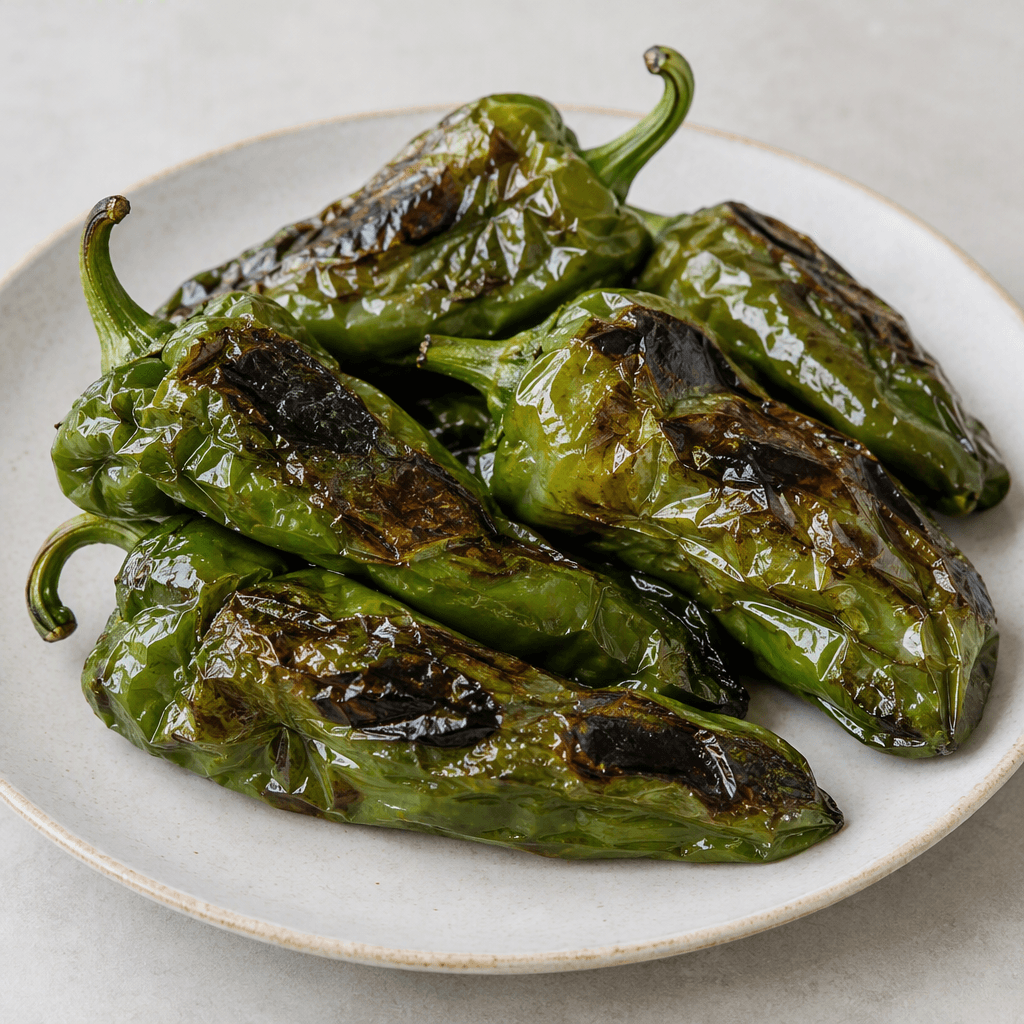
Grilled green pepper Calories
Low calorie, source of fiber, rich in vitamin C
In season: Summer · Autumn
CALORIES
GI
POTASSIUM
FIBER
Quick answer
1 piece (medium) of Grilled green pepper (60 g) has 16 calories. That works out to 27 calories per 100 g. It contains 3.6 g of carbs, 0.7 g of protein, 0.1 g of fat and 1.3 g of fiber. Its 48 mg of Vitamin C covers 53% of the Daily Value. Its glycemic index is 15 (low), so it raises blood sugar slowly.
What is Grilled green pepper?
Grilled green pepper is made by cooking whole or large pieces of green pepper over a flame, on a grill or in a hot pan until the skin softens and blisters. It is a simple preparation found across Mediterranean cooking, including Turkish meals; the pepper may be mild or slightly hot depending on the variety.
The flesh turns tender and takes on a smoky, gently sweet flavour. Serve it alongside grilled meat or fish, with bread and cheese, or as part of a mezze-style spread. It is low in calories and contributes fibre and vitamin C, making it a light vegetable side rather than a substantial dish on its own. A little lemon or yogurt works well with it; go easy on added oil if you want to keep the plate lighter.
Grilled green pepper Nutrition Facts
Selected: 100 g
27
KCAL / 100G
Carbs
6g
· 2% DV
Protein
1.1g
· 2% DV
Fat
0.2g
· 0% DV
Fiber
2.1g
· 8% DV
DV is the share of the daily value covered, on a 2,000 kcal reference diet.
Calories come from: Carbs 79% · Protein 15% · Fat 6%
Grilled green pepper Vitamins & Minerals
Vitamins
Vitamin C
80mg · 89% DV
Vitamin A
157µg · 17% DV
B6
0.22mg · 13% DV
B5
0.28mg · 6% DV
Minerals
Potassium ⭐
175mg · 5% DV
Magnesium
12mg · 3% DV
Phosphorus
20mg · 3% DV
Calcium
10mg · 1% DV
How Nutritious Is Grilled green pepper?
Nutrient density
High
How many vitamins, minerals and how much fiber this food carries per calorie. A high score means a lot of nutrition for few calories.
Satiety score
Medium
An EatBetter score computed from fiber, protein and calorie density. A high score means staying full longer on the same calories.
Both scores are calculated per 100 g and do not change with the selected portion. The satiety score is EatBetter's own calculation, not a clinical measure.
Grilled green pepper Glycemic Index
GLYCEMIC INDEX
GLYCEMIC LOAD
Accounts for portion size — a more realistic measure than GI alone.
How to Burn Off Grilled green pepper
To burn the 27 calories in 100 g:
🚶
Walking (5 km/h)
🏃
Running (8 km/h)
🚴
Cycling
🏊
Swimming
Times are calculated with the MET equation for a 70 kg adult. Actual burn varies with your weight, age and pace.
Is Grilled green pepper Processed?
NOVA 2
Minimally Processed
1. Unprocessed
2. Minimally Processed
3. Processed
4. Ultra-Processed
NOVA classifies foods into 4 groups by industrial processing. NOVA 1 (unprocessed) is the healthiest.
Does Grilled green pepper Contain Allergens?
No known major allergens
Which Diets Is Grilled green pepper Good For?
Vegan
✓ Suitable
Vegetarian
✓ Suitable
Gluten-Free
✓ Suitable
Dairy-Free
— Not suitable
Mediterranean
✓ Suitable
Paleo
✓ Suitable
Whole30
— Not suitable
DASH
— Not suitable
Keto
— Not suitable
Low FODMAP
— Not suitable
Grilled green pepper Fat Profile
SATURATED
0.03g
MONOUNSATURATED
0.01g
POLYUNSATURATED
0.06g
Omega 6:3 ratio 1.7:1
Below the ideal 4:1 — a good omega balance.
Compare Grilled green pepper
Foods Similar to Grilled green pepper
Frequently Asked Questions About Grilled green pepper
How do you grill green peppers without them falling through the grates?
Grill green peppers whole or cut them into large pieces so they stay on the grates. For small or narrow peppers, use a grill basket or place them across the bars. Turn them occasionally until softened and blistered, rather than moving them constantly.
Should you remove the blackened skin from grilled green peppers?
No, you do not have to remove the skin from grilled green peppers. The blistered skin is edible, though you can peel away heavily charred patches or remove all the skin if you prefer a softer texture. Resting the peppers covered briefly helps loosen it.
Are grilled green peppers the same as roasted green peppers?
They are similar, but the names describe different cooking methods. Grilled green peppers are cooked over a grill or grill pan, while roasted green peppers are usually cooked in an oven or under a broiler. Both can develop softened flesh and blistered skin.
Why are my grilled green peppers still firm inside?
Grilled green peppers may stay firm if the heat is too high for the time they spend on the grill. Cook them over medium-high heat, turning them so all sides soften and blister; thicker-walled peppers generally need longer than slender ones.
Can you grill green peppers on a stovetop without an outdoor grill?
Yes, you can make grilled green peppers on a stovetop using a hot cast-iron grill pan or a heavy skillet. Cook the peppers in a single layer and turn them with tongs as their skins blister. Ventilate the kitchen because charring can produce smoke.
Do grilled green peppers need to be peeled before cooking?
No, grilled green peppers should not be peeled before cooking. Leaving the skin on helps the peppers hold their shape and makes them easier to turn. After grilling, the skin can be eaten, partly removed, or peeled off according to your preference.
How can you tell when grilled green peppers are done?
Grilled green peppers are done when they have blistered patches and the flesh feels soft when pressed with tongs. A few dark spots are normal, but the peppers should not be completely burned through. Thin peppers cook faster than thick-walled ones.
What seasoning works well on grilled green peppers?
Olive oil, salt, and black pepper are a simple match for grilled green peppers. Lemon juice, garlic, or herbs can be added after cooking so they do not scorch on the grill. If the peppers are hot, a little yogurt can balance their heat when serving.
Can you eat grilled green peppers cold?
Yes, grilled green peppers can be eaten cold once they have been refrigerated safely. They work well in salads, sandwiches, or as part of an antipasto-style plate. Letting them cool before storing helps prevent condensation in the container.
Can you freeze grilled green peppers for later?
Yes, grilled green peppers freeze well for use in cooked dishes, though they will be softer after thawing. Cool them completely, drain excess liquid, and pack them in an airtight freezer container. Use thawed peppers in sauces, soups, or other warm dishes.
Have another question about Grilled green pepper?
Ask the AI nutrition coach — calories, portions, alternatives and more, answered in seconds in the app.

Scan calories with your camera
Instant AI nutrition analysis

Nutrition data compiled from USDA FoodData Central and scientific sources.