

Ready & Packaged Foods
All →Vegetables & Legumes
All →Desserts & Confectionery
All →Meat & Protein
All →Grains & Bakery
All →Beverages
All →Milk & Dairy
All →

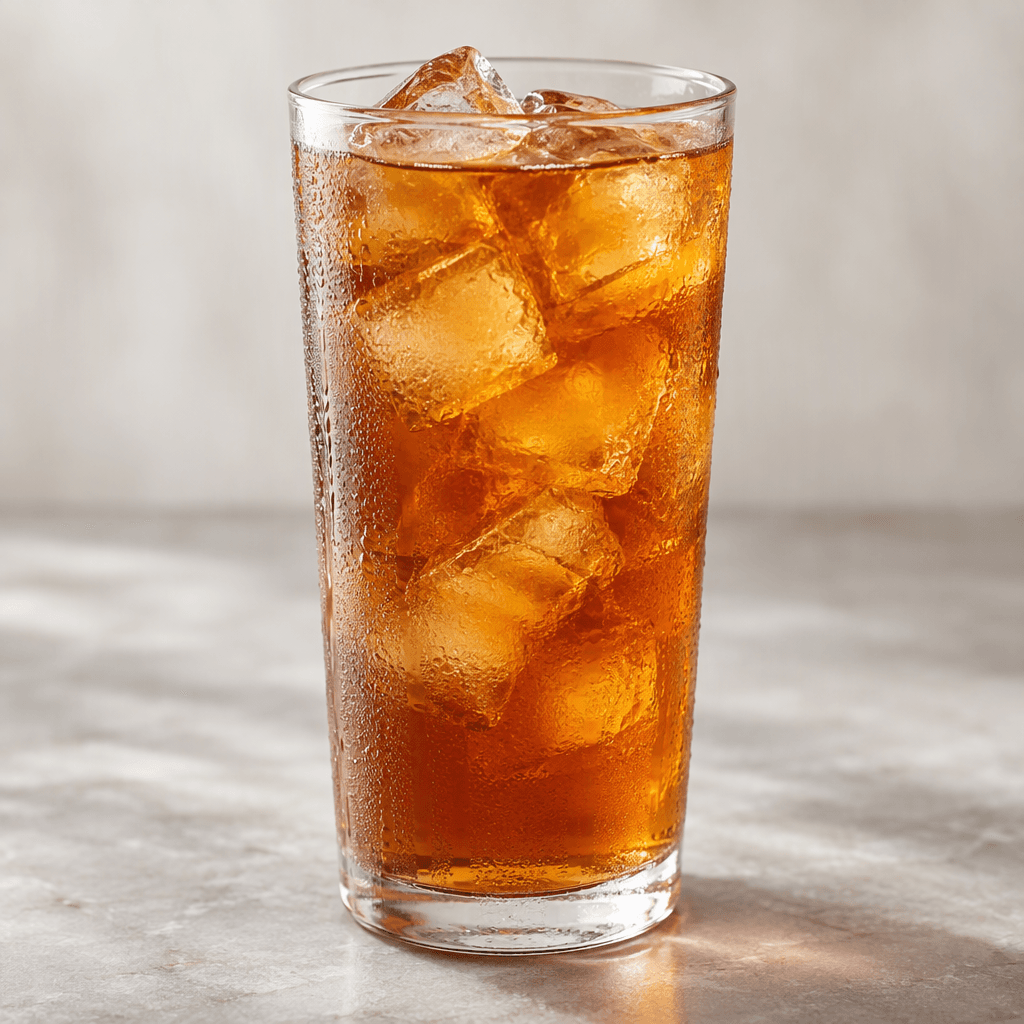
Iced Tea (Can) Calories
Sweetened, cold tea, canned, refreshing beverage
In season: Summer
CALORIES · 100 G
GI
POTASSIUM · 100 G
FIBER · 100 G
Quick answer
1 can (medium) of Iced Tea (Can) (330 g) has 89 calories. That works out to 27 calories per 100 g. It contains 22.1 g of carbs, 0 g of protein, 0 g of fat and 0 g of fiber. Its 0.1 mg of Manganese covers 6% of the Daily Value. Its glycemic index is 60 (medium), so it raises blood sugar at a moderate pace.
Iced Tea (Can) Nutrition Facts
Selected: 1 can (medium) · 330 g
89
KCAL / 330G
Carbs
22.1g
· 8% DV
Protein
0g
· 0% DV
Fat
0g
· 0% DV
Fiber
0g
· 0% DV
DV is the share of the daily value covered, on a 2,000 kcal reference diet.
Calories come from: Carbs 100% · Protein 0% · Fat 0%
Iced Tea (Can) nutrition facts table · 1 can (medium) (330 g)
| Nutrient | Amount | % DV |
|---|---|---|
| Calories | 89 kcal | |
| Total fat | 0 g | 0% |
| Saturated fat | 0 g | 0% |
| Trans fat | 0 g | |
| Sodium | 13 mg | 1% |
| Total carbohydrate | 22.1 g | 8% |
| Fiber | 0 g | 0% |
| Protein | 0 g | 0% |
Calories: Calories measure energy. Average daily need is 2,000 kcal. Excess calories are stored as fat, too few cause weight loss.
Carbs: Your body's primary energy source. The brain runs exclusively on carbs. Daily need: 275g.
Protein: Essential for muscle repair and cell growth. Daily need: 50g. Keeps you full and boosts metabolism.
Fat: Needed for hormone production and vitamin absorption. Daily need: 78g. Limit saturated fats, choose unsaturated.
Fiber: Critical for digestive health and satiety. Daily need: 28g. Stabilizes blood sugar, lowers cholesterol.

Log this food in EatBetter
100,000+ people use it
- Get your daily calorie target
- Snap your meal, log it in seconds
- See every vitamin and mineral

📸 Scan the code to get the app free.

How Many Calories in 1 Can of Iced Tea (Can)?
| Serving | Amount | Calories |
|---|---|---|
| 1 can (medium) | 330 g | 89 kcal |
| 100 g | 100 g | 27 kcal |
| 1 serving (small) | 200 g | 54 kcal |
| 1 cup (medium) | 240 g | 65 kcal |
| 1 can (small) | 250 g | 68 kcal |
| 1 serving (large) | 400 g | 108 kcal |
| 1 can (large) | 500 g | 135 kcal |
| 1 bottle (large) | 500 g | 135 kcal |
Calculated from 27 calories per 100 g.
Frequently Asked Questions About Iced Tea (Can)
Is canned iced tea healthier than soda?
Not automatically; canned iced tea can still contain substantial added sugar, even though it is tea-based. Compare the sugar content of the products you are choosing, and favour unsweetened tea or water for regular drinking.
Does canned iced tea contain caffeine?
Yes, canned iced tea made with black or green tea usually contains caffeine, but the amount varies by product and tea type. If caffeine affects your sleep or makes you feel jittery, avoid it later in the day.
Can you drink canned iced tea every day?
You can, but sugary canned iced tea is better as an occasional drink than a daily thirst-quencher. Frequent sweet drinks add sugar to your routine, so choose water or unsweetened tea more often.
How long does canned iced tea last after opening?
Keep opened canned iced tea covered in the refrigerator and drink it as soon as practical, preferably the same day. Discard it if it has been left out for a long time or its smell, taste, or appearance has changed.
Does canned iced tea go bad before its best-by date?
Yes, a can of iced tea can become unsafe before its date if it is punctured, leaking, badly dented, or swollen. Store unopened cans in a cool, dry place and discard damaged cans rather than tasting the drink.
Does canned iced tea contain real tea?
Usually, yes: canned iced tea is commonly made with brewed tea or tea extract. The tea type and amount vary between products, so a black-tea version may taste quite different from a green-tea one.
Is canned iced tea carbonated?
Usually not; most canned iced tea is still rather than fizzy. Some tea-based canned drinks are carbonated, so bubbles are normal only when the product is meant to be sparkling and the can is intact.
Can you freeze canned iced tea?
Do not freeze the drink inside its sealed can. Iced tea expands as it freezes, which can split or deform the can; chill it in the refrigerator or pour it over ice instead.
Does canned iced tea stain your teeth?
Yes, tea pigments can gradually stain tooth enamel, and added sugar can also contribute to tooth decay. Drinking water after canned iced tea and keeping up with regular brushing can help limit these effects.
Is canned iced tea hydrating after exercise?
Canned iced tea provides fluid, but a sweetened version is not the best default drink after a routine workout. Water is usually enough for everyday exercise; the caffeine and sugar content can vary by can.
Iced Tea (Can) Vitamins & Minerals
Vitamins
B1
0.03mg · 3% DV
B2
0.03mg · 2% DV
B3
0.33mg · 2% DV
B6
0.03mg · 2% DV
Minerals
Manganese
0.13mg · 6% DV
Copper
0.03mg · 3% DV
Magnesium
3.3mg · 1% DV
Potassium ⭐
26mg · 1% DV
Sodium
13mg · 1% DV
Iced Tea (Can) Glycemic Index
GLYCEMIC INDEX
GLYCEMIC LOAD
Accounts for portion size — a more realistic measure than GI alone.
How to Burn Off Iced Tea (Can)
To burn the 89 calories in 1 can (medium) (330 g):
🚶
Walking (5 km/h)
🏃
Running (8 km/h)
🚴
Cycling
🏊
Swimming
Times are calculated with the MET equation for a 70 kg adult. Actual burn varies with your weight, age and pace.
What is Iced Tea (Can)?
Iced tea in a can is ready-to-drink tea that has been brewed, chilled and sweetened before packaging. Depending on the brand, it may be made with black or green tea, and lemon and peach flavours are common.
It is often served cold in warm weather, with a casual meal or as a convenient drink on the go. Its smooth, still texture balances a light tea-like bite with noticeable sweetness. At 6.7 g of carbohydrates per 100 g, it is mainly a sweet drink rather than a substantial source of nutrients. Pair it with a savoury sandwich or snack, or choose an unsweetened version if you’d prefer less sweetness.
How Nutritious Is Iced Tea (Can)?
Nutrient density
Low
How many vitamins, minerals and how much fiber this food carries per calorie. A high score means a lot of nutrition for few calories.
Satiety score
Medium
An EatBetter score computed from fiber, protein and calorie density. A high score means staying full longer on the same calories.
Both scores are calculated per 100 g and do not change with the selected portion. The satiety score is EatBetter's own calculation, not a clinical measure.
Is Iced Tea (Can) Processed?
NOVA 3
Processed
1. Unprocessed
2. Minimally Processed
3. Processed
4. Ultra-Processed
NOVA classifies foods into 4 groups by industrial processing. NOVA 1 (unprocessed) is the healthiest.
Does Iced Tea (Can) Contain Allergens?
No known major allergens
Which Diets Is Iced Tea (Can) Good For?
Vegan
✓ Suitable
Vegetarian
✓ Suitable
Gluten-Free
— Not suitable
Dairy-Free
— Not suitable
Mediterranean
— Not suitable
Paleo
— Not suitable
Whole30
— Not suitable
DASH
— Not suitable
Keto
— Not suitable
Low FODMAP
— Not suitable
Iced Tea (Can) Fat Profile
SATURATED
0g
MONOUNSATURATED
0g
POLYUNSATURATED
0g
Compare Iced Tea (Can)
Foods Similar to Iced Tea (Can)
Have another question about Iced Tea (Can)?
Ask the AI nutrition coach — calories, portions, alternatives and more, answered in seconds in the app.

Scan calories with your camera
Instant AI nutrition analysis

Nutrition data compiled from USDA FoodData Central and scientific sources.