

Ready & Packaged Foods
All →Vegetables & Legumes
All →Desserts & Confectionery
All →Meat & Protein
All →Grains & Bakery
All →Beverages
All →Milk & Dairy
All →

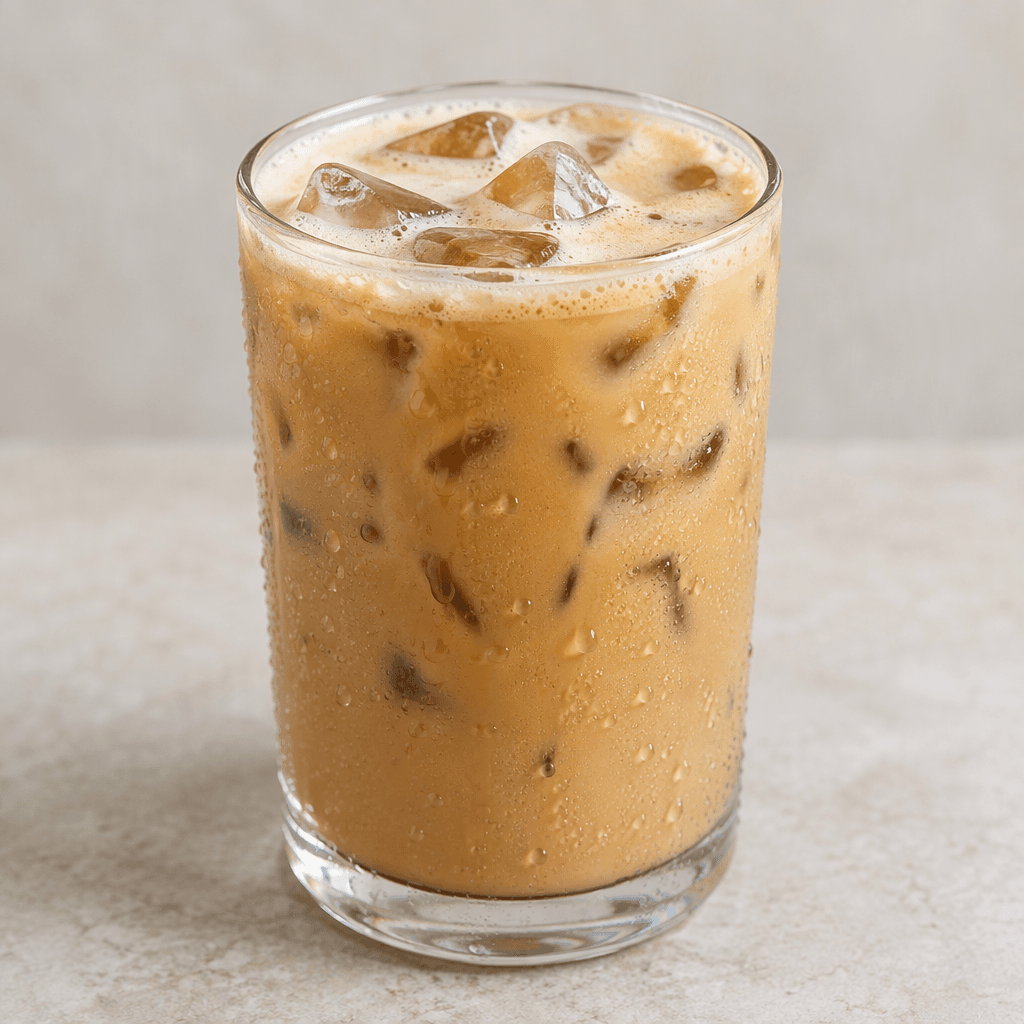
Iced Milk Coffee Calories
Chilled coffee drink with milk and ice
In season: Summer
CALORIES
GI
POTASSIUM
FIBER
Quick answer
1 cup (medium) of Iced Milk Coffee (240 g) has 108 calories. That works out to 45 calories per 100 g. It contains 14.9 g of carbs, 4.1 g of protein, 2.9 g of fat and 0 g of fiber. Its 0.4 mg of B2 covers 33% of the Daily Value. Its glycemic index is 45 (low), so it raises blood sugar slowly.
What is Iced Milk Coffee?
Iced milk coffee is made by chilling coffee and serving it with milk and ice. At home, it can start with brewed or instant coffee; cafés may use espresso or cold brew. It is not tied to a single place, but iced coffee is enjoyed widely wherever people want a cooler coffee.
Milk softens coffee’s bitterness, giving the drink a creamy, mellow taste that becomes lighter as the ice melts. It suits a warm-weather break, whether made at home or ordered from a café, and pairs well with a plain biscuit or pastry. This version is a relatively light milky coffee, with 45 calories per 100 g. Chill the coffee before adding ice to keep it from diluting too quickly; leave out added sugar if you prefer a more pronounced coffee flavor.
Iced Milk Coffee Nutrition Facts
Selected: 100 g
45
KCAL / 100G
Carbs
6.2g
· 2% DV
Protein
1.7g
· 3% DV
Fat
1.2g
· 2% DV
Fiber
0g
· 0% DV
DV is the share of the daily value covered, on a 2,000 kcal reference diet.
Calories come from: Carbs 58% · Protein 16% · Fat 26%
Iced Milk Coffee Vitamins & Minerals
Vitamins
B2
0.18mg · 14% DV
B5
0.4mg · 8% DV
B12
0.2µg · 8% DV
Biotin
2µg · 7% DV
Minerals
Calcium
60mg · 6% DV
Phosphorus
45mg · 6% DV
Iodine
7µg · 5% DV
Selenium
1.5µg · 3% DV
How Nutritious Is Iced Milk Coffee?
Nutrient density
Medium
How many vitamins, minerals and how much fiber this food carries per calorie. A high score means a lot of nutrition for few calories.
Satiety score
Medium
An EatBetter score computed from fiber, protein and calorie density. A high score means staying full longer on the same calories.
Both scores are calculated per 100 g and do not change with the selected portion. The satiety score is EatBetter's own calculation, not a clinical measure.
Iced Milk Coffee Glycemic Index
GLYCEMIC INDEX
GLYCEMIC LOAD
Accounts for portion size — a more realistic measure than GI alone.
How to Burn Off Iced Milk Coffee
To burn the 45 calories in 100 g:
🚶
Walking (5 km/h)
🏃
Running (8 km/h)
🚴
Cycling
🏊
Swimming
Times are calculated with the MET equation for a 70 kg adult. Actual burn varies with your weight, age and pace.
Is Iced Milk Coffee Processed?
NOVA 2
Minimally Processed
1. Unprocessed
2. Minimally Processed
3. Processed
4. Ultra-Processed
NOVA classifies foods into 4 groups by industrial processing. NOVA 1 (unprocessed) is the healthiest.
Does Iced Milk Coffee Contain Allergens?
Contains these allergens:
Which Diets Is Iced Milk Coffee Good For?
Vegan
— Not suitable
Vegetarian
✓ Suitable
Gluten-Free
— Not suitable
Dairy-Free
— Not suitable
Mediterranean
✓ Suitable
Paleo
— Not suitable
Whole30
— Not suitable
DASH
— Not suitable
Keto
— Not suitable
Low FODMAP
— Not suitable
Iced Milk Coffee Fat Profile
SATURATED
0.7g
MONOUNSATURATED
0.3g
POLYUNSATURATED
0.05g
Omega 6:3 ratio 2:1
Below the ideal 4:1 — a good omega balance.
Compare Iced Milk Coffee
Foods Similar to Iced Milk Coffee
Frequently Asked Questions About Iced Milk Coffee
How do you make iced milk coffee at home?
To make iced milk coffee, brew coffee, let it cool, then pour it over ice and add cold milk. Stir before drinking. Cooling the coffee first keeps the ice from melting quickly and watering down the drink.
What is the difference between iced milk coffee and an iced latte?
Iced milk coffee is a broad term for coffee served cold with milk, while an iced latte is usually made with espresso and a larger proportion of milk. Recipes vary, so the key difference is often the coffee base and strength.
Can you make iced milk coffee with cold brew?
Yes, cold brew works well in iced milk coffee and gives it a smooth, less sharp taste. Pour the cold brew over ice, add milk, and adjust the balance to your preference; it does not need to be cooled after brewing.
How do you stop iced milk coffee from tasting watery?
Use chilled coffee instead of pouring hot coffee over ice, or freeze leftover coffee in an ice tray and use those cubes. Both approaches keep the drink cold without diluting its coffee flavor as quickly.
How should you sweeten iced milk coffee?
Add sugar while the coffee is still warm so it dissolves fully. For already-chilled iced milk coffee, use simple syrup or another liquid sweetener and stir well; granulated sugar can settle at the bottom.
Can you make iced milk coffee ahead of time?
Yes, you can brew the coffee ahead and refrigerate it, then add milk and ice just before serving. Keeping the components separate preserves the coffee’s flavor and prevents melting ice from diluting the drink.
How much caffeine is in iced milk coffee?
Iced milk coffee contains caffeine from the coffee, but the amount varies with the coffee type, brew strength, and quantity used. Adding milk and ice changes the drink’s volume, not the caffeine already in the coffee.
Can you use espresso to make iced milk coffee?
Yes, espresso makes a strong-tasting iced milk coffee. Let it cool before adding it to ice and milk, or the ice may melt quickly; you can also pour espresso over coffee ice cubes to preserve its strength.
Can you drink iced milk coffee on an empty stomach?
Yes, most people can drink iced milk coffee on an empty stomach, but coffee may trigger stomach discomfort or reflux in some. If that happens to you, have it with food or choose a less concentrated coffee.
Does iced milk coffee keep you awake?
It can, because iced milk coffee contains caffeine, which may make it harder to fall asleep, especially when consumed later in the day. Choose decaffeinated coffee or have it earlier if caffeine affects your sleep.
Have another question about Iced Milk Coffee?
Ask the AI nutrition coach — calories, portions, alternatives and more, answered in seconds in the app.

Scan calories with your camera
Instant AI nutrition analysis

Nutrition data compiled from USDA FoodData Central and scientific sources.