

Ready & Packaged Foods
All →Vegetables & Legumes
All →Desserts & Confectionery
All →Meat & Protein
All →Grains & Bakery
All →Beverages
All →Milk & Dairy
All →

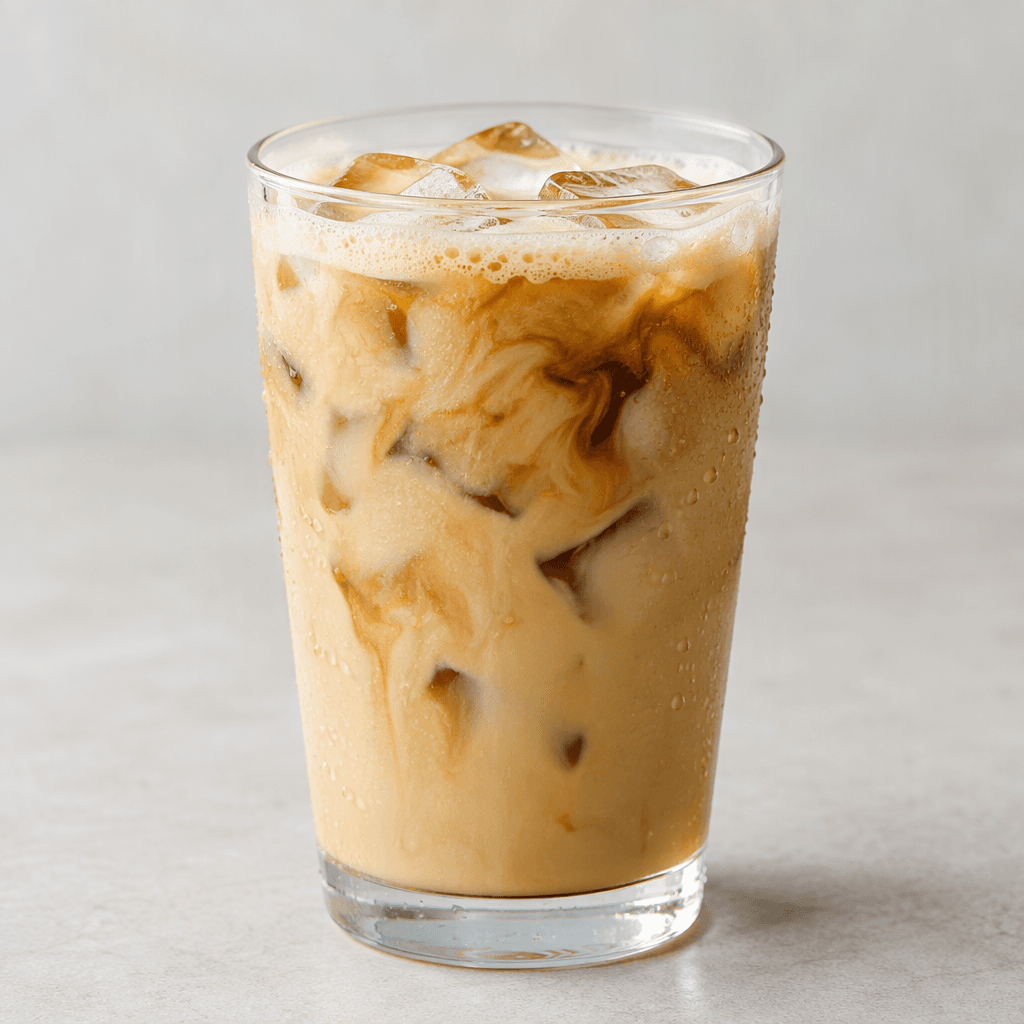
Iced Latte Calories
Chilled milk coffee, refreshing, caffeinated
In season: Summer
CALORIES
GI
POTASSIUM
FIBER
Quick answer
1 cup (medium) of Iced Latte (240 g) has 108 calories. That works out to 45 calories per 100 g. It contains 13.7 g of carbs, 4.1 g of protein, 3.1 g of fat and 0 g of fiber. Its 0.4 mg of B2 covers 31% of the Daily Value. Its glycemic index is 35 (low), so it raises blood sugar slowly.
What is Iced Latte?
An Iced Latte combines espresso with cold milk and ice, often finished with a little milk foam. It belongs to the wider family of espresso-and-milk drinks popularised by café culture; cafés may pour the coffee over the milk for visible swirls, or mix everything together before serving.
Its flavour is smooth, creamy and milder than a straight espresso, while the chilled, lightly foamed texture makes it especially refreshing in warm weather. It is commonly enjoyed as a café drink, with breakfast or as an afternoon pick-me-up. Milk contributes some protein, and without flavoured syrup the drink is generally not very sweet. For a lighter version, ask for less syrup or a smaller splash of milk; an extra espresso shot brings out the coffee flavour.
Iced Latte Nutrition Facts
Selected: 100 g
45
KCAL / 100G
Carbs
5.7g
· 2% DV
Protein
1.7g
· 3% DV
Fat
1.3g
· 2% DV
Fiber
0g
· 0% DV
DV is the share of the daily value covered, on a 2,000 kcal reference diet.
Calories come from: Carbs 55% · Protein 16% · Fat 29%

Log this food in EatBetter
100,000+ people use it
- Get your daily calorie target
- Snap your meal, log it in seconds
- See every vitamin and mineral

📸 Scan the code to get the app free.

Iced Latte Vitamins & Minerals
Vitamins
B2
0.17mg · 13% DV
B12
0.2µg · 8% DV
B5
0.4mg · 8% DV
Biotin
2µg · 7% DV
Minerals
Phosphorus
45mg · 6% DV
Calcium
60mg · 6% DV
Iodine
7µg · 5% DV
Potassium ⭐
130mg · 4% DV
How Nutritious Is Iced Latte?
Nutrient density
Low
How many vitamins, minerals and how much fiber this food carries per calorie. A high score means a lot of nutrition for few calories.
Satiety score
Medium
An EatBetter score computed from fiber, protein and calorie density. A high score means staying full longer on the same calories.
Both scores are calculated per 100 g and do not change with the selected portion. The satiety score is EatBetter's own calculation, not a clinical measure.
Iced Latte Glycemic Index
GLYCEMIC INDEX
GLYCEMIC LOAD
Accounts for portion size — a more realistic measure than GI alone.
How to Burn Off Iced Latte
To burn the 45 calories in 100 g:
🚶
Walking (5 km/h)
🏃
Running (8 km/h)
🚴
Cycling
🏊
Swimming
Times are calculated with the MET equation for a 70 kg adult. Actual burn varies with your weight, age and pace.
Is Iced Latte Processed?
NOVA 2
Minimally Processed
1. Unprocessed
2. Minimally Processed
3. Processed
4. Ultra-Processed
NOVA classifies foods into 4 groups by industrial processing. NOVA 1 (unprocessed) is the healthiest.
Does Iced Latte Contain Allergens?
Contains these allergens:
Which Diets Is Iced Latte Good For?
Vegan
— Not suitable
Vegetarian
✓ Suitable
Gluten-Free
— Not suitable
Dairy-Free
— Not suitable
Mediterranean
✓ Suitable
Paleo
— Not suitable
Whole30
— Not suitable
DASH
— Not suitable
Keto
— Not suitable
Low FODMAP
— Not suitable
Iced Latte Fat Profile
SATURATED
0.8g
MONOUNSATURATED
0.3g
POLYUNSATURATED
0.05g
Omega 6:3 ratio 3:1
Below the ideal 4:1 — a good omega balance.
Compare Iced Latte
Foods Similar to Iced Latte
Frequently Asked Questions About Iced Latte
What is an iced latte?
An iced latte is espresso combined with cold milk and ice. It has a milkier taste than many iced coffee drinks, and cafés may offer it plain or with added sweetener or flavor syrup.
How do you make an iced latte at home?
Fill a glass with ice, add cold milk, then pour in espresso to make an iced latte. Strong brewed coffee can stand in for espresso; cooling it first helps keep the ice from melting too quickly.
What is the difference between an iced latte and iced coffee?
An iced latte is made with espresso and a generous amount of milk, while iced coffee is a broader term for coffee served cold or over ice. Iced coffee may be brewed in different ways and served black or with milk.
Does an iced latte have caffeine?
Yes, an iced latte contains caffeine from its coffee. The amount depends on the espresso and the number of shots used; adding milk or ice does not remove the caffeine.
Can you make an iced latte without espresso?
Yes, you can make an iced latte-style drink with strongly brewed coffee if you do not have an espresso machine. It may taste less concentrated than one made with espresso, so use coffee that is stronger than you would normally drink.
Can you get an iced latte with oat milk?
Yes, an iced latte can be made with oat milk, as well as other milk alternatives such as soy or almond. The choice changes the drink’s flavor and texture, so specify your preferred milk when ordering.
Is an iced latte sweet?
An unsweetened iced latte is not usually very sweet; its mild sweetness comes mostly from the milk. Coffee shops may add flavored syrup or another sweetener, so ask for it unsweetened if you want to avoid those additions.
Why does an iced latte taste watered down?
An iced latte can taste watered down as its ice melts, especially when hot espresso is poured straight over the cubes. Cooling the espresso first or using larger ice cubes helps the drink keep its flavor longer.
Can you store an iced latte overnight?
It is better to prepare an iced latte fresh because the melting ice dilutes it and the coffee flavor fades. If you need to make it ahead, refrigerate the coffee and milk without ice, then add ice just before serving.
Will drinking an iced latte at night affect sleep?
It can: the caffeine in an iced latte may make it harder to fall asleep or stay asleep. If caffeine affects you, avoid it in the evening or choose a decaffeinated version.
Have another question about Iced Latte?
Ask the AI nutrition coach — calories, portions, alternatives and more, answered in seconds in the app.

Scan calories with your camera
Instant AI nutrition analysis

Nutrition data compiled from USDA FoodData Central and scientific sources.