

Ready & Packaged Foods
All →Vegetables & Legumes
All →Desserts & Confectionery
All →Meat & Protein
All →Grains & Bakery
All →Beverages
All →Milk & Dairy
All →

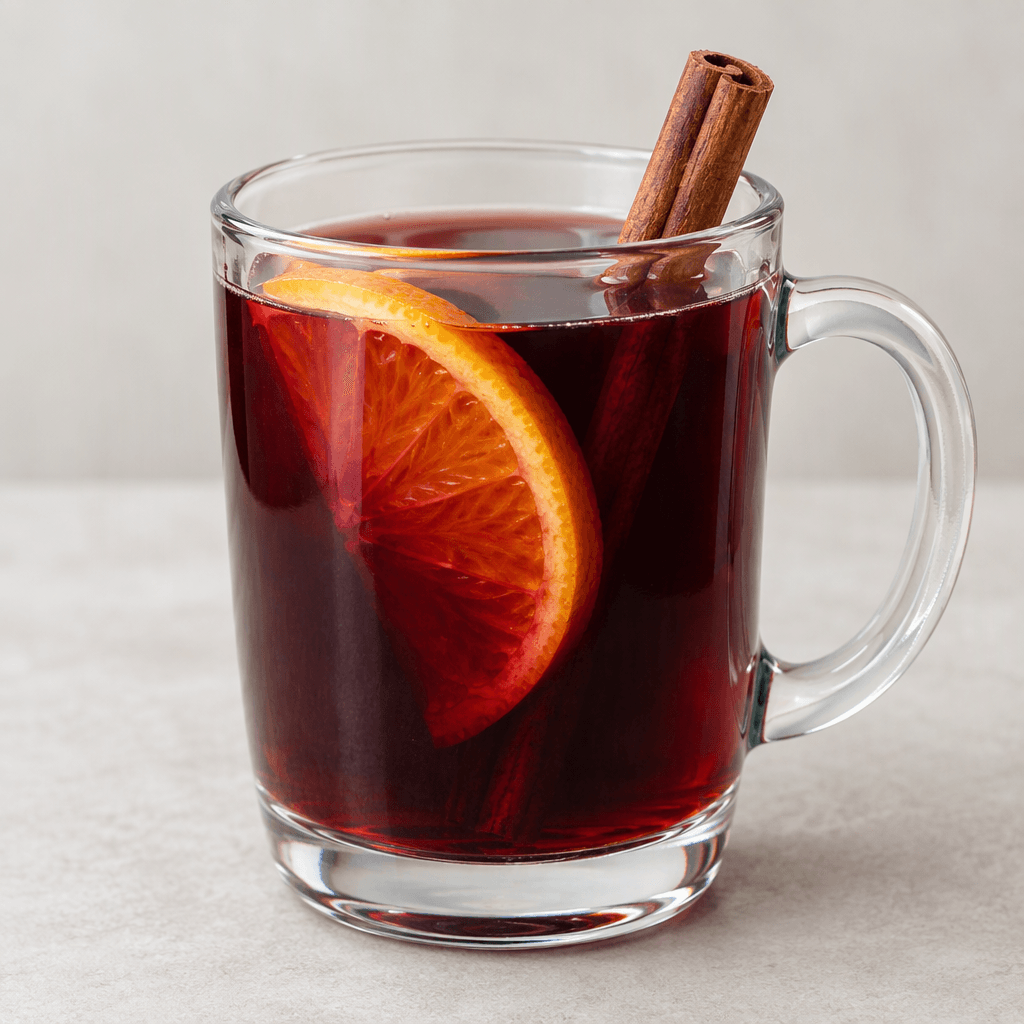
Hot Wine Calories
Red wine heated with spices and sugar
In season: Autumn · Winter
CALORIES
GI
POTASSIUM
FIBER
Quick answer
1 cup (medium) of Hot Wine (200 g) has 170 calories. That works out to 85 calories per 100 g. It contains 17 g of carbs, 0.2 g of protein, 0 g of fat and 0.4 g of fiber. Its 160 mg of Potassium covers 5% of the Daily Value. Its glycemic index is 45 (low), so it raises blood sugar slowly.
What is Hot Wine?
Hot Wine is red wine gently heated with sugar and warming spices, often with orange, cinnamon or cloves. It is closely associated with European winter markets and festive gatherings, though recipes and spice blends vary from place to place. In English-speaking countries, it is commonly served during colder months, especially at Christmas markets or at home with friends.
The flavour is fruity and gently sweet, with aromatic spice; served warm, it feels fuller and softer than chilled wine. Enjoy it in a heatproof mug alongside gingerbread, biscuits or roasted nuts. It is best treated as a seasonal alcoholic drink rather than a source of nourishment, and its sugar contributes to its carbohydrate content. For a less sweet cup, use less sugar and warm the wine gently without bringing it to a boil.
Hot Wine Nutrition Facts
Selected: 100 g
85
KCAL / 100G
Carbs
8.5g
· 3% DV
Protein
0.1g
· 0% DV
Fat
0g
· 0% DV
Fiber
0.2g
· 1% DV
DV is the share of the daily value covered, on a 2,000 kcal reference diet.
Calories come from: Carbs 99% · Protein 1% · Fat 0%
Hot Wine Vitamins & Minerals
Vitamins
B1
0.02mg · 2% DV
B2
0.02mg · 2% DV
B6
0.03mg · 2% DV
B3
0.2mg · 1% DV
Minerals
Magnesium
8mg · 2% DV
Phosphorus
15mg · 2% DV
Potassium ⭐
80mg · 2% DV
Calcium
10mg · 1% DV
How Nutritious Is Hot Wine?
Nutrient density
Low
How many vitamins, minerals and how much fiber this food carries per calorie. A high score means a lot of nutrition for few calories.
Satiety score
Low
An EatBetter score computed from fiber, protein and calorie density. A high score means staying full longer on the same calories.
Both scores are calculated per 100 g and do not change with the selected portion. The satiety score is EatBetter's own calculation, not a clinical measure.
Hot Wine Glycemic Index
GLYCEMIC INDEX
GLYCEMIC LOAD
Accounts for portion size — a more realistic measure than GI alone.
How to Burn Off Hot Wine
To burn the 85 calories in 100 g:
🚶
Walking (5 km/h)
🏃
Running (8 km/h)
🚴
Cycling
🏊
Swimming
Times are calculated with the MET equation for a 70 kg adult. Actual burn varies with your weight, age and pace.
Is Hot Wine Processed?
NOVA 3
Processed
1. Unprocessed
2. Minimally Processed
3. Processed
4. Ultra-Processed
NOVA classifies foods into 4 groups by industrial processing. NOVA 1 (unprocessed) is the healthiest.
Does Hot Wine Contain Allergens?
No known major allergens
Which Diets Is Hot Wine Good For?
Vegan
— Not suitable
Vegetarian
✓ Suitable
Gluten-Free
— Not suitable
Dairy-Free
— Not suitable
Mediterranean
✓ Suitable
Paleo
— Not suitable
Whole30
— Not suitable
DASH
— Not suitable
Keto
— Not suitable
Low FODMAP
— Not suitable
Hot Wine Fat Profile
SATURATED
0g
MONOUNSATURATED
0g
POLYUNSATURATED
0g
Compare Hot Wine
Foods Similar to Hot Wine
Frequently Asked Questions About Hot Wine
How do you make Hot Wine?
Hot Wine is made by gently warming red wine with spices such as cinnamon, cloves and star anise, often with orange and sugar. Keep it below a boil, let the flavors infuse briefly, then strain before serving.
What wine is best for Hot Wine?
A fruity, dry or off-dry red wine works well for Hot Wine. Choose a wine you would be happy to drink on its own; strong oak flavors can compete with the spices, and an expensive bottle is unnecessary.
Does Hot Wine lose its alcohol when heated?
No, heating Hot Wine does not remove all its alcohol. Some may evaporate depending on how long and how it is heated, but the drink should still be treated as alcoholic. Use dealcoholized wine or grape juice for an alcohol-free version.
What spices go in Hot Wine?
Cinnamon, cloves and orange are classic additions to Hot Wine; star anise, cardamom and nutmeg are also common. Use whole spices where possible and strain them out before serving to prevent the drink becoming harsh or bitter.
Can you make Hot Wine in a slow cooker?
Yes, Hot Wine can be made in a slow cooker on low heat. Add the wine, fruit and spices, warm until steaming, and avoid leaving it to simmer for hours; prolonged heating can dull the flavor and reduce the alcohol.
Can Hot Wine be made without alcohol?
Yes, make alcohol-free Hot Wine with red grape juice or a non-alcoholic red wine, then add orange and the usual spices. Taste before adding sugar, since grape juice is often already sweet.
Why does Hot Wine taste bitter?
Hot Wine can taste bitter if it is boiled, heated for too long, or infused with citrus pith and spices for hours. Warm it gently, use orange peel sparingly, and remove the spices once the drink is aromatic.
How long does Hot Wine keep after making it?
Strained Hot Wine can be refrigerated in a sealed container and is best used within a few days. Reheat only the amount you plan to serve, warming it gently rather than bringing it to a boil.
What do you serve with Hot Wine?
Hot Wine pairs well with gingerbread, spiced cookies, roasted nuts and cheese. Serve it warm in heat-safe mugs, and remember that it still contains alcohol even when it has been heated.
Can you use white wine to make Hot Wine?
Yes, white wine makes a lighter version of Hot Wine. Pair it with citrus, cinnamon, cloves or ginger, and add sweetener gradually because white wines vary in sweetness.
Have another question about Hot Wine?
Ask the AI nutrition coach — calories, portions, alternatives and more, answered in seconds in the app.

Scan calories with your camera
Instant AI nutrition analysis

Nutrition data compiled from USDA FoodData Central and scientific sources.