

Ready & Packaged Foods
All →Vegetables & Legumes
All →Desserts & Confectionery
All →Meat & Protein
All →Grains & Bakery
All →Beverages
All →Milk & Dairy
All →

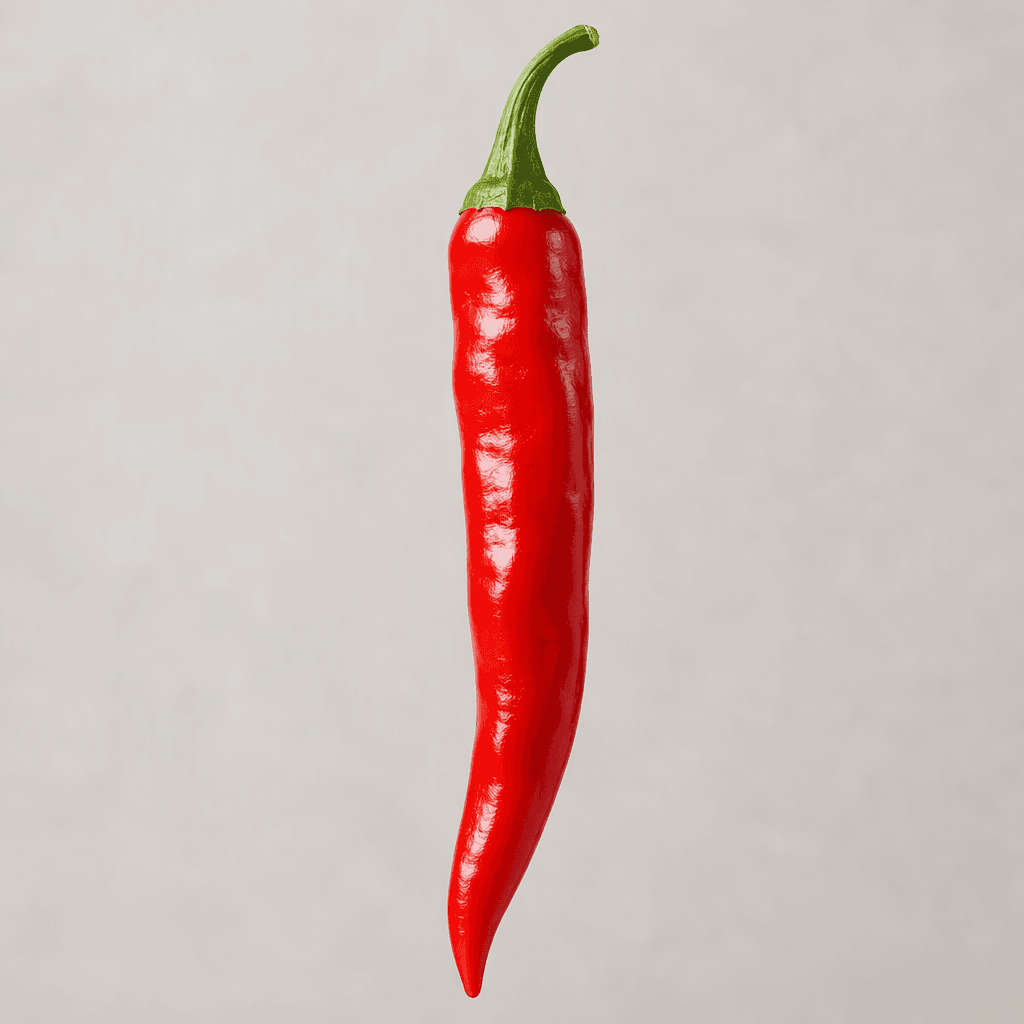
Hot Red Pepper Calories
High in vitamin C and capsaicin, low calorie, antioxidant
In season: Summer · Autumn
CALORIES
GI
POTASSIUM
FIBER
Quick answer
1 piece (medium) of Hot Red Pepper (15 g) has 6 calories. That works out to 40 calories per 100 g. It contains 1.3 g of carbs, 0.3 g of protein, 0.1 g of fat and 0.2 g of fiber. Its 21.6 mg of Vitamin C covers 24% of the Daily Value. Its glycemic index is 15 (low), so it raises blood sugar slowly.
What is Hot Red Pepper?
Hot red pepper is a ripe red chilli, usually picked fresh while its skin is smooth and glossy. It brings both heat and colour to a dish, and is distinct from dried chilli flakes or powder.
Its crisp, juicy flesh has a sharp, lingering burn. Across the cuisines where chillies are common, it is chopped into sauces, salsas and stews, grilled, or served pickled; elsewhere, a little can brighten eggs, sandwiches or soups. Hot red pepper is low in calories and provides vitamin C and fibre, while capsaicin gives it its characteristic heat. Start with a small amount, or remove the inner membrane for a milder result.
Hot Red Pepper Nutrition Facts
Selected: 100 g
40
KCAL / 100G
Carbs
9g
· 3% DV
Protein
2g
· 4% DV
Fat
0.5g
· 1% DV
Fiber
1.5g
· 5% DV
DV is the share of the daily value covered, on a 2,000 kcal reference diet.
Calories come from: Carbs 74% · Protein 16% · Fat 10%
Hot Red Pepper Vitamins & Minerals
Vitamins
Vitamin C
144mg · 160% DV
Vitamin A
530µg · 59% DV
B6
0.5mg · 29% DV
Biotin
7µg · 23% DV
Minerals
Potassium ⭐
322mg · 9% DV
Iron
1mg · 6% DV
Phosphorus
43mg · 6% DV
Magnesium
23mg · 5% DV
How Nutritious Is Hot Red Pepper?
Nutrient density
Very high
How many vitamins, minerals and how much fiber this food carries per calorie. A high score means a lot of nutrition for few calories.
Satiety score
Medium
An EatBetter score computed from fiber, protein and calorie density. A high score means staying full longer on the same calories.
Both scores are calculated per 100 g and do not change with the selected portion. The satiety score is EatBetter's own calculation, not a clinical measure.
Hot Red Pepper Glycemic Index
GLYCEMIC INDEX
GLYCEMIC LOAD
Accounts for portion size — a more realistic measure than GI alone.
How to Burn Off Hot Red Pepper
To burn the 40 calories in 100 g:
🚶
Walking (5 km/h)
🏃
Running (8 km/h)
🚴
Cycling
🏊
Swimming
Times are calculated with the MET equation for a 70 kg adult. Actual burn varies with your weight, age and pace.
Is Hot Red Pepper Processed?
NOVA 1
Unprocessed
1. Unprocessed
2. Minimally Processed
3. Processed
4. Ultra-Processed
NOVA classifies foods into 4 groups by industrial processing. NOVA 1 (unprocessed) is the healthiest.
Does Hot Red Pepper Contain Allergens?
No known major allergens
Which Diets Is Hot Red Pepper Good For?
Vegan
✓ Suitable
Vegetarian
✓ Suitable
Gluten-Free
✓ Suitable
Dairy-Free
— Not suitable
Mediterranean
✓ Suitable
Paleo
✓ Suitable
Whole30
— Not suitable
DASH
— Not suitable
Keto
✓ Suitable
Low FODMAP
— Not suitable
Hot Red Pepper Fat Profile
SATURATED
0.08g
MONOUNSATURATED
0.03g
POLYUNSATURATED
0.11g
Omega 6:3 ratio 4.5:1
Above the ideal 4:1 (4.5:1).
Compare Hot Red Pepper
Foods Similar to Hot Red Pepper
Frequently Asked Questions About Hot Red Pepper
Is hot red pepper good for you?
Yes, hot red pepper can be a nutritious addition to meals. It provides vitamin C and capsaicin, but it is not a treatment or a substitute for a varied diet. Its benefits do not require eating it in large amounts.
Does hot red pepper boost metabolism or help with weight loss?
Hot red pepper may briefly increase heat production or reduce appetite for some people, but the effect is small. Eating it alone does not lead to meaningful weight loss; use it for flavor rather than as a weight-loss method.
How do you store fresh hot red pepper?
Keep fresh hot red pepper dry and unwashed in the refrigerator, ideally in a breathable produce bag. Wash it just before use. Discard peppers that become slimy, moldy, or unusually soft.
Can you freeze hot red pepper?
Yes, hot red pepper freezes well for cooking. Wash and dry it thoroughly, then freeze it whole or chopped in an airtight container. It may turn softer after thawing, so use it in sauces, soups, or cooked dishes rather than salads.
Are the seeds of hot red pepper the hottest part?
No. Most capsaicin is concentrated in the pale inner ribs that hold the seeds. Seeds can seem hot because they touch those ribs, so remove both the seeds and ribs if you want a milder pepper.
How can you make a dish less spicy if you added too much hot red pepper?
Dilute the dish with more of its mild ingredients, or add a dairy ingredient such as yogurt or cream when it suits the recipe. Water alone spreads capsaicin rather than neutralizing it, so it usually does not fix the heat.
Can you roast hot red pepper?
Yes, roasting hot red pepper brings out a sweeter, smoky flavor. Roast it under a broiler, over a flame, or on a grill until the skin blisters, then cover it briefly to loosen the skin before peeling.
Is hot red pepper hotter than green pepper?
Not necessarily. Red hot red pepper is usually riper than green hot pepper, so its flavor may be fruitier, but color alone does not reliably predict heat. Pepper variety and growing conditions matter more.
Can hot red pepper irritate your stomach?
Yes, hot red pepper can trigger heartburn, reflux, or stomach discomfort in some people. If you notice symptoms after eating it, try a smaller amount or avoid it; its spiciness can also irritate the mouth and skin.
Can you eat the skin of hot red pepper?
Yes, the smooth skin of hot red pepper is edible. Rinse the pepper under running water and remove the stem before eating or cooking it. Peeling is usually unnecessary, although roasting can make the skin easier to remove if you prefer.
Have another question about Hot Red Pepper?
Ask the AI nutrition coach — calories, portions, alternatives and more, answered in seconds in the app.

Scan calories with your camera
Instant AI nutrition analysis

Nutrition data compiled from USDA FoodData Central and scientific sources.